Navarro-Ledesma Santiago, Hamed-Hamed Dina, Pruimboom Leo
Department of Physical Therapy, Faculty of Health Sciences, Campus of Melilla, University of Granada, Melilla, Spain.
University Chair in Clinical Psychoneuroimmunology, University of Granada and PNI Europe, Melilla, Spain.
Front Physiol. 2024 Mar 29;15:1248612. doi: 10.3389/fphys.2024.1248612. eCollection 2024.
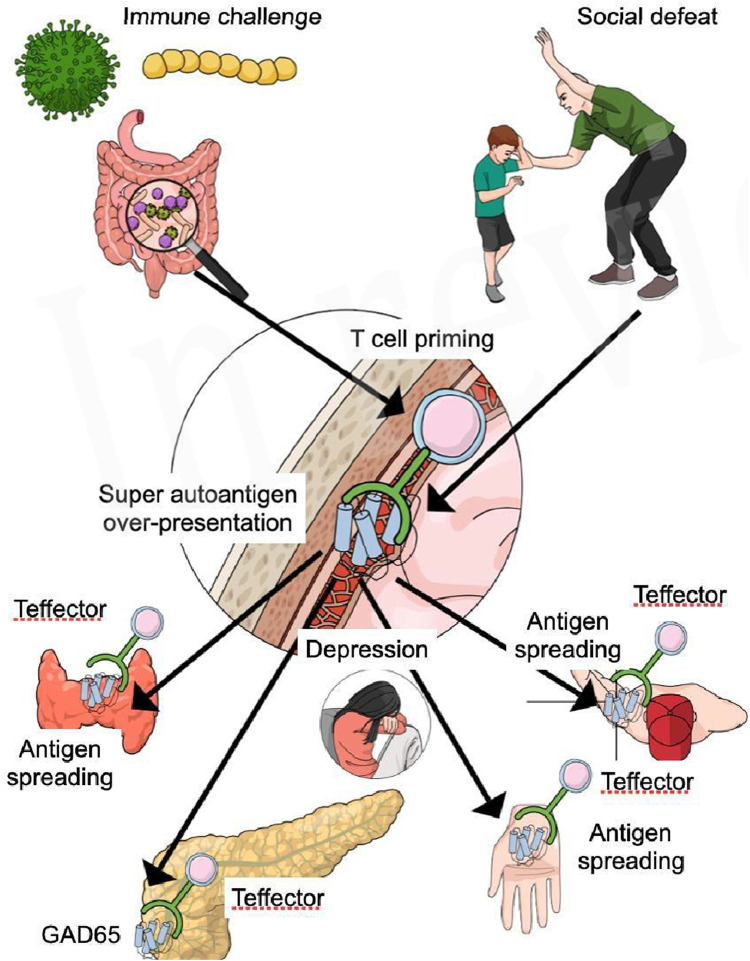
Frozen shoulder (FS), also known as adhesive capsulitis of the shoulder (FS), is a fibrotic inflammatory process of unknown etiology whose main symptoms are pain, stiffness and the loss of joint mobility. These symptoms may be associated with pathologies such as diabetes, Dupuytren's syndrome and the prevalence of today's sedentary lifestyle. This literature review provides an overview of the epidemiology and pathogenesis of this pathology, as well as the mechanisms of lowgrade chronic inflammation and infection, insulin resistance, and omics-science associated with it. We also propose a new hypothesis related to the possibility that the GABAergic system could play a decisive role in the development of frozen shoulder and that therefore diabetes type 1, endocrinological autoimmune disorders and frozen shoulder are connected by the same pathophysiological mechanisms. If that is true, the combined presence of psycho-emotional stress factors and pathogenic immune challenges could be the main causes of frozen shoulder syndrome. Finally, we propose a series of possible intervention strategies based on a multifactorial etiological and mechanistic concept.
肩周炎(FS),也称为粘连性肩关节囊炎,是一种病因不明的纤维化炎症过程,其主要症状为疼痛、僵硬和关节活动度丧失。这些症状可能与糖尿病、杜普伊特伦挛缩症等病理状况以及当今久坐不动的生活方式的流行有关。这篇文献综述概述了这种病理状况的流行病学和发病机制,以及低度慢性炎症和感染、胰岛素抵抗及其相关组学的机制。我们还提出了一个新的假说,即γ-氨基丁酸能系统可能在肩周炎的发展中起决定性作用,因此1型糖尿病、内分泌自身免疫性疾病和肩周炎是由相同的病理生理机制联系在一起的。如果这是真的,心理情绪应激因素和致病性免疫挑战的共同存在可能是肩周炎综合征的主要原因。最后,我们基于多因素病因和机制概念提出了一系列可能的干预策略。