Department of Geriatrics, Liaocheng People's Hospital, Liaocheng, 252000, Shandong, China.
Harbin Inji Technology Co., Ltd., Harbin, 150060, Heilongjiang, China.
Sci Rep. 2024 Apr 17;14(1):8911. doi: 10.1038/s41598-024-59656-6.
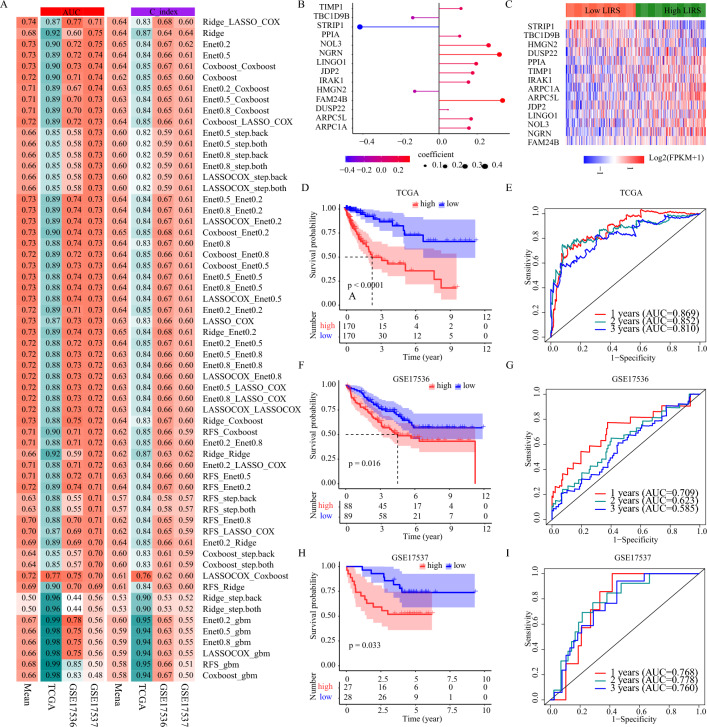
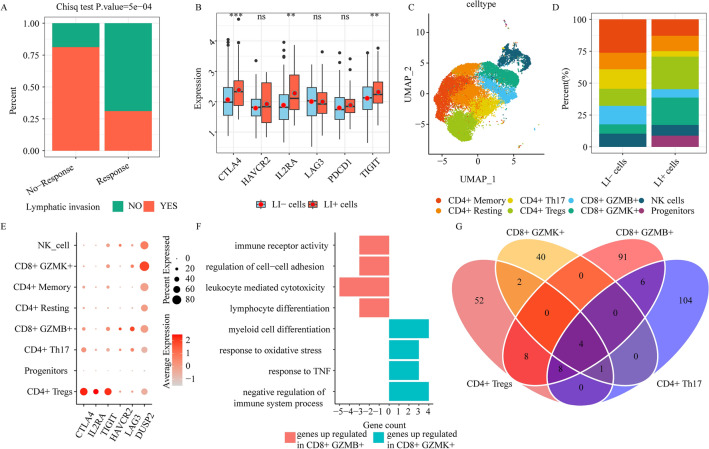
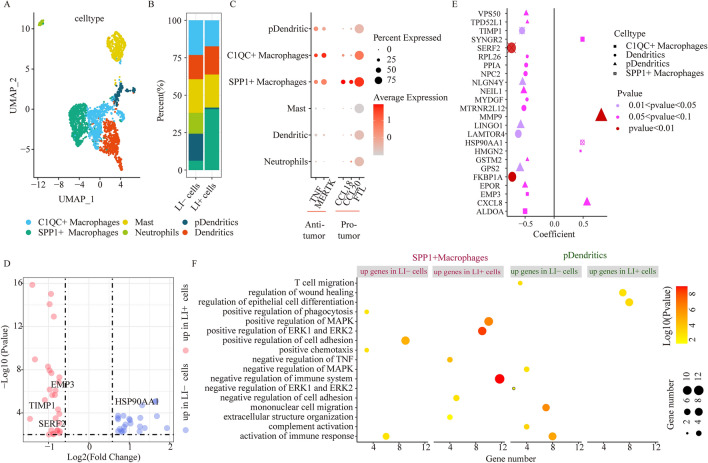
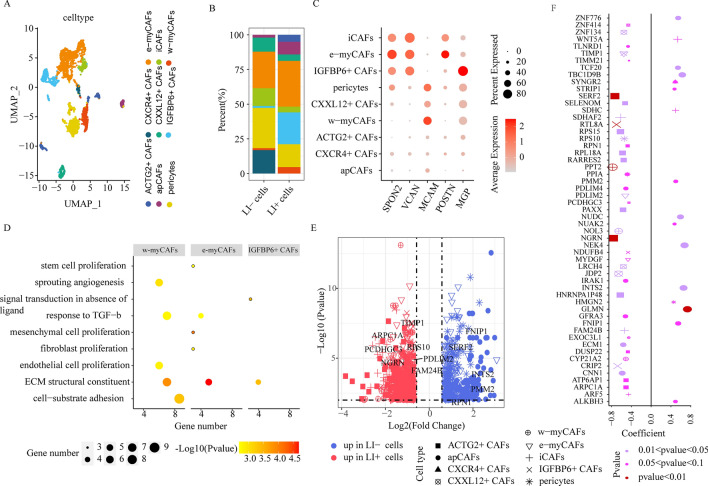
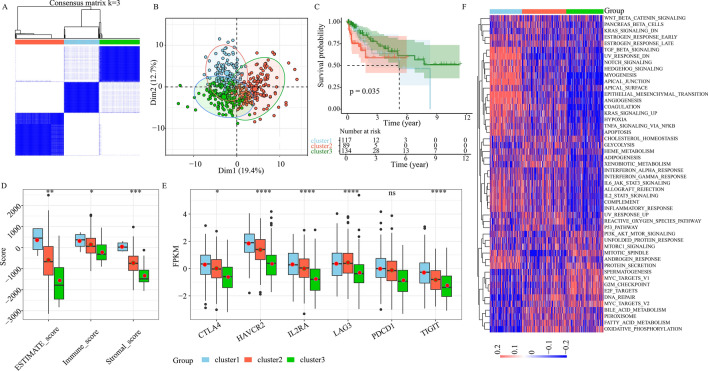
Lymphatic invasion (LI) is extremely aggressive and induces worse prognosis among patients with colorectal cancer (CRC). Thus, it is critical to characterize the cellular and molecular mechanisms underlying LI in order to establish novel and efficacious therapeutic targets that enhance the prognosis of CRC patients. RNA-seq data, clinical and survival information of colon adenocarcinoma (COAD) patients were obtained from the TCGA database. In addition, three scRNA-seq datasets of CRC patients were acquired from the GEO database. Data analyses were conducted with the R packages. We assessed the tumor microenvironment (TME) differences between LI+ and LI- based scRNA-seq data, LI+ cells exhibited augmented abundance of immunosuppression and invasive subset. Marked extracellular matrix network activation was also observed in LI+ cells within SPP1+ macrophages. We revealed that an immunosuppressive and pro-angiogenic TME strongly enhanced LI, as was evidenced by the CD4+ Tregs, CD8+ GZMK+, SPP1+ macrophages, e-myCAFs, and w-myCAFs subcluster infiltrations. Furthermore, we identified potential LI targets that influenced tumor development, metastasis, and immunotherapeutic response. Finally, a novel LIRS model was established based on the expression of 14 LI-related signatures, and in the two testing cohorts, LIRS was also proved to have accurate prognostic predictive ability. In this report, we provided a valuable resource and extensive insights into the LI of CRC. Our conclusions can potentially benefit the establishment of highly efficacious therapeutic targets as well as diagnostic biomarkers that improve patient outcomes.
淋巴血管侵犯(LI)是结直肠癌(CRC)患者极具侵袭性且预后较差的一个特征。因此,深入了解 LI 背后的细胞和分子机制对于确定新的、有效的治疗靶点,改善 CRC 患者的预后至关重要。我们从 TCGA 数据库中获取了 COAD 患者的 RNA-seq 数据、临床和生存信息。此外,我们还从 GEO 数据库中获取了三个 CRC 患者的 scRNA-seq 数据集。我们使用 R 软件包进行数据分析。我们根据 scRNA-seq 数据评估了 LI+和 LI-肿瘤之间的肿瘤微环境(TME)差异,发现 LI+细胞中存在更多的免疫抑制和侵袭亚群。在 SPP1+巨噬细胞中,LI+细胞中也观察到明显的细胞外基质网络激活。我们揭示了一个具有免疫抑制和促血管生成作用的 TME 强烈促进了 LI 的发生,这表现在 CD4+Tregs、CD8+GZMK+、SPP1+巨噬细胞、e-myCAFs 和 w-myCAFs 亚群浸润中。此外,我们确定了潜在的 LI 相关靶点,这些靶点影响肿瘤的发展、转移和免疫治疗反应。最后,我们基于 14 个 LI 相关特征的表达建立了一个新的 LIRS 模型,在两个测试队列中,LIRS 也被证明具有准确的预后预测能力。在本报告中,我们提供了一个有价值的资源,并对 CRC 的 LI 进行了广泛的深入研究。我们的结论可能有助于建立高效的治疗靶点和诊断生物标志物,从而改善患者的预后。