Gu Suyu, Liu Yuting, Huang Yufan, Lin Wenzheng, Li Ke
Institute of Translational Medicine, Medical College, Yangzhou University, Yangzhou, China.
Affiliated Hospital of Yangzhou University, Yangzhou University, Yangzhou, China.
Front Oncol. 2024 Apr 3;14:1331055. doi: 10.3389/fonc.2024.1331055. eCollection 2024.
In recent years, novel therapies targeting specific molecular pathways and immunotherapies have exhibited promising outcomes for treating human epidermal growth factor receptor 2 (HER2)-positive breast cancer. Our work aimed to assess the effectiveness and safety of these emerging treatment regimens for this disease.
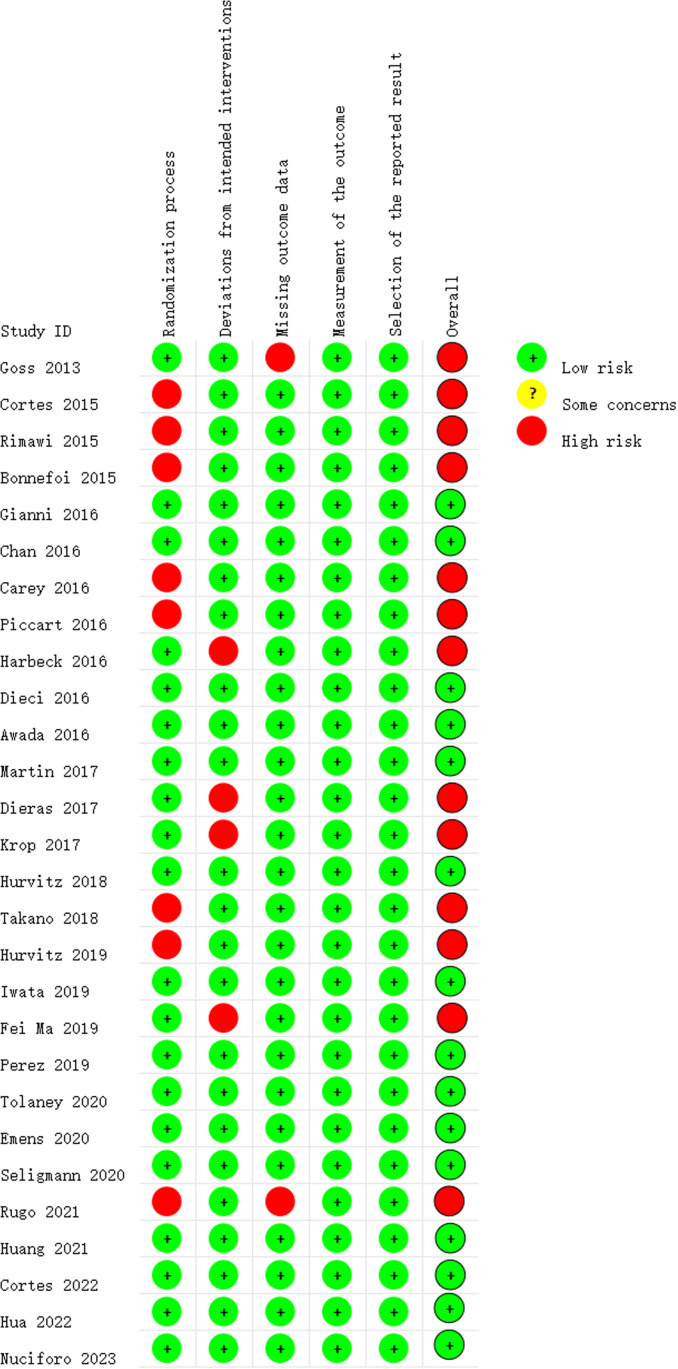
We systematically searched databases including PubMed, Embase, Web of Science, and the Cochrane Central Register of Controlled Trials their inception to August 2023 to identify relevant randomized controlled trials (RCTs). The quality of eligible RCTs was evaluated with the Cochrane risk-of-bias tool, version 2 (RoB2). Investigated outcomes encompassed progression-free survival (PFS), overall survival (OS), disease-free survival (DFS), pathologic complete remission (pCR), and adverse events (AEs). They were expressed as hazard ratio (HR) with 95% conference intervals (CI) or risk ratio (RR) with 95% CI.
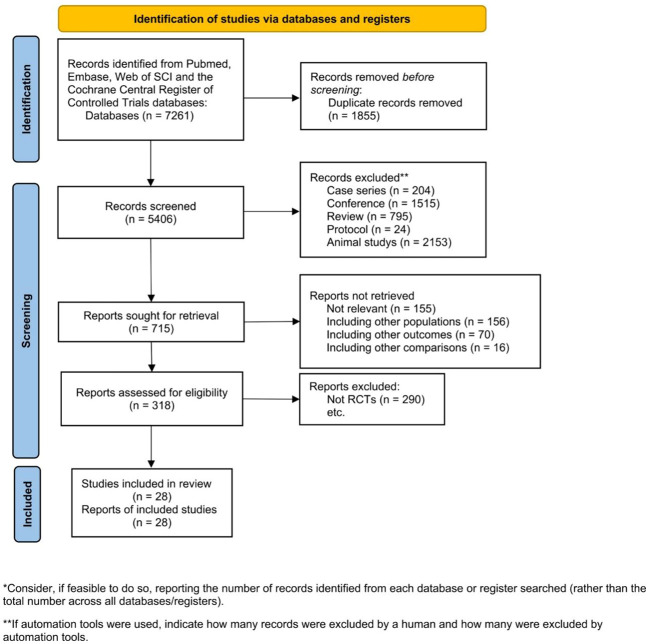
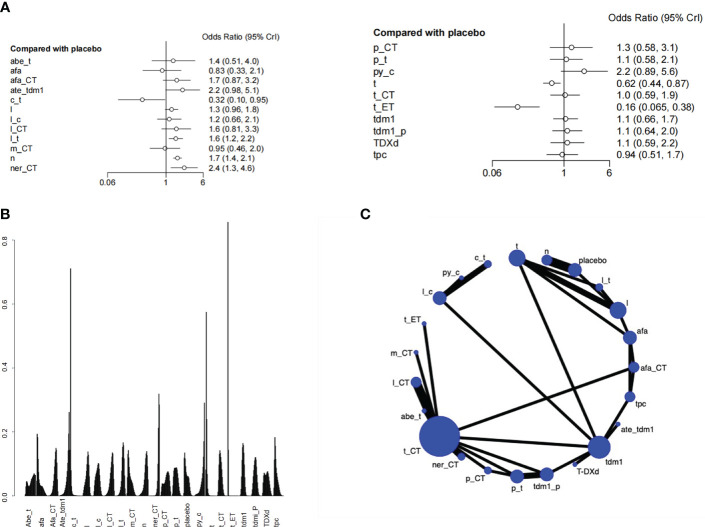
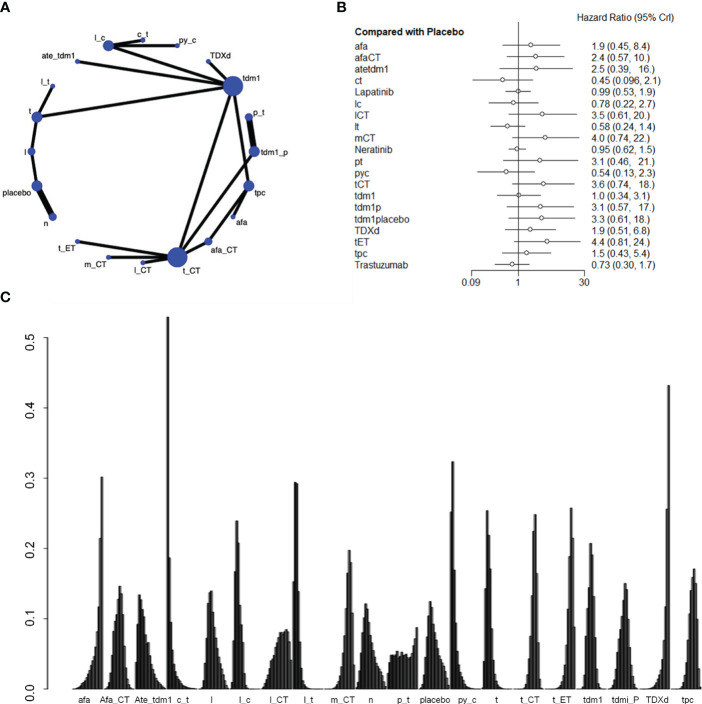
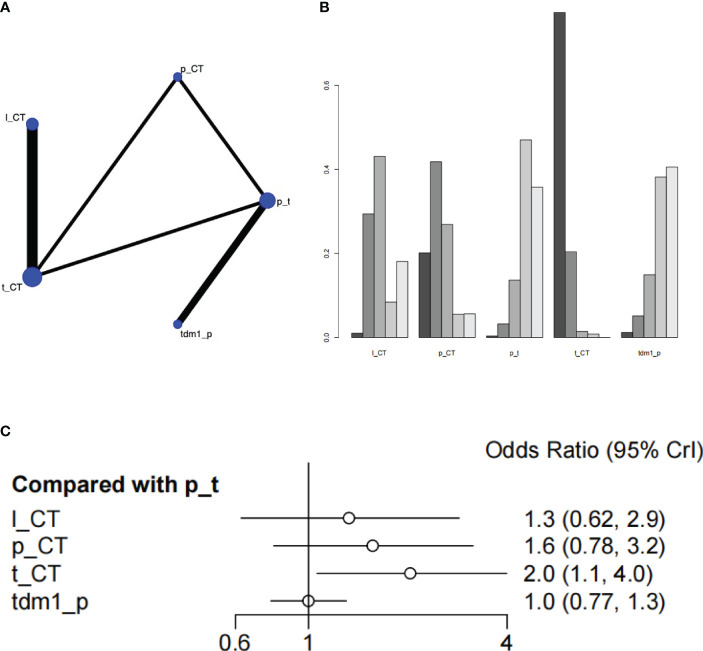
Our analysis identified a total of 28 RCTs suitable for inclusion in the NMA. Regarding the PFS, all these treatment regimens exhibited comparable effectiveness. In terms of OS, Capecitabine+Trastuzumab, Lapatinib+Trastuzumab and Pyrotinib+Capecitabine exhibited better effect compared to other treatments. Regarding pCR and AEs, all these treatment regimens exhibited comparable effectiveness, especially Lapatinib+Trastuzumab and Pyrotinib+Capecitabine.
Our study highlights the prominent role of targeted therapies and immunotherapies in treating HER2-positive breast cancer. The efficacy of trastuzumab-containing regimens was superior to other treatment options, while maintaining a comparable safety profile. Based on these findings, trastuzumab-containing regimens emerge as a preferable and recommended choice in clinical practice for managing HER2-positive breast cancer.
PROSPERO, identifier CRD42023414348.
近年来,针对特定分子途径的新型疗法和免疫疗法在治疗人表皮生长因子受体2(HER2)阳性乳腺癌方面显示出了有前景的结果。我们的工作旨在评估这些新兴治疗方案对该疾病的有效性和安全性。
我们系统检索了包括PubMed、Embase、Web of Science和Cochrane对照试验中心注册库在内的数据库,检索时间从各数据库建库至2023年8月,以识别相关的随机对照试验(RCT)。使用Cochrane偏倚风险工具第2版(RoB2)评估符合条件的RCT的质量。研究的结局包括无进展生存期(PFS)、总生存期(OS)、无病生存期(DFS)、病理完全缓解(pCR)和不良事件(AE)。结果以风险比(HR)及95%置信区间(CI)或风险比(RR)及95%CI表示。
我们的分析共确定了28项适合纳入网络荟萃分析的RCT。关于PFS,所有这些治疗方案均显示出相当的有效性。在OS方面,卡培他滨+曲妥珠单抗、拉帕替尼+曲妥珠单抗和吡咯替尼+卡培他滨与其他治疗相比显示出更好的效果。关于pCR和AE,所有这些治疗方案均显示出相当的有效性,尤其是拉帕替尼+曲妥珠单抗和吡咯替尼+卡培他滨。
我们的研究突出了靶向治疗和免疫治疗在治疗HER2阳性乳腺癌中的重要作用。含曲妥珠单抗方案的疗效优于其他治疗选择,同时保持了相当的安全性。基于这些发现,含曲妥珠单抗方案在临床实践中成为治疗HER2阳性乳腺癌的更优和推荐选择。
PROSPERO,标识符CRD42023414348。