Department of Thoracic Surgery and Oncology, the First Affiliated Hospital of Guangzhou Medical University, Guangzhou Institute of Respiratory Health, State Key Laboratory of Respiratory Disease, National Clinical Research Center for Respiratory Disease, Guangzhou, China.
Medical Department, Genecast Biotechnology Co., Ltd, Wuxi, China.
Signal Transduct Target Ther. 2024 Apr 19;9(1):93. doi: 10.1038/s41392-024-01799-z.
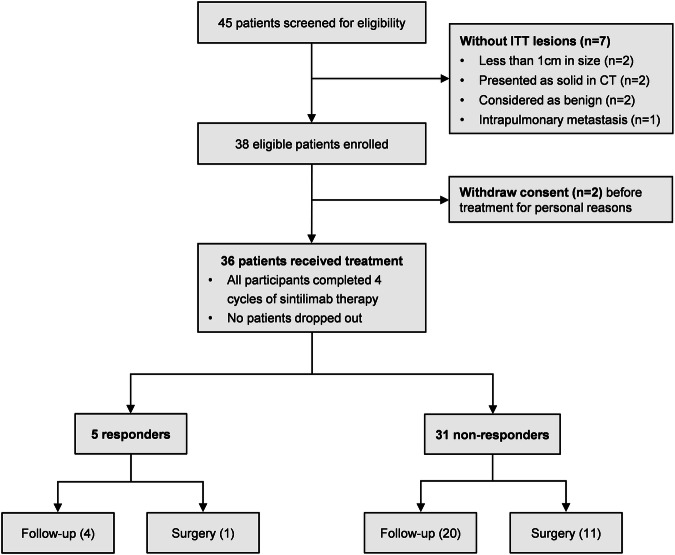
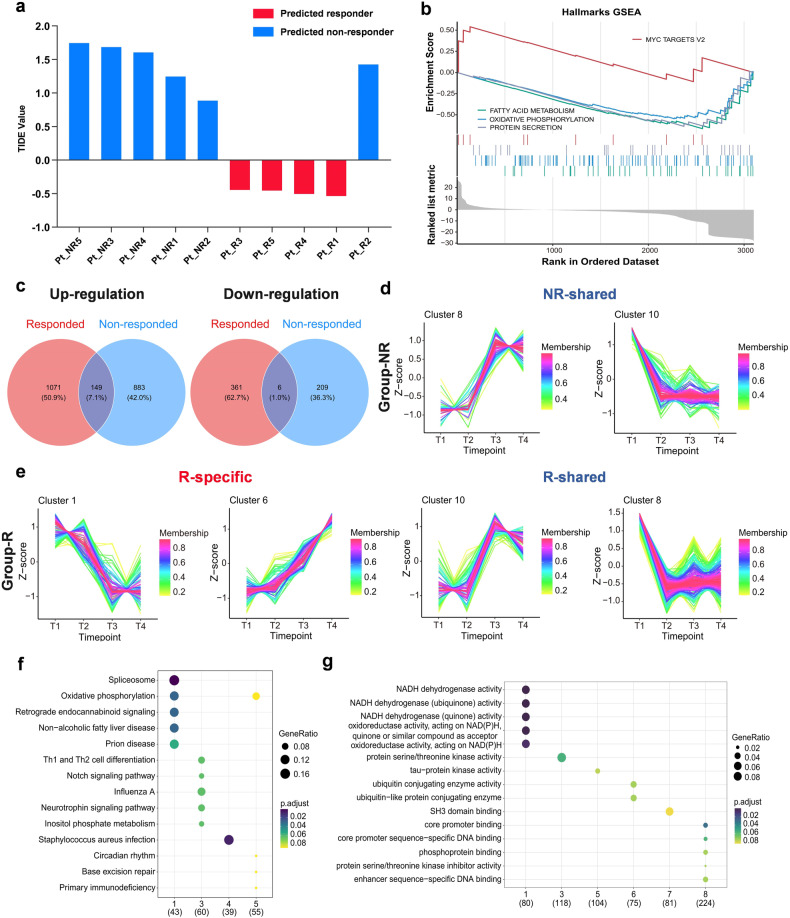
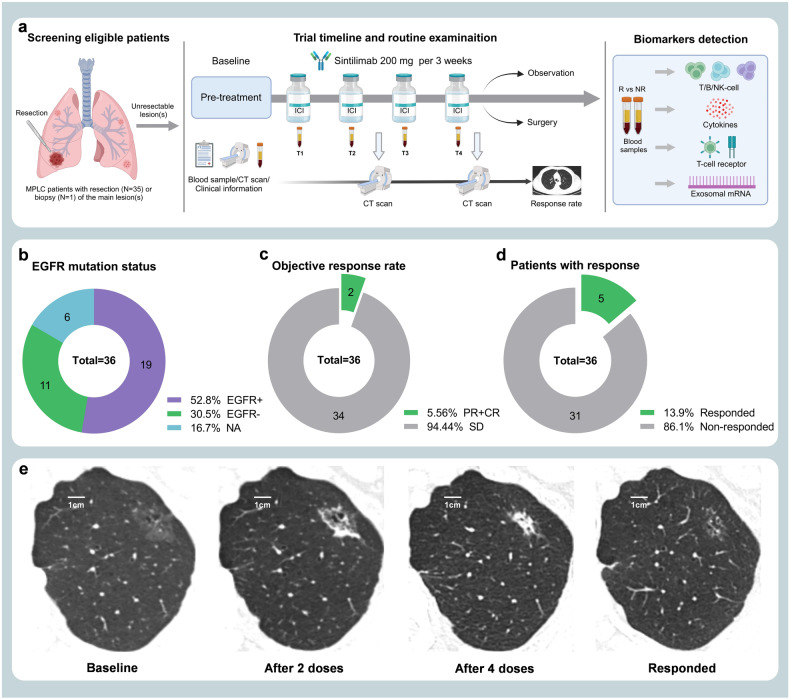
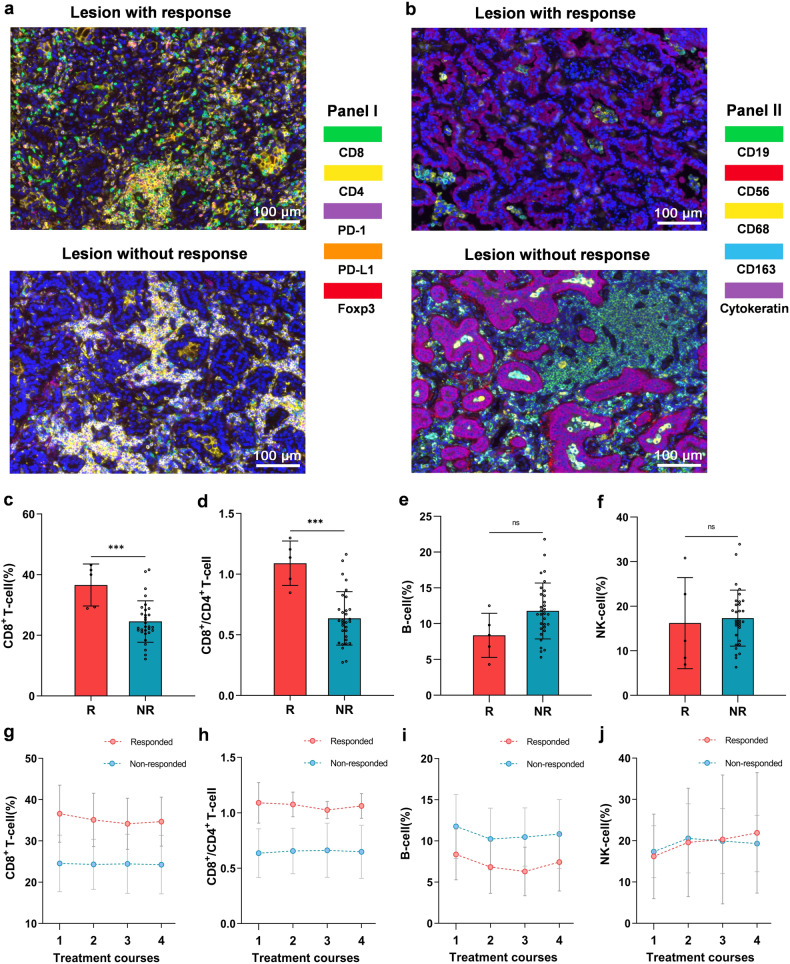
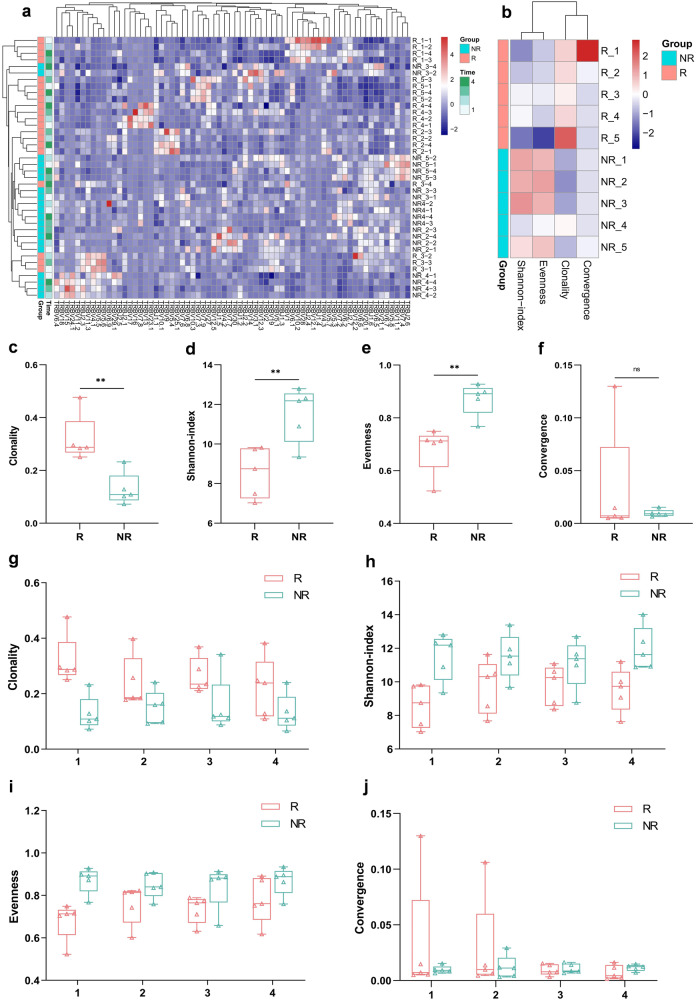
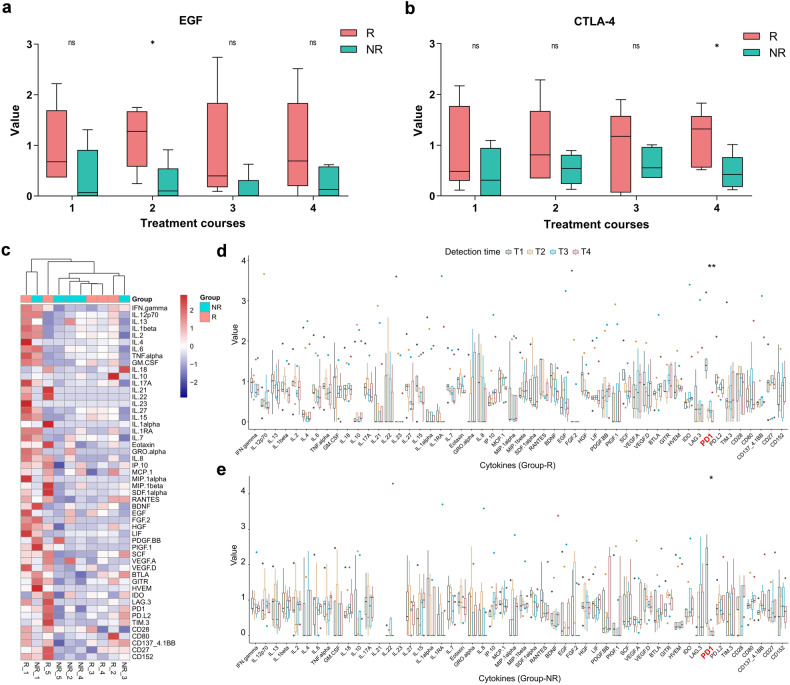
Immune checkpoint inhibitors targeting the programmed cell death-1 (PD-1) protein significantly improve survival in patients with advanced non-small-cell lung cancer (NSCLC), but its impact on early-stage ground-glass opacity (GGO) lesions remains unclear. This is a single-arm, phase II trial (NCT04026841) using Simon's optimal two-stage design, of which 4 doses of sintilimab (200 mg per 3 weeks) were administrated in 36 enrolled multiple primary lung cancer (MPLC) patients with persistent high-risk (Lung-RADS category 4 or had progressed within 6 months) GGOs. The primary endpoint was objective response rate (ORR). T/B/NK-cell subpopulations, TCR-seq, cytokines, exosomal RNA, and multiplexed immunohistochemistry (mIHC) were monitored and compared between responders and non-responders. Finally, two intent-to-treat (ITT) lesions (pure-GGO or GGO-predominant) showed responses (ORR: 5.6%, 2/36), and no patients had progressive disease (PD). No grade 3-5 TRAEs occurred. The total response rate considering two ITT lesions and three non-intent-to-treat (NITT) lesions (pure-solid or solid-predominant) was 13.9% (5/36). The proportion of CD8 T cells, the ratio of CD8/CD4, and the TCR clonality value were significantly higher in the peripheral blood of responders before treatment and decreased over time. Correspondingly, the mIHC analysis showed more CD8 T cells infiltrated in responders. Besides, responders' cytokine concentrations of EGF and CTLA-4 increased during treatment. The exosomal expression of fatty acid metabolism and oxidative phosphorylation gene signatures were down-regulated among responders. Collectively, PD-1 inhibitor showed certain activity on high-risk pulmonary GGO lesions without safety concerns. Such effects were associated with specific T-cell re-distribution, EGF/CTLA-4 cytokine compensation, and regulation of metabolism pathways.
免疫检查点抑制剂靶向程序性细胞死亡蛋白-1(PD-1)可显著改善晚期非小细胞肺癌(NSCLC)患者的生存,但其对早期磨玻璃密度(GGO)病变的影响尚不清楚。这是一项单臂、二期试验(NCT04026841),采用 Simon 最优两阶段设计,36 例多原发肺癌(MPLC)患者持续存在高危(Lung-RADS 分类 4 或 6 个月内进展)GGO 接受 4 个周期的信迪利单抗(每 3 周 200mg)治疗。主要终点是客观缓解率(ORR)。在应答者和无应答者之间监测和比较了 T/B/NK 细胞亚群、TCR-seq、细胞因子、外泌体 RNA 和多重免疫组化(mIHC)。最后,两名意向治疗(ITT)病变(纯 GGO 或 GGO 为主)有反应(ORR:5.6%,2/36),无进展性疾病(PD)患者。无 3-5 级 TRAEs 发生。考虑两个 ITT 病变和三个非意向治疗(NITT)病变(纯实性或实性为主),总反应率为 13.9%(5/36)。在治疗前和治疗过程中,应答者外周血中 CD8 T 细胞、CD8/CD4 比值和 TCR 克隆性值均显著升高,且随时间逐渐降低。相应地,mIHC 分析显示应答者中有更多 CD8 T 细胞浸润。此外,应答者的 EGF 和 CTLA-4 细胞因子浓度在治疗期间增加。应答者的外泌体表达脂肪酸代谢和氧化磷酸化基因特征下调。总的来说,PD-1 抑制剂对高危肺部 GGO 病变有一定的活性,且无安全性问题。这些作用与特定的 T 细胞再分布、EGF/CTLA-4 细胞因子补偿和代谢途径调节有关。