Department of Emergency, The Second Hospital of Hebei Medical University, Shijiazhuang, 050000, China.
Department of Emergency, The Third Hospital of Hebei Medical University, Shijiazhuang, 050000, China.
Sci Rep. 2024 Apr 18;14(1):8987. doi: 10.1038/s41598-024-59397-6.
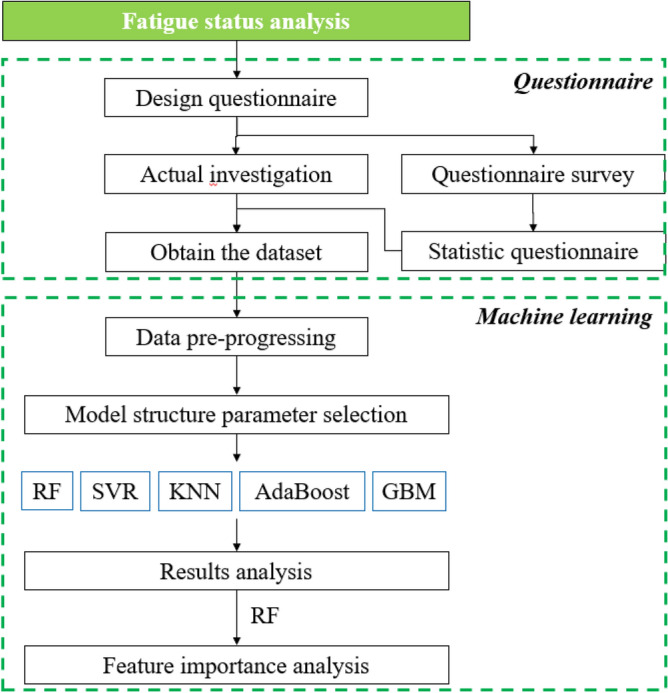
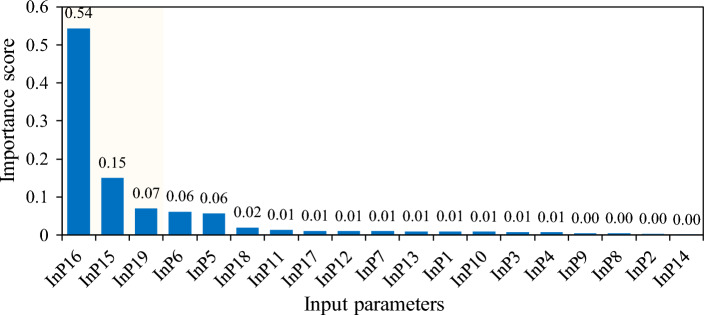
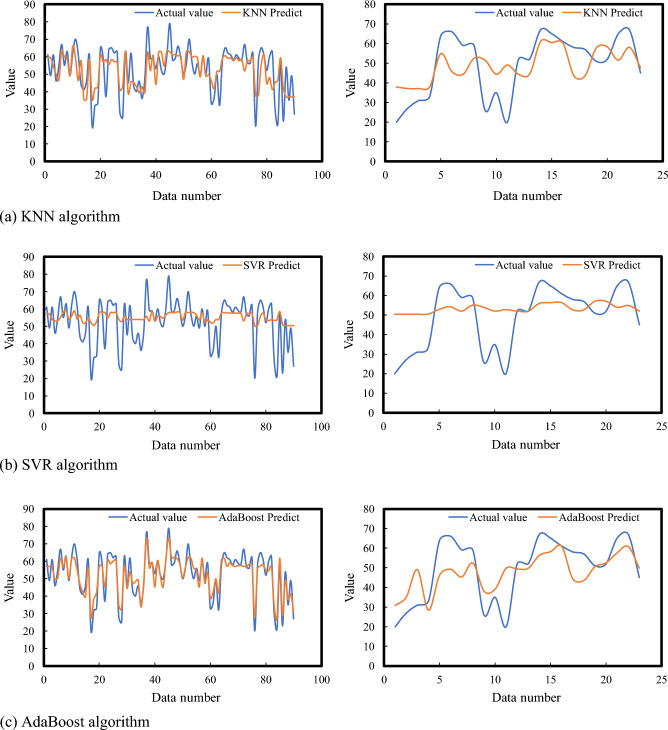
Using machine learning methods to analyze the fatigue status of medical security personnel and the factors influencing fatigue (such as BMI, gender, and wearing protective clothing working hours), with the goal of identifying the key factors contributing to fatigue. By validating the predicted outcomes, actionable and practical recommendations can be offered to enhance fatigue status, such as reducing wearing protective clothing working hours. A questionnaire was designed to assess the fatigue status of medical security personnel during the closed-loop period, aiming to capture information on fatigue experienced during work and disease recovery. The collected data was then preprocessed and used to determine the structural parameters for each machine learning algorithm. To evaluate the prediction performance of different models, the mean relative error (MRE) and goodness of fit (R) between the true and predicted values were calculated. Furthermore, the importance rankings of various parameters in relation to fatigue status were determined using the RF feature importance analysis method. The fatigue status of medical security personnel during the closed-loop period was analyzed using multiple machine learning methods. The prediction performance of these methods was ranked from highest to lowest as follows: Gradient Boosting Regression (GBM) > Random Forest (RF) > Adaptive Boosting (AdaBoost) > K-Nearest Neighbors (KNN) > Support Vector Regression (SVR). Among these algorithms, four out of the five achieved good prediction results, with the GBM method performing the best. The five most critical parameters influencing fatigue status were identified as working hours in protective clothing, a customized symptom and disease score (CSDS), physical exercise, body mass index (BMI), and age, all of which had importance scores exceeding 0.06. Notably, working hours in protective clothing obtained the highest importance score of 0.54, making it the most critical factor impacting fatigue status. Fatigue is a prevalent and pressing issue among medical security personnel operating in closed-loop environments. In our investigation, we observed that the GBM method exhibited superior predictive performance in determining the fatigue status of medical security personnel during the closed-loop period, surpassing other machine learning techniques. Notably, our analysis identified several critical factors influencing the fatigue status of medical security personnel, including the duration of working hours in protective clothing, CSDS, and engagement in physical exercise. These findings shed light on the multifaceted nature of fatigue among healthcare workers and emphasize the importance of considering various contributing factors. To effectively alleviate fatigue, prudent management of working hours for security personnel, along with minimizing the duration of wearing protective clothing, proves to be promising strategies. Furthermore, promoting regular physical exercise among medical security personnel can significantly impact fatigue reduction. Additionally, the exploration of medication interventions and the adoption of innovative protective clothing options present potential avenues for mitigating fatigue. The insights derived from this study offer valuable guidance to management personnel involved in organizing large-scale events, enabling them to make informed decisions and implement targeted interventions to address fatigue among medical security personnel. In our upcoming research, we will further expand the fatigue dataset while considering higher precisionprediction algorithms, such as XGBoost model, ensemble model, etc., and explore their potential contributions to our research.
利用机器学习方法分析医疗保障人员的疲劳状态和影响疲劳的因素(如 BMI、性别和穿防护服工作时间),以确定导致疲劳的关键因素。通过验证预测结果,可以提供切实可行的建议,以改善疲劳状态,例如减少穿防护服的工作时间。设计了一份问卷,以评估闭环期间医疗保障人员的疲劳状态,旨在收集工作期间和疾病恢复期间的疲劳信息。然后对收集到的数据进行预处理,并用于确定每个机器学习算法的结构参数。为了评估不同模型的预测性能,计算了真实值与预测值之间的平均相对误差(MRE)和拟合优度(R)。此外,使用随机森林特征重要性分析方法确定了与疲劳状态相关的各种参数的重要性排名。使用多种机器学习方法分析了闭环期间医疗保障人员的疲劳状态。这些方法的预测性能排名从高到低依次为:梯度提升回归(GBM)>随机森林(RF)>自适应提升(AdaBoost)>K 近邻(KNN)>支持向量回归(SVR)。在这些算法中,有五个达到了良好的预测结果,其中 GBM 方法表现最好。确定了五个影响疲劳状态的最关键参数,分别为防护服工作时间、定制症状和疾病评分(CSDS)、体育锻炼、体重指数(BMI)和年龄,所有参数的重要性得分均超过 0.06。值得注意的是,防护服工作时间的重要性得分最高,为 0.54,是影响疲劳状态的最关键因素。疲劳是闭环环境中医疗保障人员普遍存在且紧迫的问题。在我们的调查中,我们观察到 GBM 方法在确定闭环期间医疗保障人员的疲劳状态方面表现出优越的预测性能,优于其他机器学习技术。值得注意的是,我们的分析确定了影响医疗保障人员疲劳状态的几个关键因素,包括防护服工作时间、CSDS 和体育锻炼。这些发现揭示了医疗保健工作者疲劳的多面性,并强调了考虑各种相关因素的重要性。为了有效缓解疲劳,对安保人员的工作时间进行谨慎管理,尽量减少穿防护服的工作时间,是很有前景的策略。此外,促进医疗保障人员定期进行体育锻炼,也可以显著减轻疲劳。此外,探索药物干预措施和采用创新的防护服选择,也为减轻疲劳提供了潜在途径。本研究的结果为组织大型活动的管理人员提供了有价值的指导,使他们能够做出明智的决策,并实施有针对性的干预措施,以解决医疗保障人员的疲劳问题。在我们即将开展的研究中,我们将进一步扩展疲劳数据集,并考虑更高精度的预测算法,如 XGBoost 模型、集成模型等,并探索它们在我们研究中的潜在贡献。