Li Yun-Da, Liu Yu-Chi, Jiang Yu-Xuan, Namisy Ahmed, Chung Wen-Hsin, Sun Ying-Hsuan, Chen Shu-Yun
Department of Agronomy, National Chung-Hsing University, Taichung, Taiwan.
Department of Plant Pathology, National Chung-Hsing University, Taichung, Taiwan.
BMC Plant Biol. 2024 Apr 22;24(1):307. doi: 10.1186/s12870-024-05022-7.
Luffa (Luffa spp.) is an economically important crop of the Cucurbitaceae family, commonly known as sponge gourd or vegetable gourd. It is an annual cross-pollinated crop primarily found in the subtropical and tropical regions of Asia, Australia, Africa, and the Americas. Luffa serves not only as a vegetable but also exhibits medicinal properties, including anti-inflammatory, antidiabetic, and anticancer effects. Moreover, the fiber derived from luffa finds extensive applications in various fields such as biotechnology and construction. However, luffa Fusarium wilt poses a severe threat to its production, and existing control methods have proven ineffective in terms of cost-effectiveness and environmental considerations. Therefore, there is an urgent need to develop luffa varieties resistant to Fusarium wilt. Single-plant GWAS (sp-GWAS) has been demonstrated as a promising tool for the rapid and efficient identification of quantitative trait loci (QTLs) associated with target traits, as well as closely linked molecular markers.
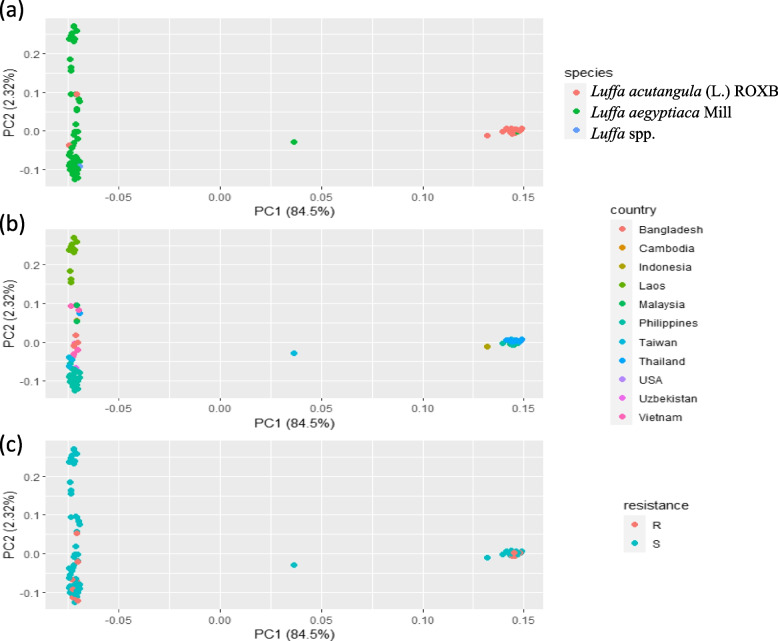
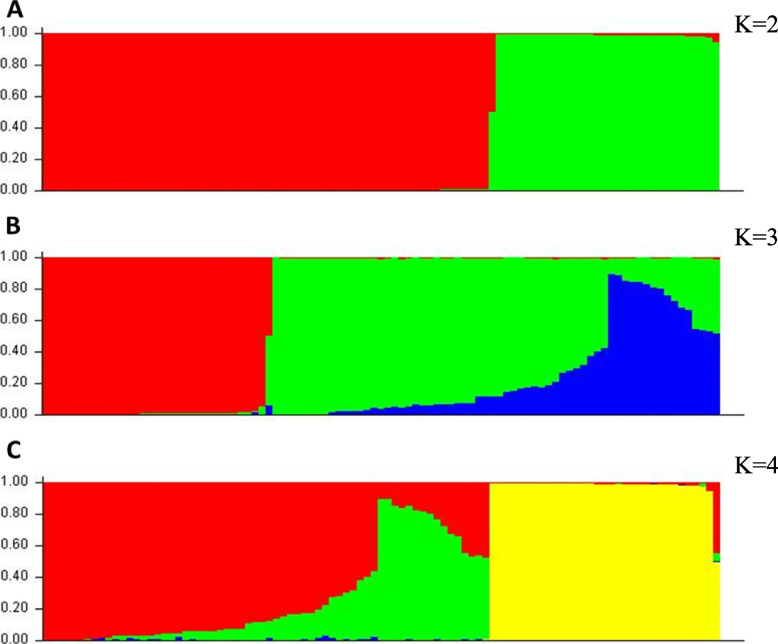
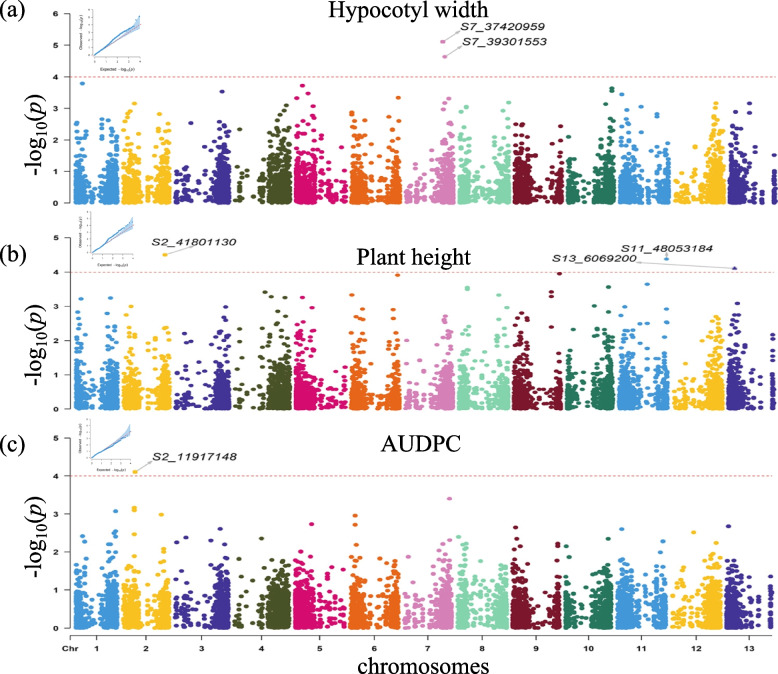
In this study, a collection of 97 individuals from 73 luffa accessions including two major luffa species underwent single-plant GWAS to investigate luffa Fusarium wilt resistance. Utilizing the double digest restriction site associated DNA (ddRAD) method, a total of 8,919 high-quality single nucleotide polymorphisms (SNPs) were identified. The analysis revealed the potential for Fusarium wilt resistance in accessions from both luffa species. There are 6 QTLs identified from 3 traits, including the area under the disease progress curve (AUDPC), a putative disease-resistant QTL, was identified on the second chromosome of luffa. Within the region of linkage disequilibrium, a candidate gene homologous to LOC111009722, which encodes peroxidase 40 and is associated with disease resistance in Cucumis melo, was identified. Furthermore, to validate the applicability of the marker associated with resistance from sp-GWAS, an additional set of 21 individual luffa plants were tested, exhibiting 93.75% accuracy in detecting susceptible of luffa species L. aegyptiaca Mill.
In summary, these findings give a hint of genome position that may contribute to luffa wild resistance to Fusarium and can be utilized in the future luffa wilt resistant breeding programs aimed at developing wilt-resistant varieties by using the susceptible-linked SNP marker.
丝瓜(丝瓜属)是葫芦科一种具有重要经济价值的作物,通常被称为丝瓜或菜瓜。它是一种一年生异花授粉作物,主要分布在亚洲、澳大利亚、非洲和美洲的亚热带和热带地区。丝瓜不仅是一种蔬菜,还具有药用特性,包括抗炎、抗糖尿病和抗癌作用。此外,丝瓜纤维在生物技术和建筑等各个领域都有广泛应用。然而,丝瓜枯萎病对其生产构成严重威胁,现有防治方法在成本效益和环境方面已被证明效果不佳。因此,迫切需要培育抗枯萎病的丝瓜品种。单株全基因组关联研究(sp-GWAS)已被证明是一种有前途的工具,可用于快速有效地鉴定与目标性状相关的数量性状位点(QTL)以及紧密连锁的分子标记。
在本研究中,对包括两个主要丝瓜品种在内的73份丝瓜种质资源的97个个体进行了单株全基因组关联研究,以调查丝瓜对枯萎病的抗性。利用双酶切限制性位点相关DNA(ddRAD)方法,共鉴定出8919个高质量单核苷酸多态性(SNP)。分析揭示了两个丝瓜品种的种质资源都具有抗枯萎病的潜力。从3个性状中鉴定出6个QTL,其中包括在丝瓜第二条染色体上鉴定出的一个假定的抗病QTL——病情进展曲线下面积(AUDPC)。在连锁不平衡区域内,鉴定出一个与LOC111009722同源的候选基因,该基因编码过氧化物酶40,与甜瓜的抗病性有关。此外,为了验证sp-GWAS抗性相关标记的适用性,对另外一组21株丝瓜植株进行了测试,在检测埃及丝瓜品种的易感性方面准确率达到93.75%。
总之,这些发现揭示了可能有助于丝瓜对枯萎病野生抗性的基因组位置,可用于未来旨在通过使用易感性连锁SNP标记培育抗病品种的丝瓜枯萎病抗性育种计划。