School of Psychology, Shaanxi Normal University, Xi'an, China.
Department of Management, Marketing, and Information Systems, Hong Kong Baptist University, Hong Kong, China.
Hum Brain Mapp. 2024 Apr 15;45(6):e26651. doi: 10.1002/hbm.26651.
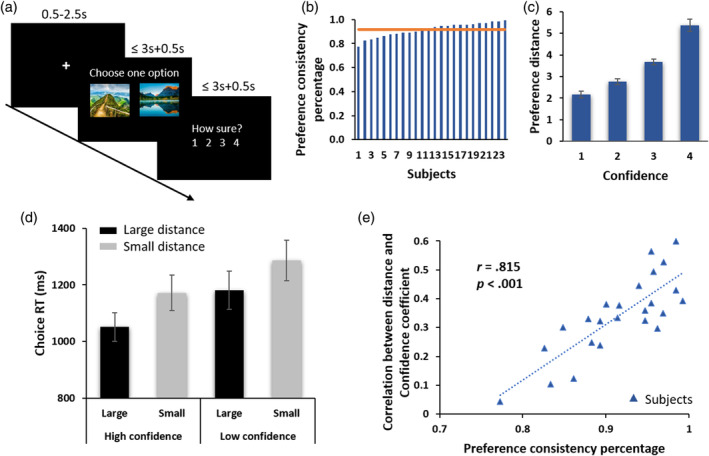
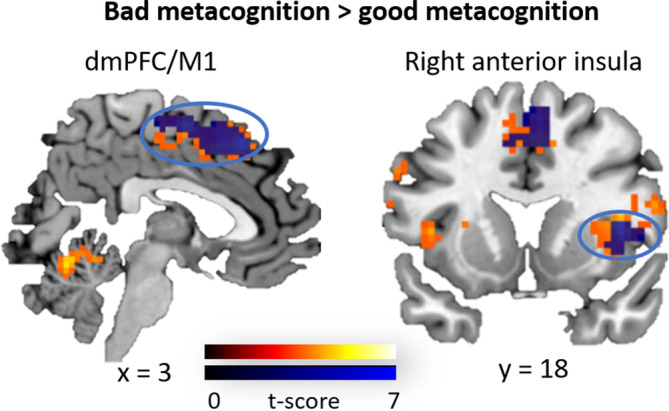
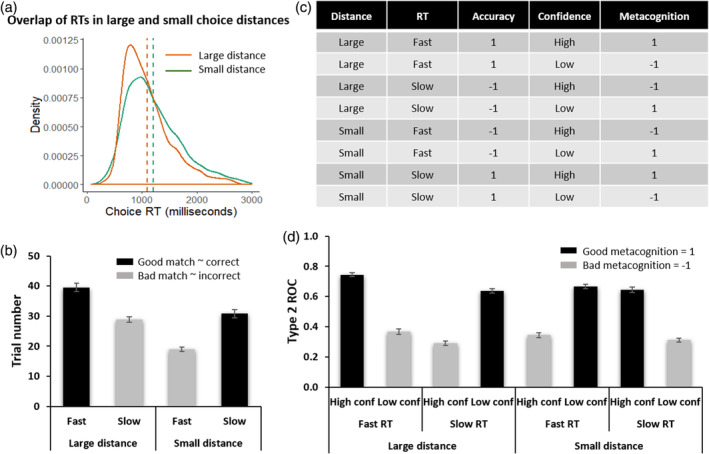
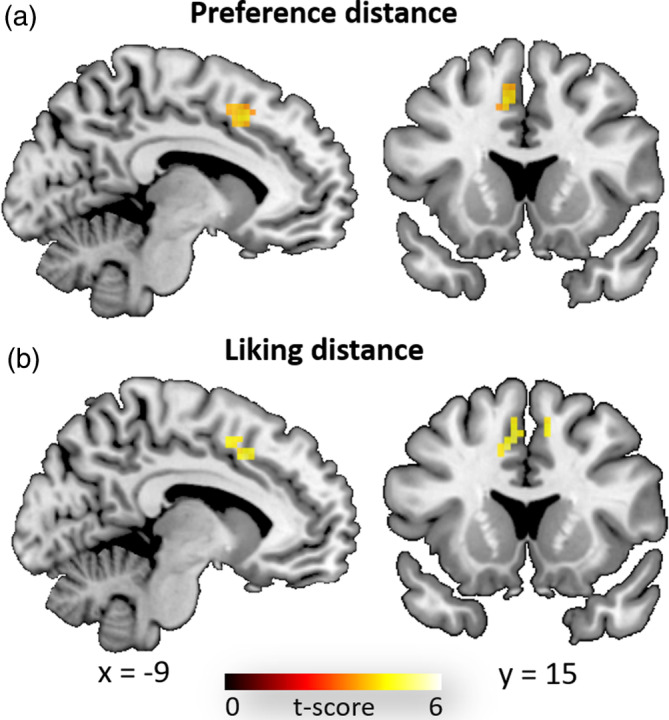
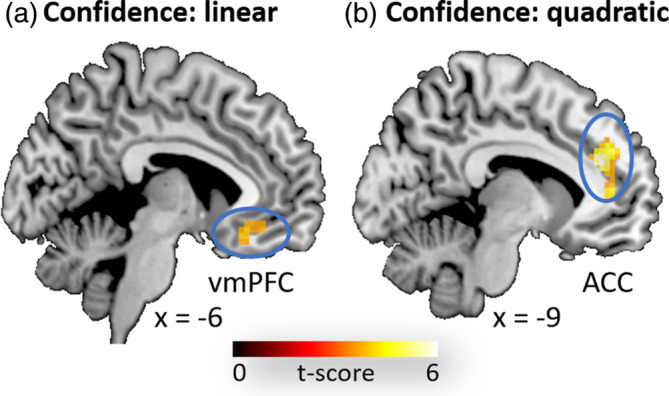
Humans regularly assess the quality of their judgements, which helps them adjust their behaviours. Metacognition is the ability to accurately evaluate one's own judgements, and it is assessed by comparing objective task performance with subjective confidence report in perceptual decisions. However, for preferential decisions, assessing metacognition in preference-based decisions is difficult because it depends on subjective goals rather than the objective criterion. Here, we develop a new index that integrates choice, reaction time, and confidence report to quantify trial-by-trial metacognitive sensitivity in preference judgements. We found that the dorsomedial prefrontal cortex (dmPFC) and the right anterior insular were more activated when participants made bad metacognitive evaluations. Our study suggests a crucial role of the dmPFC-insula network in representing online metacognitive sensitivity in preferential decisions.
人类经常评估自己判断的质量,这有助于他们调整自己的行为。元认知是准确评估自己判断的能力,它通过将客观任务表现与感知决策中的主观信心报告进行比较来评估。然而,对于偏好决策,评估基于偏好的决策中的元认知是困难的,因为它取决于主观目标,而不是客观标准。在这里,我们开发了一种新的指标,该指标将选择、反应时间和信心报告整合在一起,以量化偏好判断中的逐次元认知敏感性。我们发现,当参与者做出错误的元认知评估时,背内侧前额叶皮层(dmPFC)和右侧前岛叶的活跃度更高。我们的研究表明,dmPFC-岛叶网络在表示偏好决策中的在线元认知敏感性方面起着关键作用。