Department of Cellular Logistics, Max Planck Institute for Multidisciplinary Sciences, Göttingen, Germany.
AI Proteins, 20 Overland St., Boston, MA, USA.
EMBO J. 2024 Jun;43(11):2198-2232. doi: 10.1038/s44318-024-00081-w. Epub 2024 Apr 22.
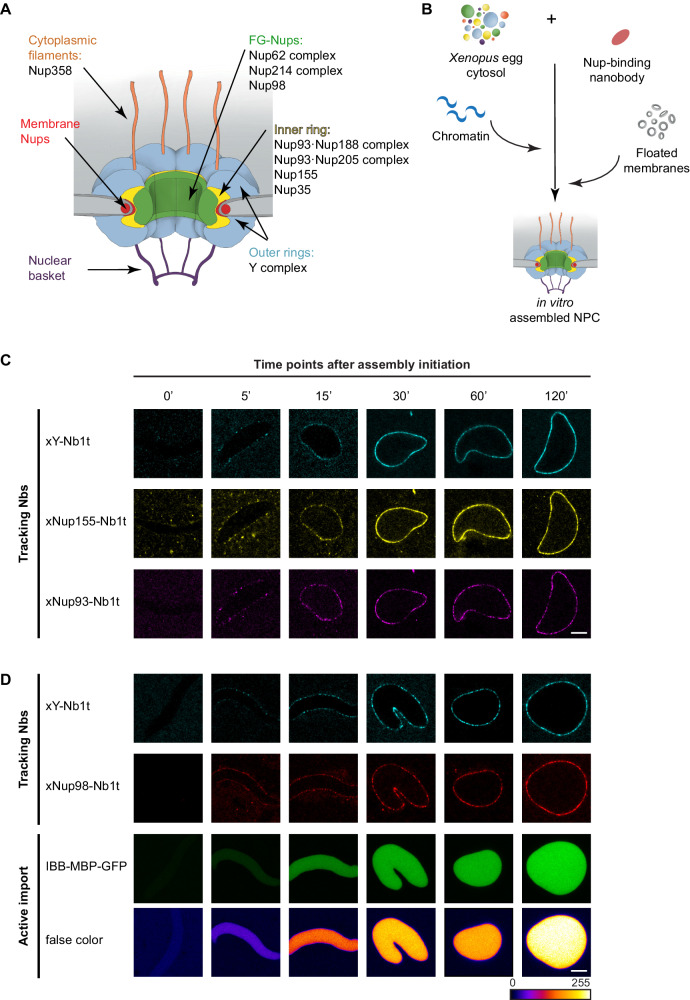
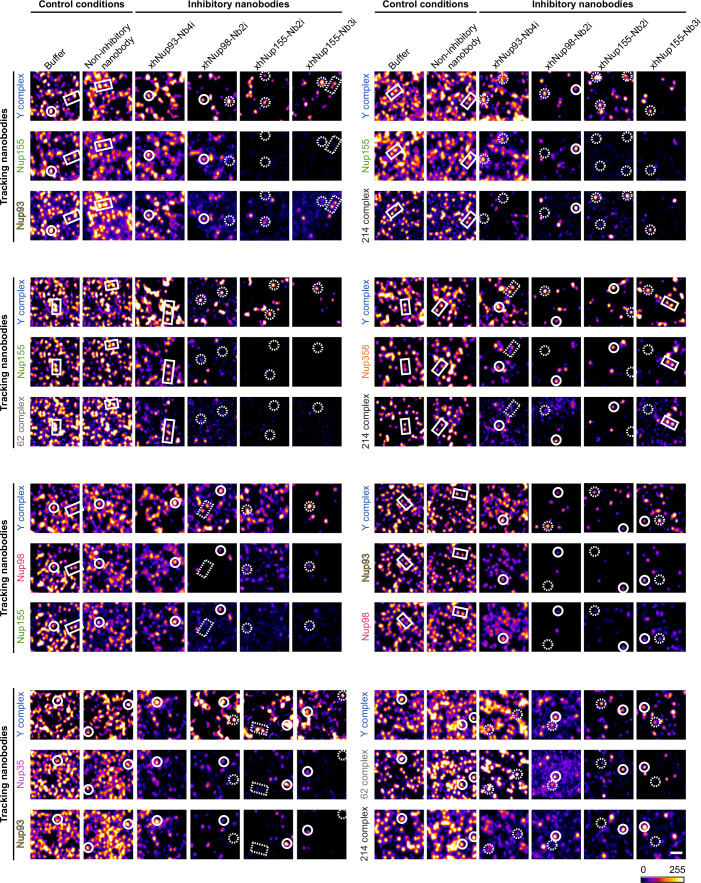
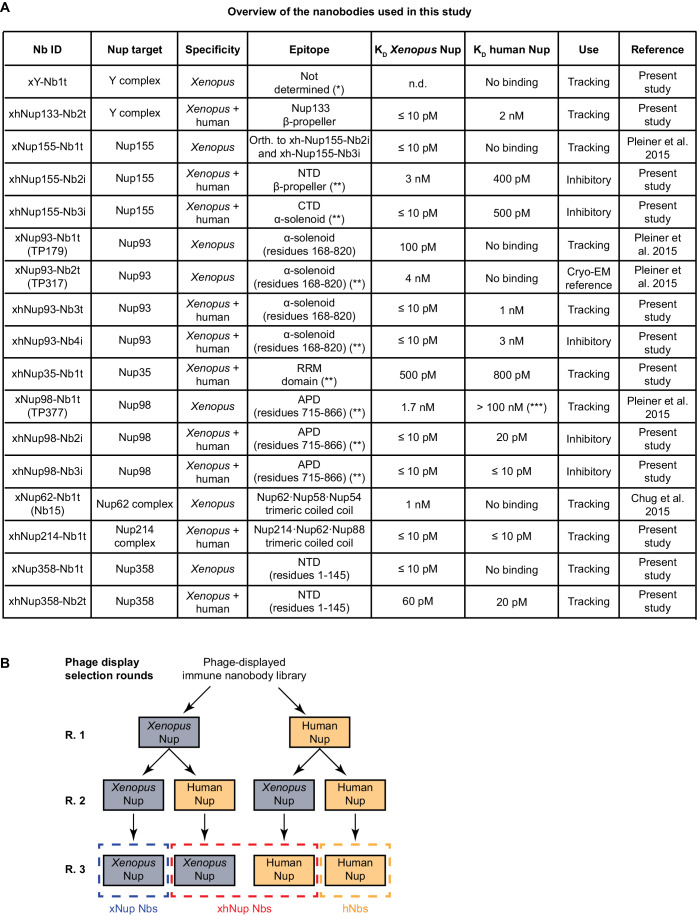
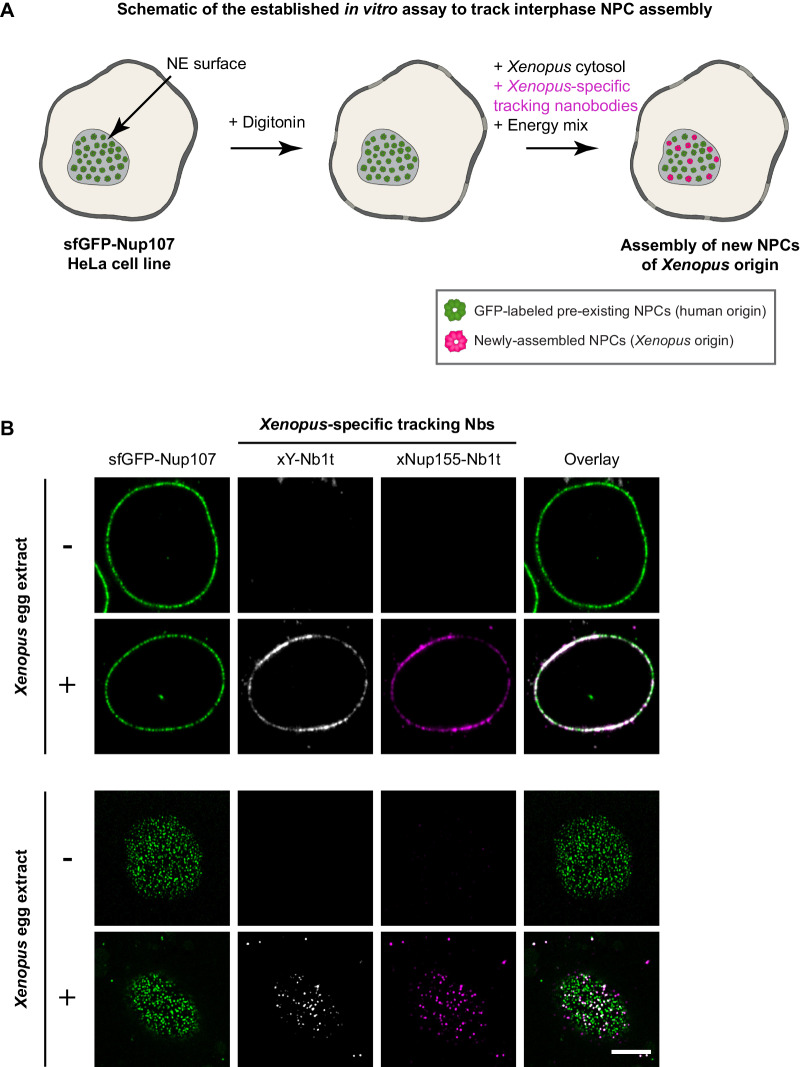
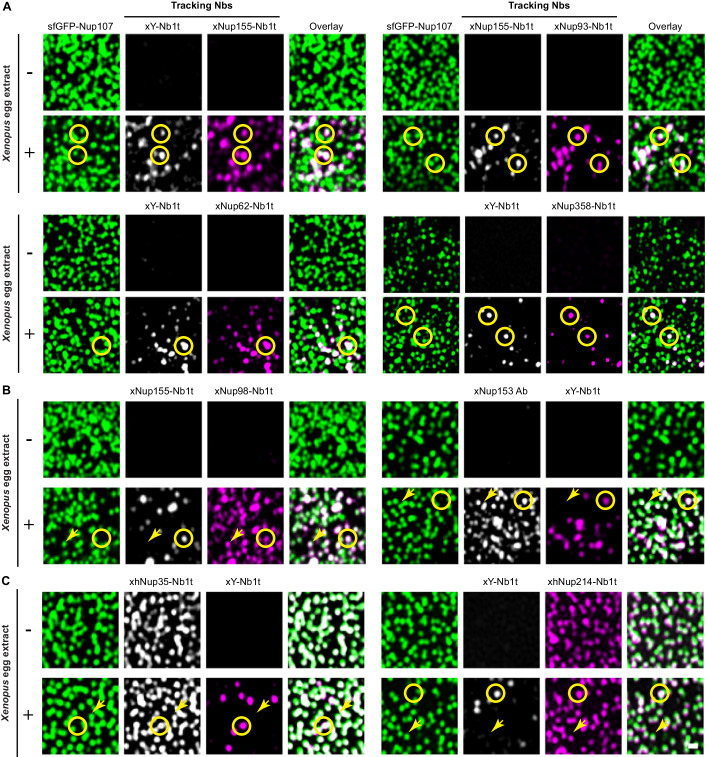
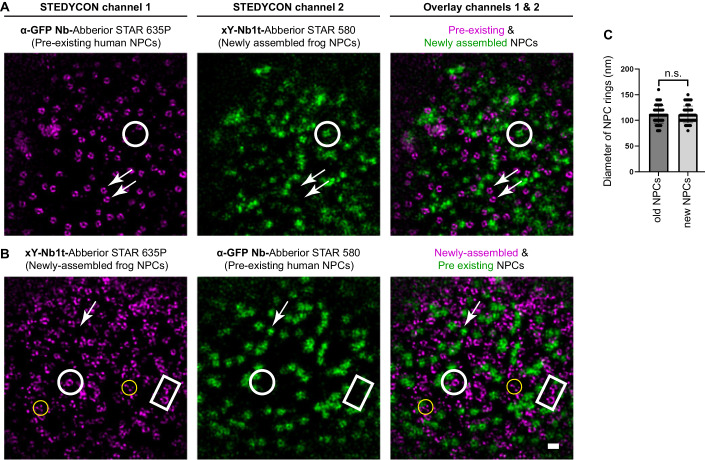
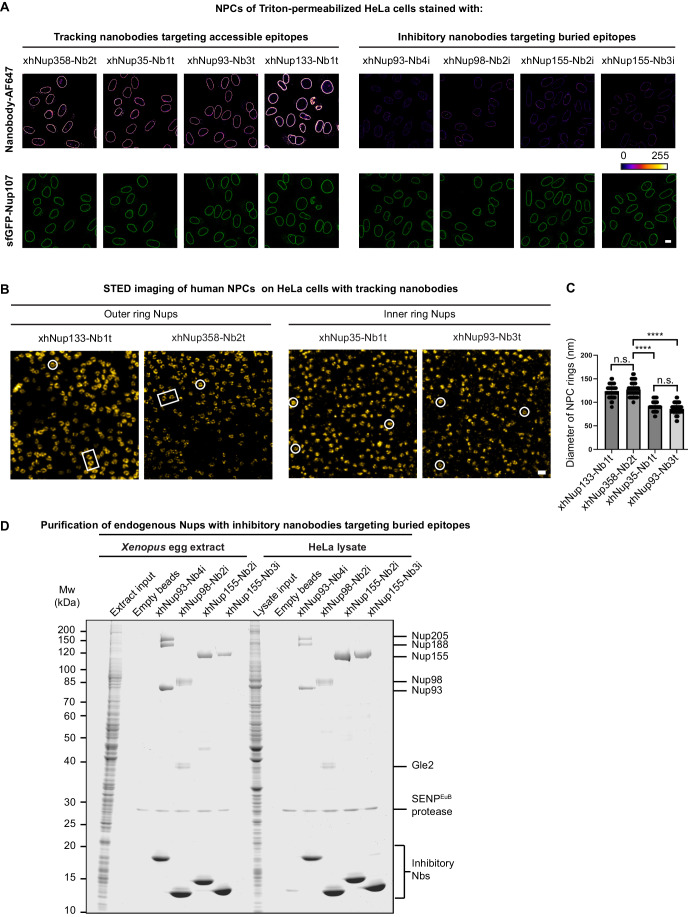
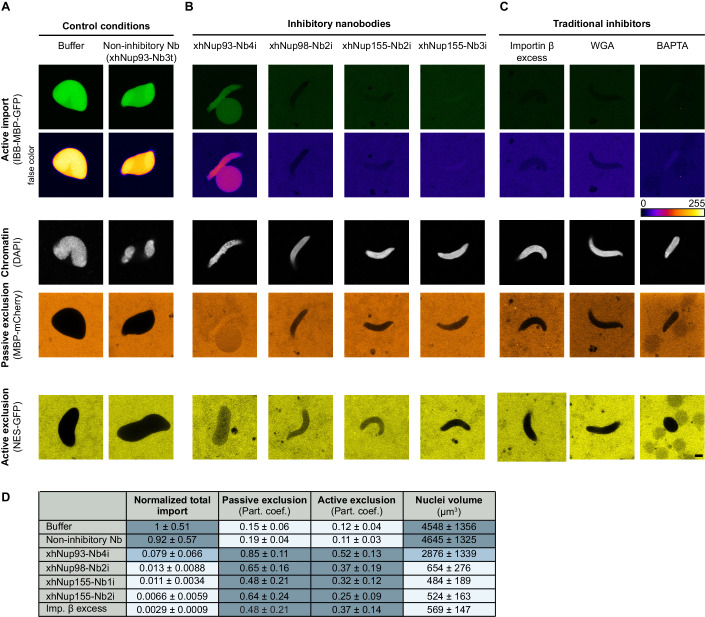
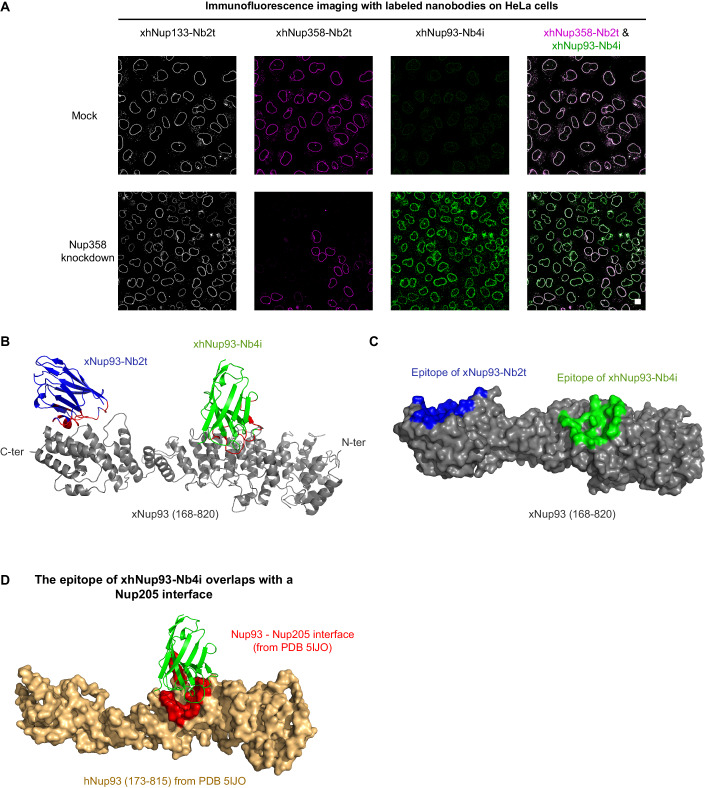
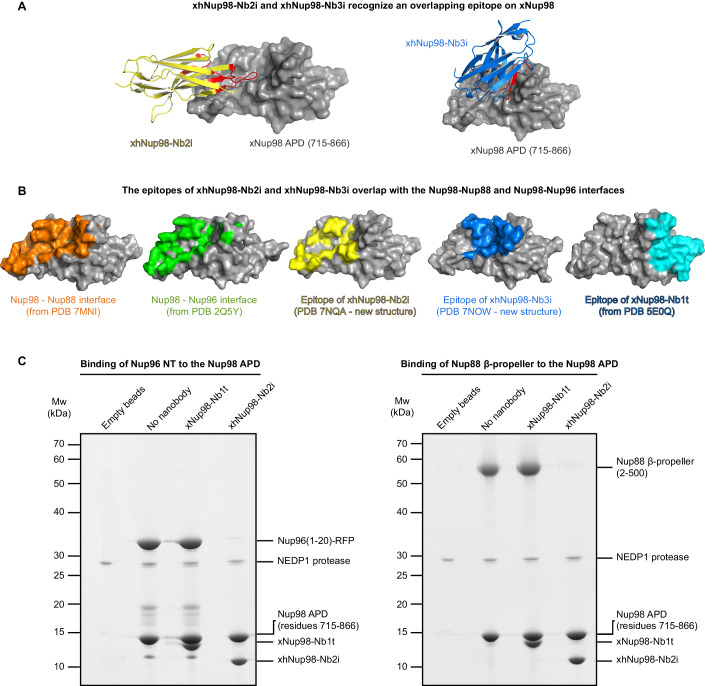
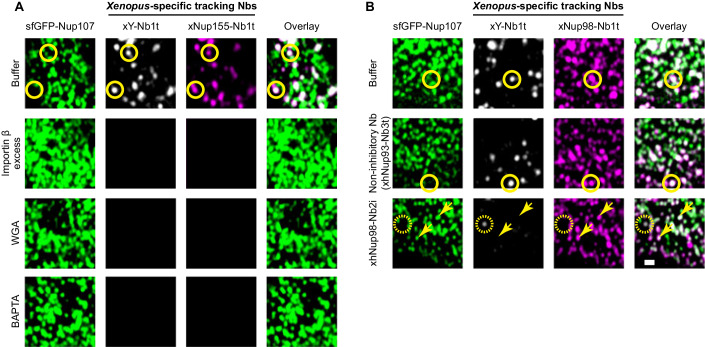
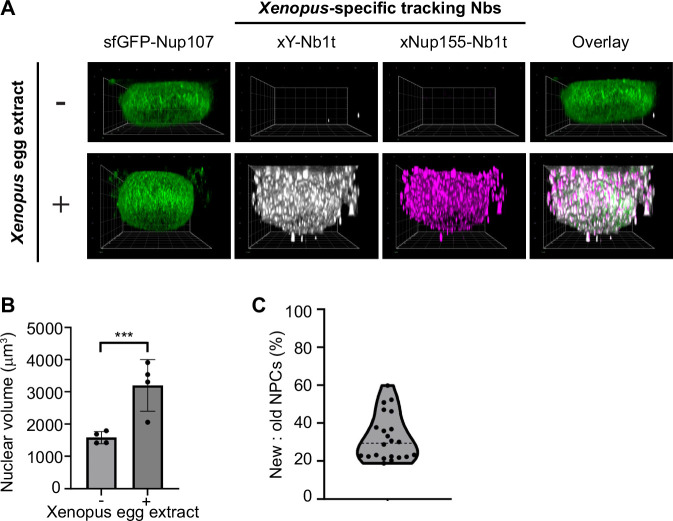
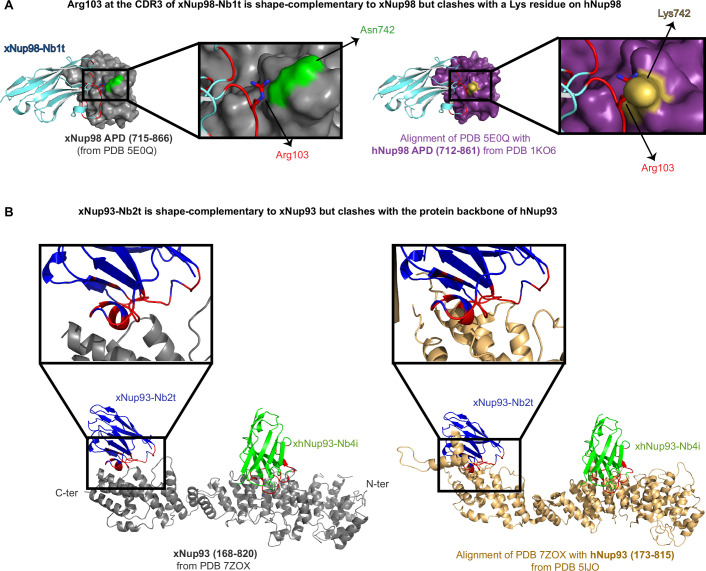
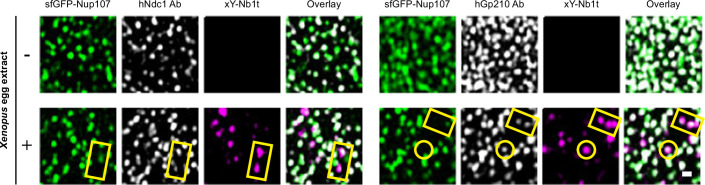
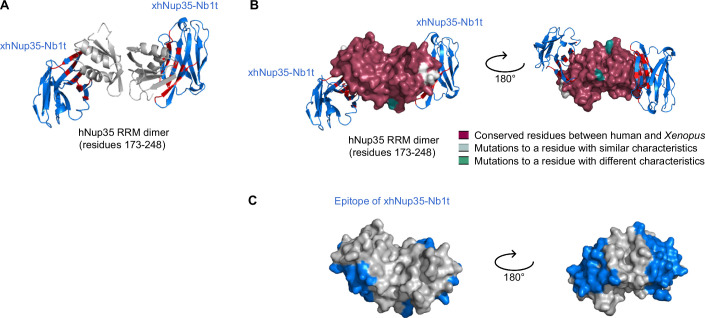
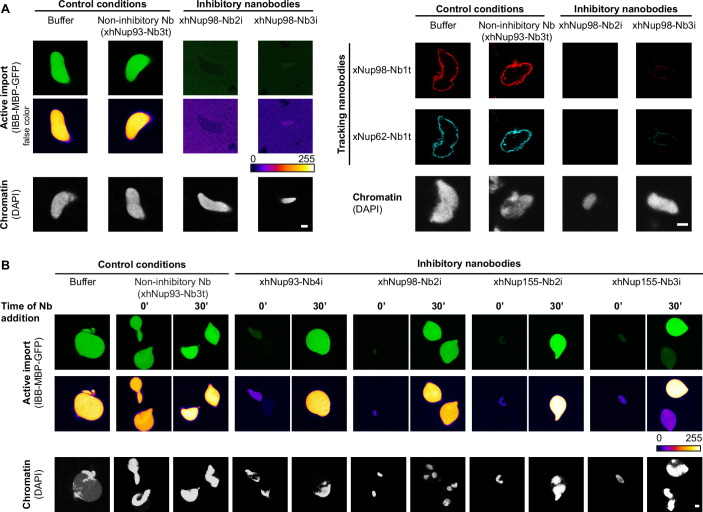
Nuclear pore complex (NPC) biogenesis is a still enigmatic example of protein self-assembly. We now introduce several cross-reacting anti-Nup nanobodies for imaging intact nuclear pore complexes from frog to human. We also report a simplified assay that directly tracks postmitotic NPC assembly with added fluorophore-labeled anti-Nup nanobodies. During interphase, NPCs are inserted into a pre-existing nuclear envelope. Monitoring this process is challenging because newly assembled NPCs are indistinguishable from pre-existing ones. We overcame this problem by inserting Xenopus-derived NPCs into human nuclear envelopes and using frog-specific anti-Nup nanobodies for detection. We further asked whether anti-Nup nanobodies could serve as NPC assembly inhibitors. Using a selection strategy against conserved epitopes, we obtained anti-Nup93, Nup98, and Nup155 nanobodies that block Nup-Nup interfaces and arrest NPC assembly. We solved structures of nanobody-target complexes and identified roles for the Nup93 α-solenoid domain in recruiting Nup358 and the Nup214·88·62 complex, as well as for Nup155 and the Nup98 autoproteolytic domain in NPC scaffold assembly. The latter suggests a checkpoint linking pore formation to the assembly of the Nup98-dominated permeability barrier.
核孔复合体(NPC)的生物发生是蛋白质自我组装的一个仍然神秘的例子。我们现在介绍了几种交叉反应的抗核孔蛋白纳米体,可用于从青蛙到人类的完整核孔复合体成像。我们还报告了一种简化的测定法,该测定法可直接追踪带有荧光标记的抗核孔蛋白纳米体的后期 NPC 组装。在有丝分裂期,NPC 插入到预先存在的核膜中。由于新组装的 NPC 与预先存在的 NPC 无法区分,因此监测此过程具有挑战性。我们通过将源自非洲爪蟾的 NPC 插入到人类核膜中,并使用蛙特异性抗核孔蛋白纳米体进行检测来克服此问题。我们进一步询问抗核孔蛋白纳米体是否可以作为 NPC 组装抑制剂。我们使用针对保守表位的选择策略获得了抗核孔蛋白纳米体,该纳米体可阻断核孔蛋白-Nup 接口并阻止 NPC 组装。我们解决了纳米体-靶复合物的结构,并确定了 Nup93 α-螺线管结构域在募集 Nup358 和 Nup214·88·62 复合物中的作用,以及 Nup155 和 Nup98 自身蛋白酶结构域在 NPC 支架组装中的作用。后者表明一个检查点将孔形成与 Nup98 主导的通透性屏障的组装联系起来。