Peters Colin H, Singh Rohit K, Langley Avery A, Nichols William G, Ferris Hannah R, Jeffrey Danielle A, Proenza Catherine, Bankston John R
Department of Physiology and Biophysics, University of Colorado Anschutz Medical Campus, Aurora, United States.
Skaggs School of Pharmacy, Department of Pharmaceutical Sciences, University of Colorado Anschutz Medical Campus, Aurora, United States.
Elife. 2024 Apr 23;12:RP92411. doi: 10.7554/eLife.92411.
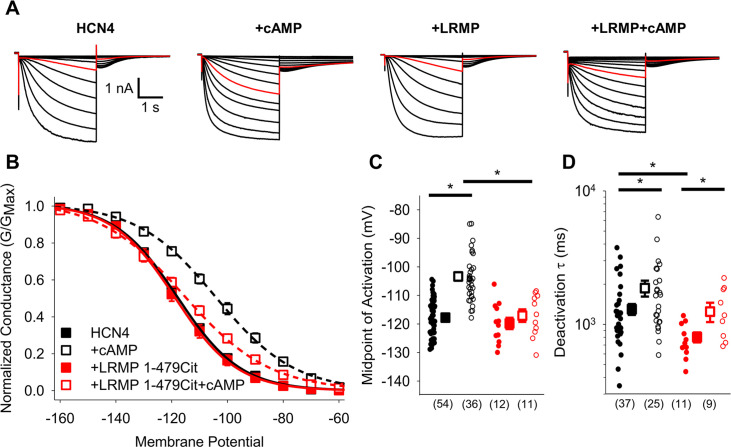
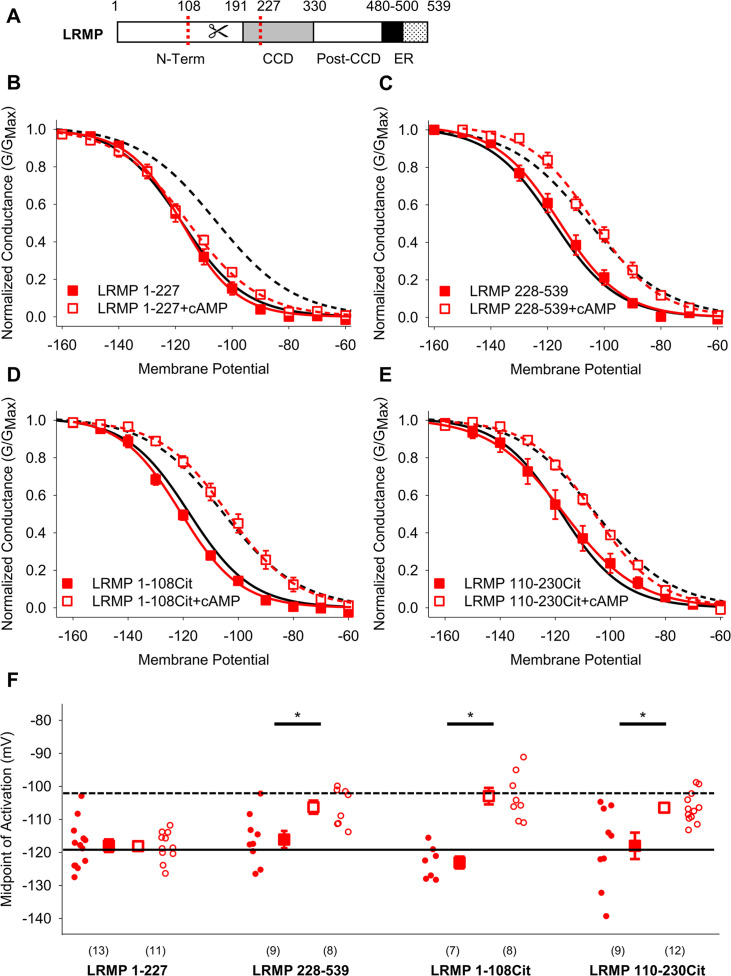
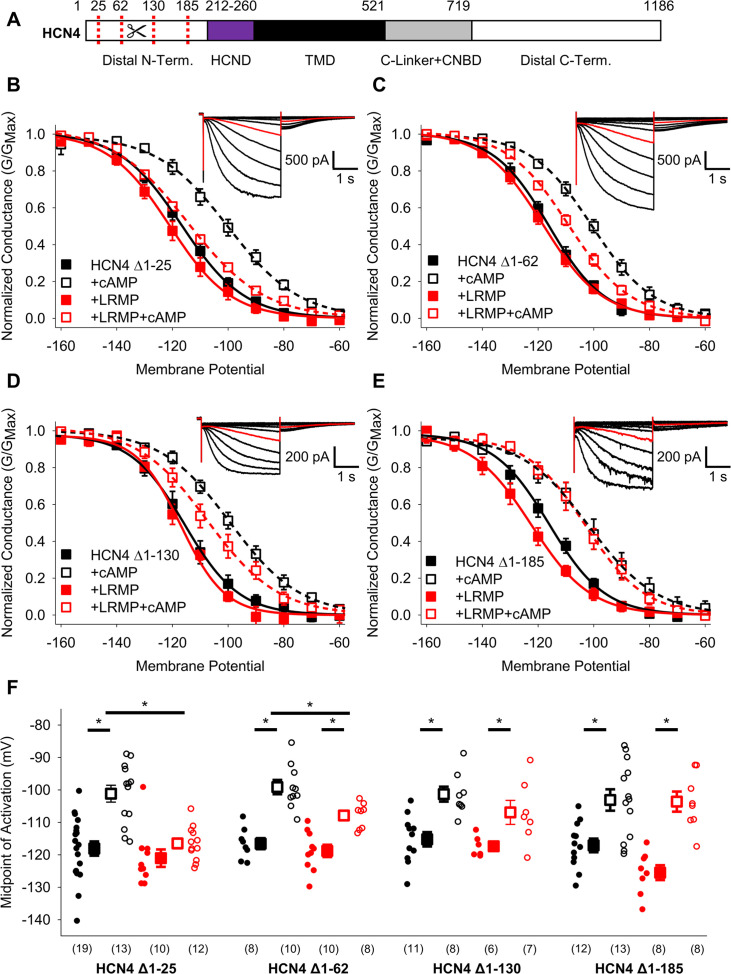
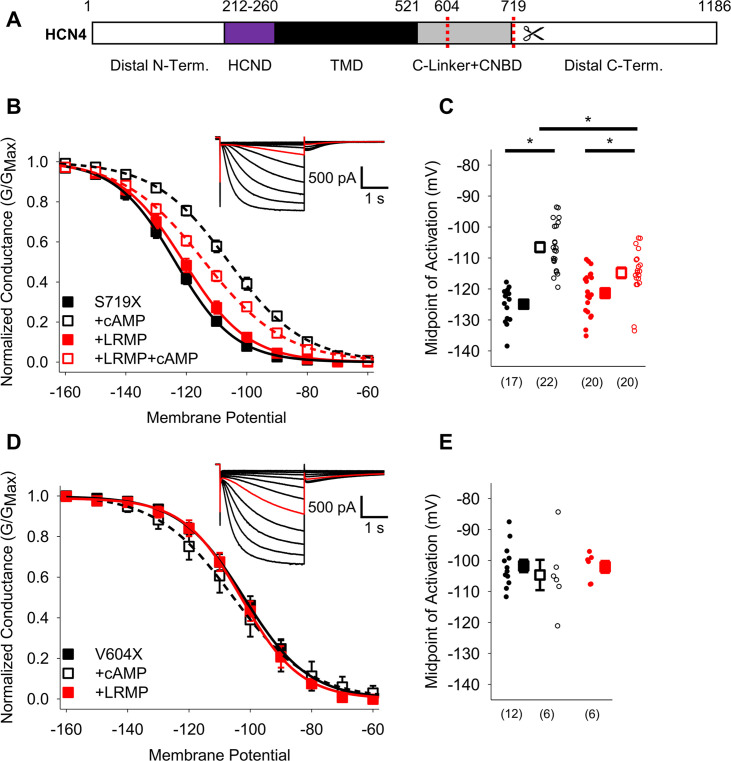
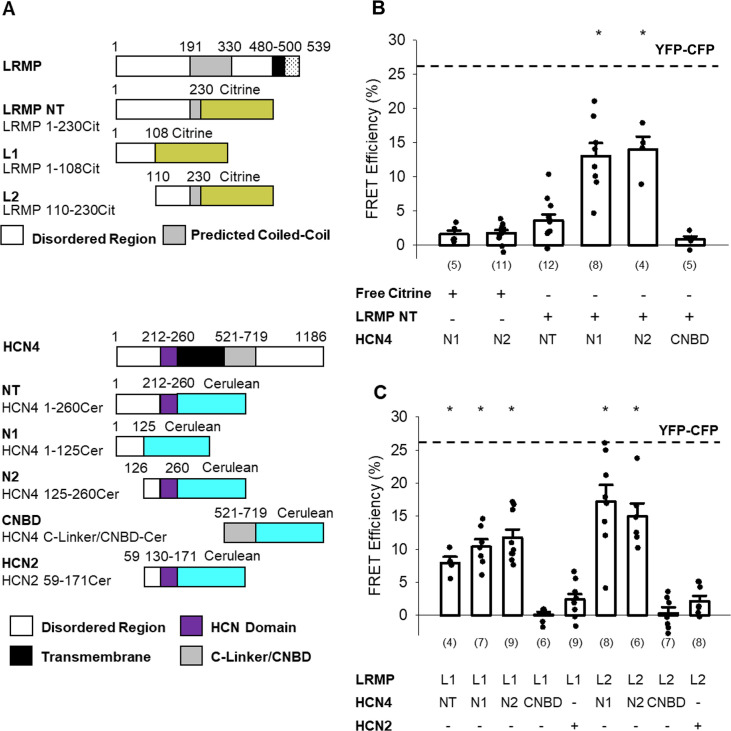
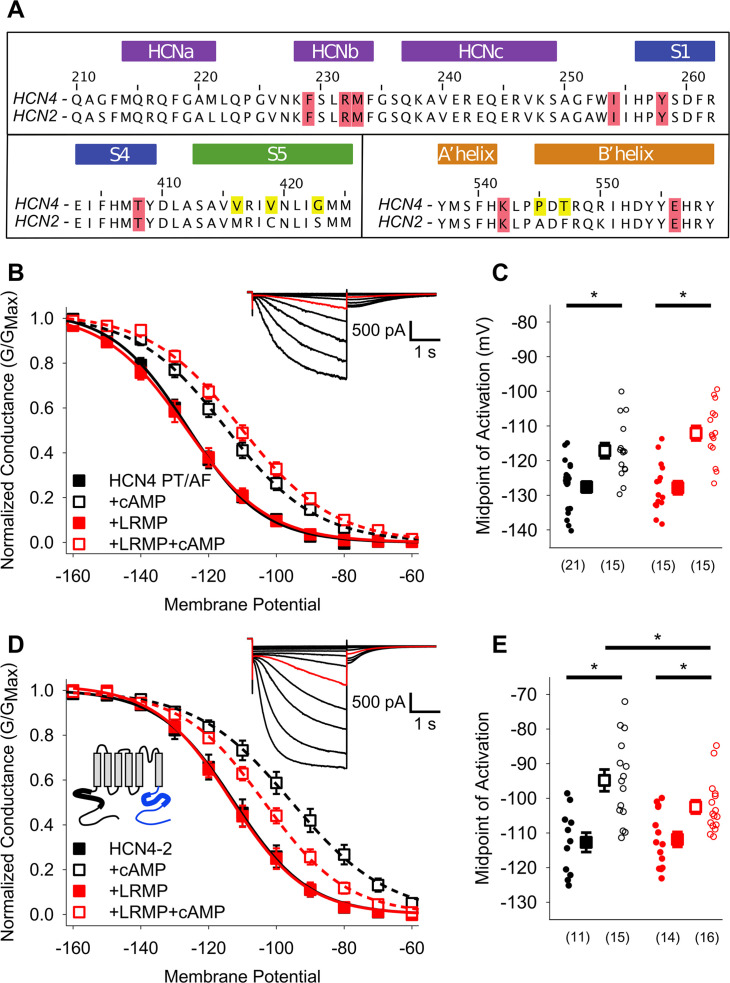
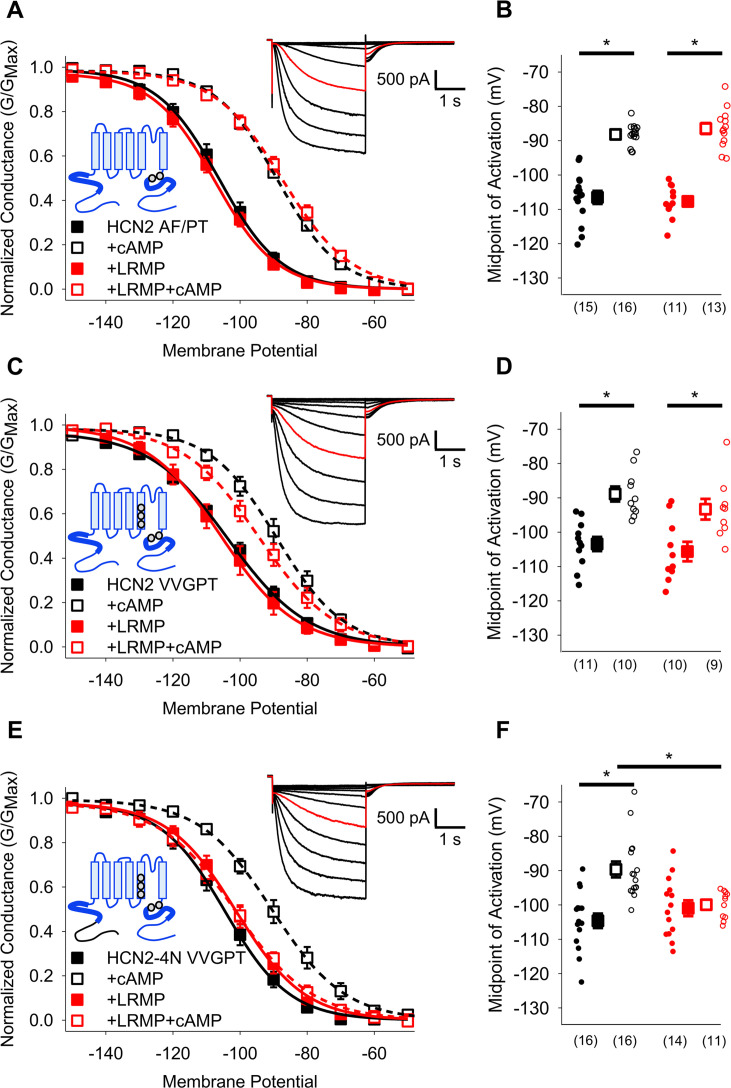
Lymphoid restricted membrane protein (LRMP) is a specific regulator of the hyperpolarization-activated cyclic nucleotide-sensitive isoform 4 (HCN4) channel. LRMP prevents cAMP-dependent potentiation of HCN4, but the interaction domains, mechanisms of action, and basis for isoform-specificity remain unknown. Here, we identify the domains of LRMP essential for this regulation, show that LRMP acts by disrupting the intramolecular signal transduction between cyclic nucleotide binding and gating, and demonstrate that multiple unique regions in HCN4 are required for LRMP isoform-specificity. Using patch clamp electrophysiology and Förster resonance energy transfer (FRET), we identified the initial 227 residues of LRMP and the N-terminus of HCN4 as necessary for LRMP to associate with HCN4. We found that the HCN4 N-terminus and HCN4-specific residues in the C-linker are necessary for regulation of HCN4 by LRMP. Finally, we demonstrated that LRMP-regulation can be conferred to HCN2 by addition of the HCN4 N-terminus along with mutation of five residues in the S5 region and C-linker to the cognate HCN4 residues. Taken together, these results suggest that LRMP inhibits HCN4 through an isoform-specific interaction involving the N-terminals of both proteins that prevents the transduction of cAMP binding into a change in channel gating, most likely via an HCN4-specific orientation of the N-terminus, C-linker, and S4-S5 linker.
淋巴细胞限制性膜蛋白(LRMP)是超极化激活的环核苷酸敏感亚型4(HCN4)通道的特异性调节剂。LRMP可阻止HCN4的cAMP依赖性增强作用,但其相互作用结构域、作用机制及亚型特异性的基础仍不清楚。在此,我们确定了LRMP对该调节至关重要的结构域,表明LRMP通过破坏环核苷酸结合与门控之间的分子内信号转导发挥作用,并证明HCN4中的多个独特区域是LRMP亚型特异性所必需的。利用膜片钳电生理学和荧光共振能量转移(FRET)技术,我们确定了LRMP的最初227个残基以及HCN4的N端是LRMP与HCN4结合所必需的。我们发现HCN4的N端和C连接子中的HCN4特异性残基是LRMP调节HCN4所必需的。最后,我们证明通过添加HCN4的N端以及将S5区域和C连接子中的五个残基突变为同源的HCN4残基,可将LRMP调节作用赋予HCN2。综上所述,这些结果表明,LRMP通过涉及两种蛋白质N端的亚型特异性相互作用抑制HCN4,这种相互作用可阻止cAMP结合转化为通道门控的变化,最有可能是通过N端、C连接子和S4-S5连接子的HCN4特异性取向实现的。