Department of Food and Nutritional Sciences, University of Reading, Whiteknights Campus, Reading, RG6 6DZ, UK.
Department of Nutrition, Food & Exercise Sciences, University of Surrey, Guildford, GU2 7XH, UK.
Eur J Nutr. 2024 Sep;63(6):2035-2054. doi: 10.1007/s00394-024-03407-w. Epub 2024 Apr 25.
Impaired gut barrier function is associated with systemic inflammation and many chronic diseases. Undigested dietary proteins are fermented in the colon by the gut microbiota which produces nitrogenous metabolites shown to reduce barrier function in vitro. With growing evidence of sex-based differences in gut microbiotas, we determined whether there were sex by dietary protein interactions which could differentially impact barrier function via microbiota modification.
Fermentation systems were inoculated with faeces from healthy males (n = 5) and females (n = 5) and supplemented with 0.9 g of non-hydrolysed proteins sourced from whey, fish, milk, soya, egg, pea, or mycoprotein. Microbial populations were quantified using fluorescence in situ hybridisation with flow cytometry. Metabolite concentrations were analysed using gas chromatography, solid phase microextraction coupled with gas chromatography-mass spectrometry and ELISA.
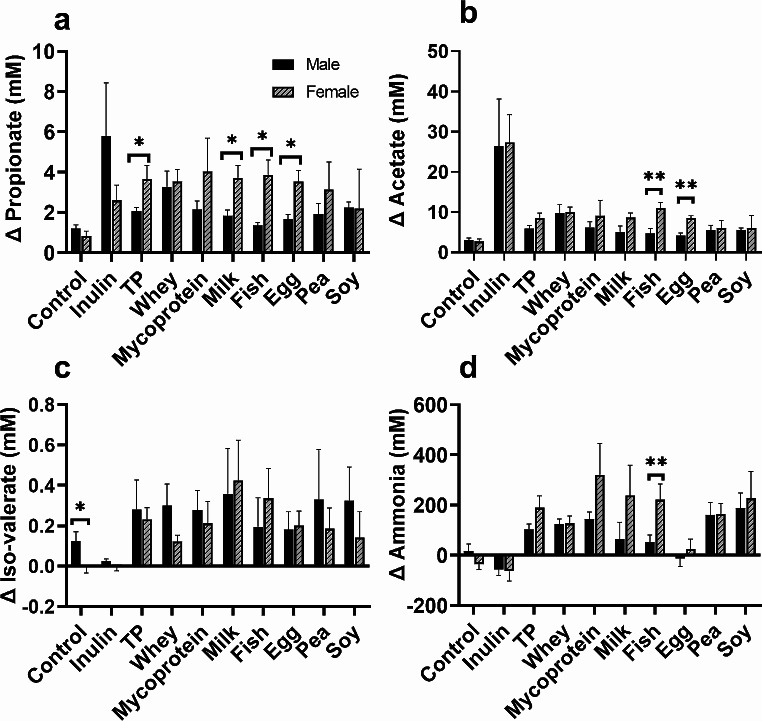
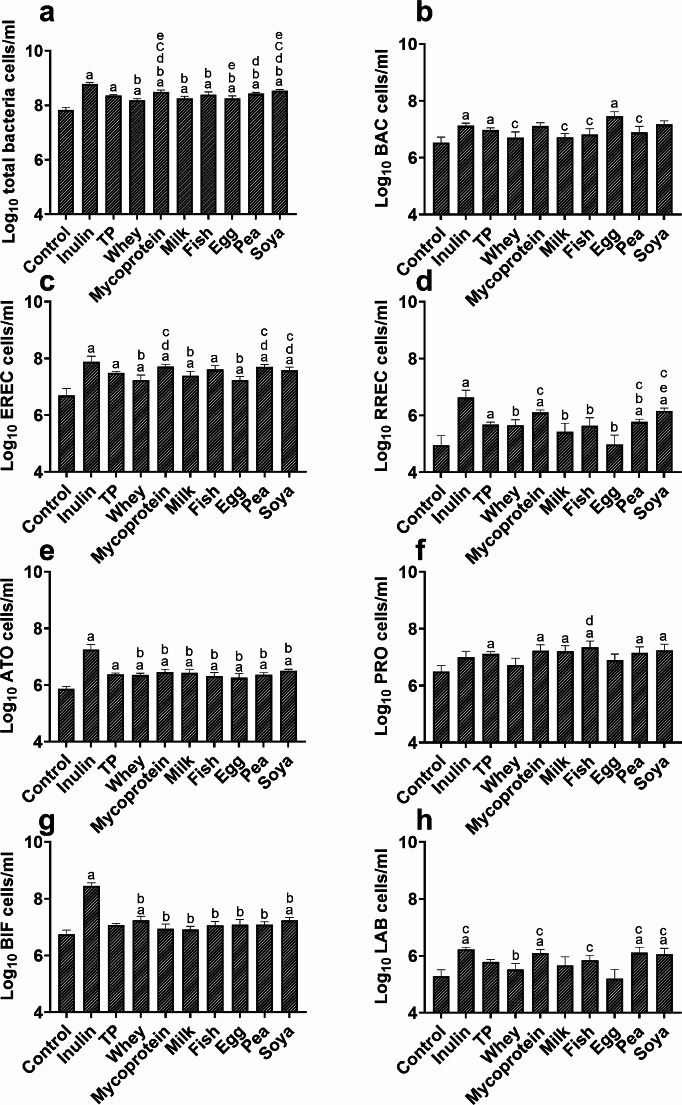
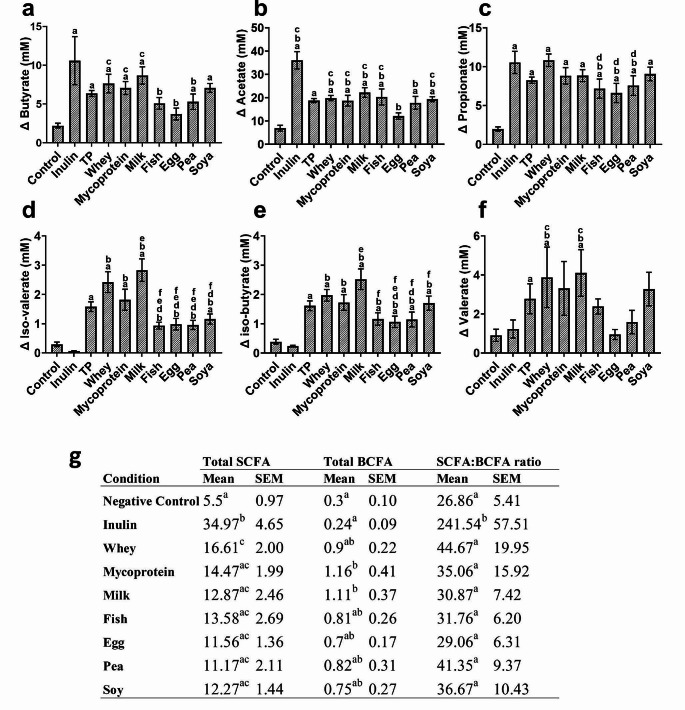
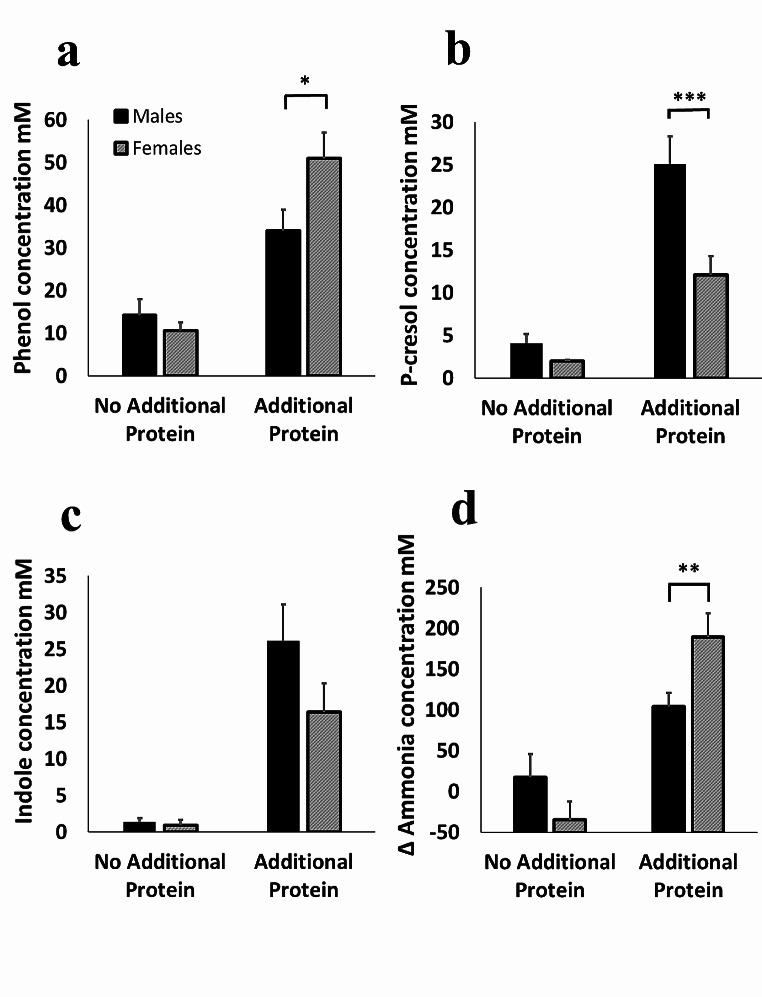
Increased protein availability resulted in increased proteolytic Bacteroides spp (p < 0.01) and Clostridium coccoides (p < 0.01), along with increased phenol (p < 0.01), p-cresol (p < 0.01), indole (p = 0.018) and ammonia (p < 0.01), varying by protein type. Counts of Clostridium cluster IX (p = 0.03) and concentration of p-cresol (p = 0.025) increased in males, while females produced more ammonia (p = 0.02), irrespective of protein type. Further, we observed significant sex-protein interactions affecting bacterial populations and metabolites (p < 0.005).
Our findings suggest that protein fermentation by the gut microbiota in vitro is influenced by both protein source and the donor's sex. Should these results be confirmed through human studies, they could have major implications for developing dietary recommendations tailored by sex to prevent chronic illnesses.
肠道屏障功能受损与全身炎症和许多慢性疾病有关。未消化的膳食蛋白在结肠中被肠道微生物群发酵,产生的含氮代谢物已被证明在体外降低屏障功能。由于越来越多的证据表明肠道微生物群存在性别差异,我们确定是否存在饮食蛋白与性别之间的相互作用,这些相互作用可能通过微生物群的改变来对屏障功能产生不同的影响。
发酵系统接种了来自健康男性(n=5)和女性(n=5)的粪便,并补充了 0.9 克来自乳清、鱼、牛奶、大豆、鸡蛋、豌豆或蛋白核小球藻的非水解蛋白。使用荧光原位杂交结合流式细胞术定量微生物种群。使用气相色谱、固相微萃取与气相色谱-质谱联用和酶联免疫吸附试验分析代谢产物浓度。
增加蛋白质的可利用性导致蛋白水解拟杆菌属 spp(p<0.01)和梭状芽胞杆菌 coccoides(p<0.01)增加,以及苯酚(p<0.01)、对甲酚(p<0.01)、吲哚(p=0.018)和氨(p<0.01)增加,这些变化因蛋白质类型而异。在男性中,梭状芽胞杆菌簇 IX 的计数(p=0.03)和对甲酚的浓度(p=0.025)增加,而女性无论蛋白质类型如何,产生的氨更多(p=0.02)。此外,我们观察到影响细菌种群和代谢物的显著性别-蛋白质相互作用(p<0.005)。
我们的研究结果表明,肠道微生物群体外对蛋白质的发酵既受蛋白质来源的影响,也受供体性别的影响。如果这些结果通过人体研究得到证实,它们可能对制定针对男性和女性的饮食建议以预防慢性疾病产生重大影响。