Wang Zijun, Li Lanqing, Wang Shunshun, Wei Jing, Qu Linghang, Pan Lianhong, Xu Kang
Hubei Engineering Technology Research Center of Chinese Materia Medica Processing, College of Pharmacy, Hubei University of Chinese Medicine, Wuhan, China.
Chongqing Key Laboratory of Development and Utilization of Genuine Medicinal Materials in Three Gorges Reservoir Area, Chongqing Engineering Research Center of Antitumor Natural Drugs, Chongqing Three Gorges Medical College, Chongqing, China.
Front Pharmacol. 2022 Nov 14;13:1025860. doi: 10.3389/fphar.2022.1025860. eCollection 2022.
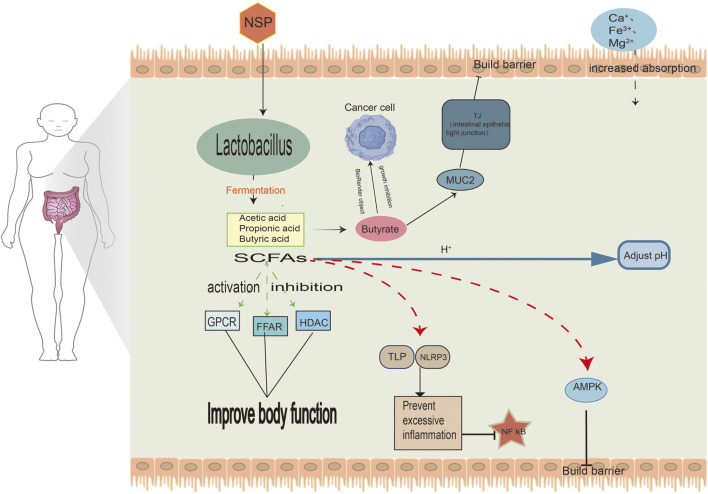
Cancer is the second leading cause of elevated mortality worldwide. Thus, the development of drugs and treatments is needed to enhance the survival rate of the cancer-affected population. Recently, gut microbiota research in the healthy development of the human body has garnered widespread attention. Many reports indicate that changes in the gut microbiota are strongly associated with chronic inflammation-related diseases, including colitis, liver disease, and cancer within the intestine and the extraintestinal tract. Different gut bacteria are vital in the occurrence and development of tumors within the gut and extraintestinal tract. The human gut microbiome has significant implications for human physiology, including metabolism, nutrient absorption, and immune function. Moreover, diet and lifestyle habits are involved in the evolution of the human microbiome throughout the lifetime of the host and are involved in drug metabolism. Probiotics are a functional food with a protective role in cancer development in animal models. Probiotics alter the gut microbiota in the host; thus, beneficial bacterial activity is stimulated, and detrimental activity is inhibited. Clinical applications have revealed that some probiotic strains could reduce the occurrence of postoperative inflammation among cancer patients. An association network was constructed by analyzing the previous literature to explore the role of probiotics from the anti-tumor perspective. Therefore, it provides direction and insights for research on tumor treatment.
癌症是全球死亡率上升的第二大主要原因。因此,需要开发药物和治疗方法来提高癌症患者的生存率。最近,肠道微生物群在人体健康发育方面的研究受到了广泛关注。许多报告表明,肠道微生物群的变化与慢性炎症相关疾病密切相关,包括结肠炎、肝病以及肠道和肠道外的癌症。不同的肠道细菌在肠道和肠道外肿瘤的发生和发展中起着至关重要的作用。人类肠道微生物群对人体生理具有重要意义,包括新陈代谢、营养吸收和免疫功能。此外,饮食和生活方式习惯在宿主的一生中参与了人类微生物群的进化,并参与药物代谢。益生菌是一种功能性食品,在动物模型中对癌症发展具有保护作用。益生菌改变宿主中的肠道微生物群;因此,有益细菌的活性受到刺激,有害活性受到抑制。临床应用表明,一些益生菌菌株可以减少癌症患者术后炎症的发生。通过分析先前的文献构建了一个关联网络,从抗肿瘤的角度探索益生菌的作用。因此,它为肿瘤治疗研究提供了方向和见解。