
一组哥伦比亚系统性红斑狼疮患者的尿液代谢组学分析
Urinary metabolomic profiling of a cohort of Colombian patients with systemic lupus erythematosus.
作者信息
Rojo-Sánchez Alejandra, Carmona-Martes Ada, Díaz-Olmos Yirys, Santamaría-Torres Mary, Cala Mónica P, Orozco-Acosta Erick, Aroca-Martínez Gustavo, Pacheco-Londoño Leonardo, Navarro-Quiroz Elkin, Pacheco-Lugo Lisandro A
机构信息
Life Sciences Research Center, School of Basic and Biomedical Sciences, Universidad Simón Bolívar, Barranquilla, Colombia.
Health Sciences Division, Medicine Program, Universidad del Norte, Barranquilla, Colombia.
出版信息
Sci Rep. 2024 Apr 25;14(1):9555. doi: 10.1038/s41598-024-60217-0.
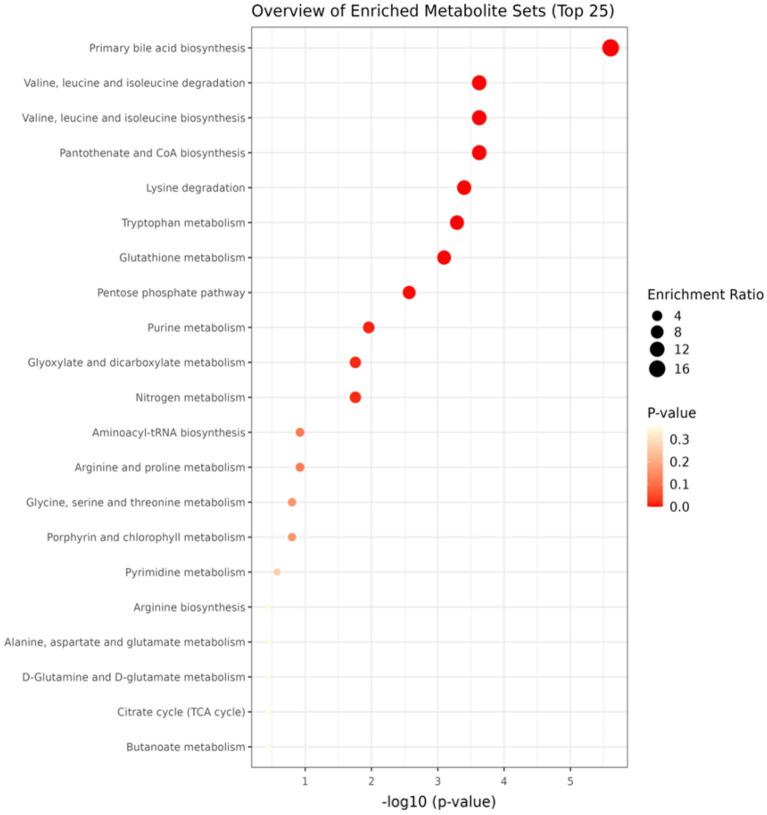
Systemic lupus erythematosus (SLE) is an autoimmune and multisystem disease with a high public health impact. Lupus nephritis (LN), commonly known as renal involvement in SLE, is associated with a poorer prognosis and increased rates of morbidity and mortality in patients with SLE. Identifying new urinary biomarkers that can be used for LN prognosis or diagnosis is essential and is part of current active research. In this study, we applied an untargeted metabolomics approach involving liquid and gas chromatography coupled with mass spectrometry to urine samples collected from 17 individuals with SLE and no kidney damage, 23 individuals with LN, and 10 clinically healthy controls (HCs) to identify differential metabolic profiles for SLE and LN. The data analysis revealed a differentially abundant metabolite expression profile for each study group, and those metabolites may act as potential differential biomarkers of SLE and LN. The differential metabolic pathways found between the LN and SLE patients with no kidney involvement included primary bile acid biosynthesis, branched-chain amino acid synthesis and degradation, pantothenate and coenzyme A biosynthesis, lysine degradation, and tryptophan metabolism. Receiver operating characteristic curve analysis revealed that monopalmitin, glycolic acid, and glutamic acid allowed for the differentiation of individuals with SLE and no kidney involvement and individuals with LN considering high confidence levels. While the results offer promise, it is important to recognize the significant influence of medications and other external factors on metabolomics studies. This impact has the potential to obscure differences in metabolic profiles, presenting a considerable challenge in the identification of disease biomarkers. Therefore, experimental validation should be conducted with a larger sample size to explore the diagnostic potential of the metabolites found as well as to examine how treatment and disease activity influence the identified chemical compounds. This will be crucial for refining the accuracy and effectiveness of using urine metabolomics for diagnosing and monitoring lupus and lupus nephritis.
系统性红斑狼疮(SLE)是一种具有较高公共卫生影响的自身免疫性多系统疾病。狼疮性肾炎(LN),通常被称为SLE的肾脏受累,与SLE患者预后较差以及发病率和死亡率增加相关。识别可用于LN预后或诊断的新尿液生物标志物至关重要,并且是当前积极研究的一部分。在本研究中,我们应用了一种非靶向代谢组学方法,该方法涉及液相色谱和气相色谱与质谱联用,对从17名无肾脏损伤的SLE患者、23名LN患者和10名临床健康对照(HC)收集的尿液样本进行分析,以识别SLE和LN的差异代谢谱。数据分析揭示了每个研究组中差异丰富的代谢物表达谱,这些代谢物可能作为SLE和LN的潜在差异生物标志物。在无肾脏受累的LN患者和SLE患者之间发现的差异代谢途径包括初级胆汁酸生物合成、支链氨基酸合成和降解、泛酸和辅酶A生物合成、赖氨酸降解以及色氨酸代谢。受试者工作特征曲线分析表明,考虑到高置信水平,单棕榈酸甘油酯、乙醇酸和谷氨酸能够区分无肾脏受累的SLE患者和LN患者。虽然结果带来了希望,但重要的是要认识到药物和其他外部因素对代谢组学研究的重大影响。这种影响有可能掩盖代谢谱的差异,在疾病生物标志物的识别中提出了相当大的挑战。因此,应该用更大的样本量进行实验验证,以探索所发现代谢物的诊断潜力,以及研究治疗和疾病活动如何影响所识别的化合物。这对于提高使用尿液代谢组学诊断和监测狼疮及狼疮性肾炎的准确性和有效性至关重要。


 Zotero 插件