Choo Myounglee, Park Doeun, Cho Minseo, Bae Sujin, Kim Jinwoo, Han Doug Hyun
HCI Lab, Yonsei University, Seoul, Republic of Korea.
Department of Psychiatry, College of Medicine, Chung-Ang University, Seoul, Republic of Korea.
Front Psychiatry. 2024 Apr 11;15:1348319. doi: 10.3389/fpsyt.2024.1348319. eCollection 2024.
Depression and anxiety are prevalent mental health concerns among children and adolescents. The application of conventional assessment methods, such as survey questionnaires to children, may lead to self-reporting issues. Digital biomarkers provide extensive data, reducing bias in mental health self-reporting, and significantly influence patient screening. Our primary objectives were to accurately assess children's mental health and to investigate the feasibility of using various digital biomarkers.
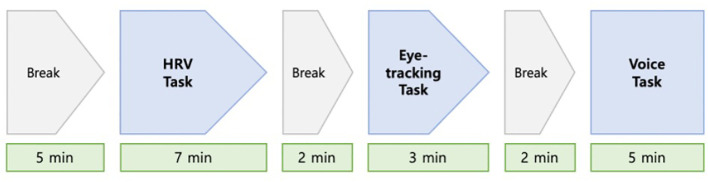
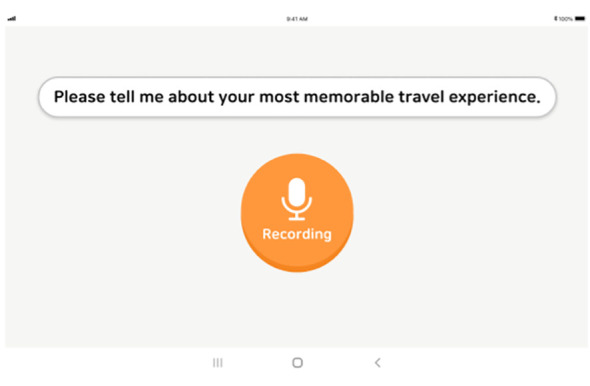
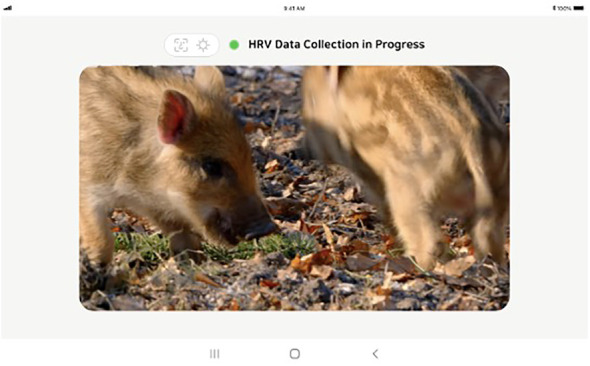
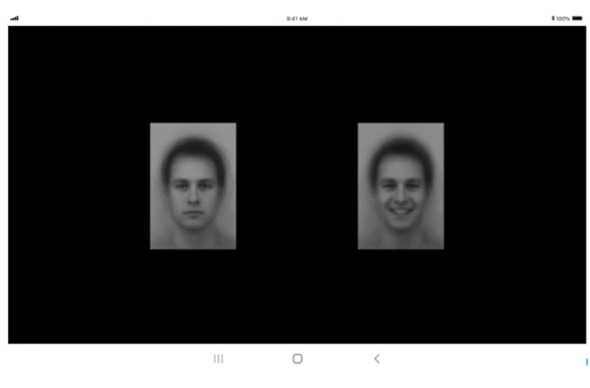
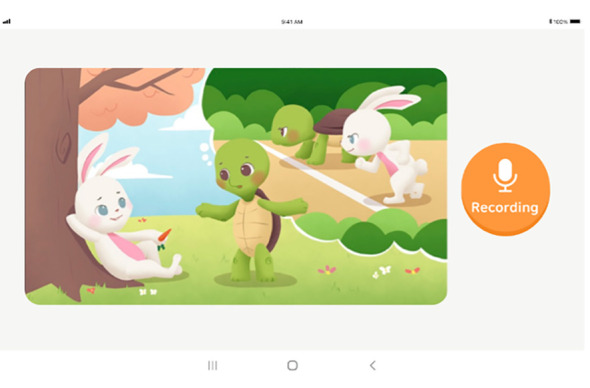
This study included a total of 54 boys and girls aged between 7 to 11 years. Each participant's mental state was assessed using the Depression, Anxiety, and Stress Scale. Subsequently, the subjects participated in digital biomarker collection tasks. Heart rate variability (HRV) data were collected using a camera sensor. Eye-tracking data were collected through tasks displaying emotion-face stimuli. Voice data were obtained by recording the participants' voices while they engaged in free speech and description tasks.
Depressive symptoms were positively correlated with low frequency (LF, 0.04-0.15 Hz of HRV) in HRV and negatively associated with eye-tracking variables. Anxiety symptoms had a negative correlation with high frequency (HF, 0.15-0.40 Hz of HRV) in HRV and a positive association with LF/HF. Regarding stress, eye-tracking variables indicated a positive correlation, while pNN50, which represents the proportion of NN50 (the number of pairs of successive R-R intervals differing by more than 50 milliseconds) divided by the total number of NN (R-R) intervals, exhibited a negative association. Variables identified for childhood depression included LF and the total time spent looking at a sad face. Those variables recognized for anxiety were LF/HF, heart rate (HR), and pNN50. For childhood stress, HF, LF, and Jitter showed different correlation patterns between the two grade groups.
We examined the potential of multimodal biomarkers in children, identifying features linked to childhood depression, particularly LF and the Sad.TF:time. Anxiety was most effectively explained by HRV features. To explore reasons for non-replication of previous studies, we categorized participants by elementary school grades into lower grades (1st, 2nd, 3rd) and upper grades (4th, 5th, 6th).
This study confirmed the potential use of multimodal digital biomarkers for children's mental health screening, serving as foundational research.
抑郁和焦虑是儿童及青少年中普遍存在的心理健康问题。采用传统评估方法,如向儿童发放调查问卷,可能会导致自我报告问题。数字生物标志物能提供大量数据,减少心理健康自我报告中的偏差,并对患者筛查产生重大影响。我们的主要目标是准确评估儿童的心理健康状况,并研究使用各种数字生物标志物的可行性。
本研究共纳入54名7至11岁的男孩和女孩。使用抑郁、焦虑和压力量表评估每位参与者的心理状态。随后,受试者参与数字生物标志物收集任务。使用摄像头传感器收集心率变异性(HRV)数据。通过显示情绪面部刺激的任务收集眼动追踪数据。在参与者进行自由交谈和描述任务时记录他们的声音来获取语音数据。
抑郁症状与HRV中的低频(LF,HRV的0.04 - 0.15赫兹)呈正相关,与眼动追踪变量呈负相关。焦虑症状与HRV中的高频(HF,HRV的0.15 - 0.40赫兹)呈负相关,与LF/HF呈正相关。关于压力,眼动追踪变量呈正相关,而代表NN50(连续R - R间期差值大于50毫秒的对数)除以NN(R - R)间期总数的比例的pNN50呈负相关。确定与儿童抑郁相关的变量包括LF以及看悲伤面孔的总时长。那些与焦虑相关的变量是LF/HF、心率(HR)和pNN50。对于儿童压力,HF、LF和抖动在两个年级组之间呈现出不同的相关模式。
我们研究了儿童多模态生物标志物的潜力,确定了与儿童抑郁相关的特征,特别是LF和Sad.TF:time。焦虑最能通过HRV特征得到有效解释。为探究先前研究未能重复的原因,我们按小学年级将参与者分为低年级(一年级、二年级、三年级)和高年级(四年级、五年级、六年级)。
本研究证实了多模态数字生物标志物在儿童心理健康筛查中的潜在用途,为基础研究提供了依据。