Baban Anwar, Parlapiano Giovanni, Cicenia Marianna, Armando Michela, Franceschini Alessio, Pacifico Concettina, Panfili Arianna, Zinzanella Gaetano, Romanzo Antonino, Fusco Adelaide, Caiazza Martina, Perri Gianluigi, Galletti Lorenzo, Digilio Maria Cristina, Buonuomo Paola Sabrina, Bartuli Andrea, Novelli Antonio, Raponi Massimiliano, Limongelli Giuseppe
The European Reference Network for Rare, Low Prevalence and Complex Diseases of the Heart-ERN GUARD-Heart, Cardiogenetic Center, Bambino Gesù Children's Hospital, Istituto di Ricovero e Cura a Carattere Scientifico (IRCCS), 00165 Rome, Italy.
The European Reference Network for Rare, Low Prevalence and Complex Diseases of the Heart-ERN GUARD-Heart, Pediatric Cardiology and Arrhythmia/Syncope Units, Bambino Gesù Children's Hospital, IRCCS, 00165 Rome, Italy.
J Cardiovasc Dev Dis. 2024 Apr 3;11(4):114. doi: 10.3390/jcdd11040114.
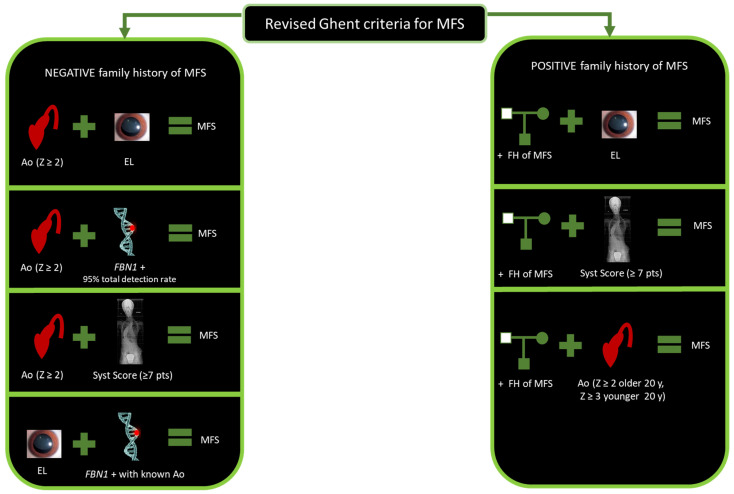
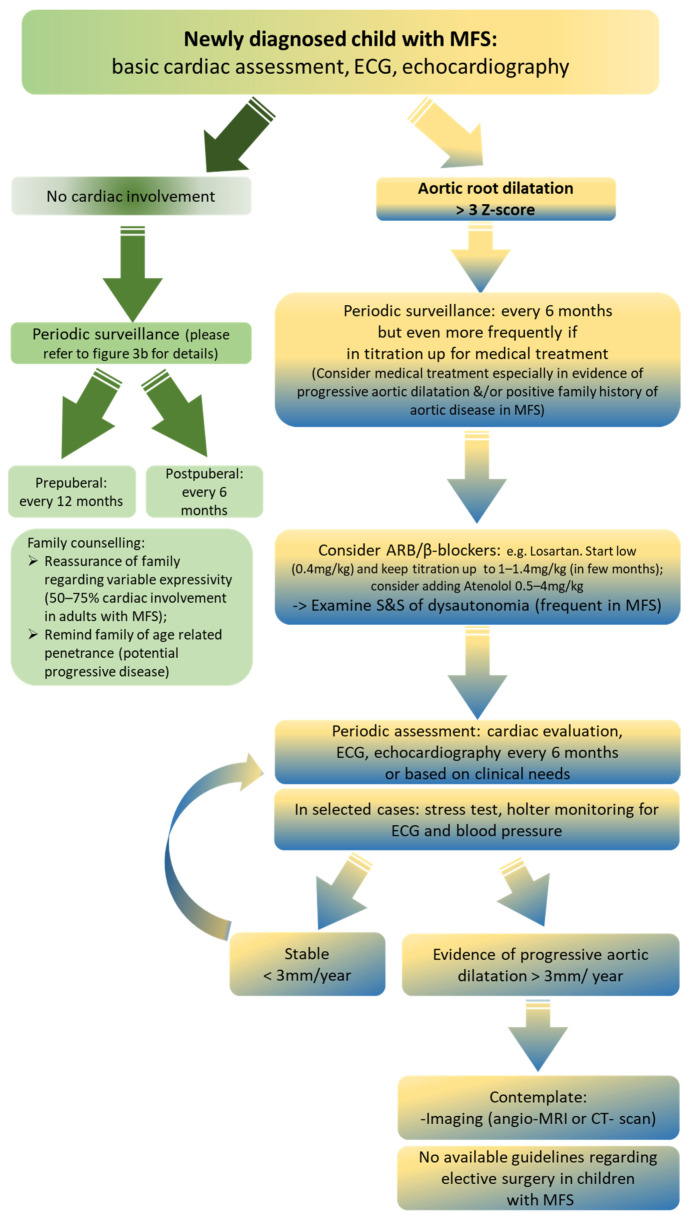
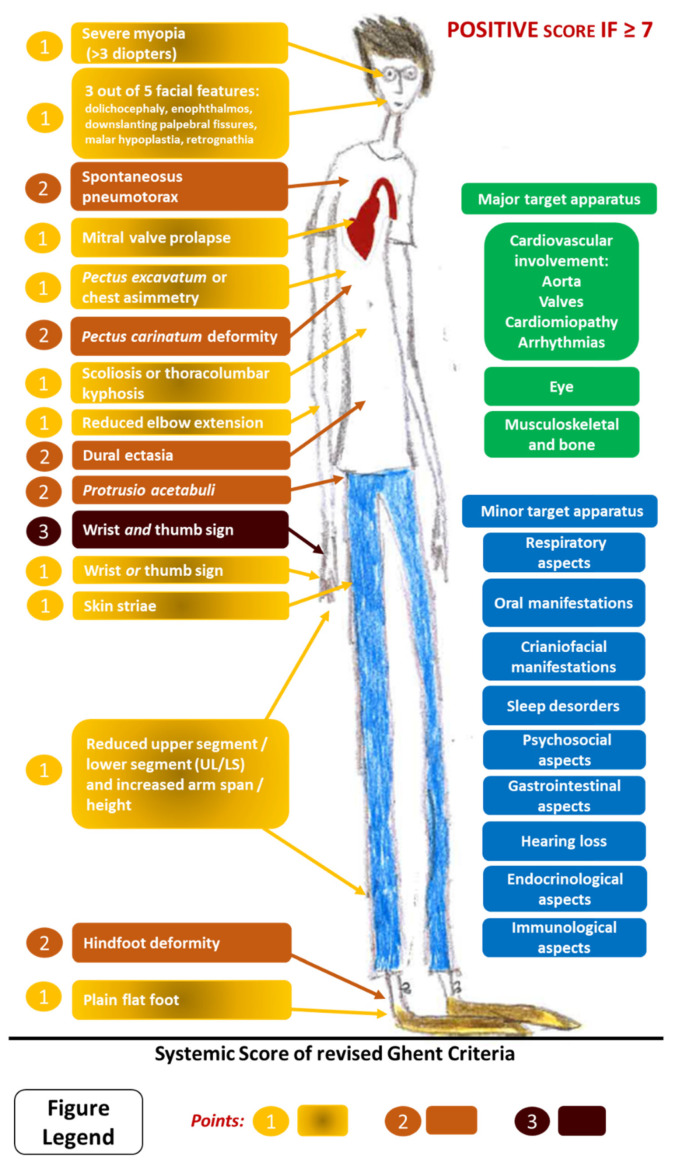
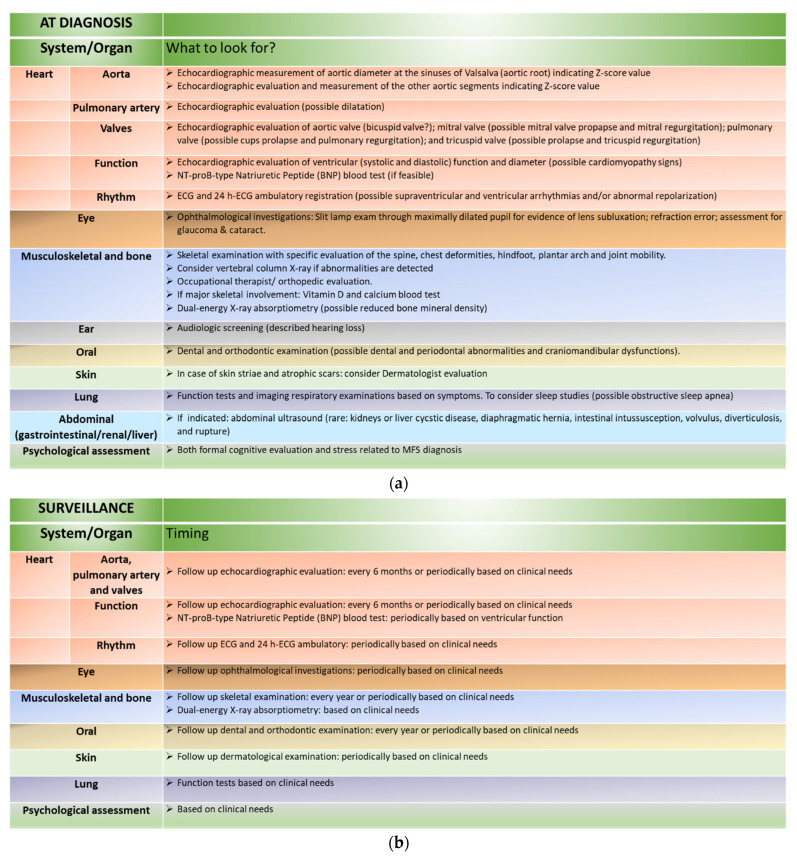
Marfan syndrome (MIM: # 154700; MFS) is an autosomal dominant disease representing the most common form of heritable connective tissue disorder. The condition presents variable multiorgan expression, typically involving a triad of cardiovascular, eye, and skeletal manifestations. Other multisystemic features are often underdiagnosed. Moreover, the disease is characterized by age related penetrance. Diagnosis and management of MFS in the adult population are well-described in literature. Few studies are focused on MFS in the pediatric population, making the clinical approach (cardiac and multiorgan) to these cases challenging both in terms of diagnosis and serial follow-up. In this review, we provide an overview of MFS manifestations in children, with extensive revision of major organ involvement (cardiovascular ocular and skeletal). We attempt to shed light on minor aspects of MFS that can have a significant progressive impact on the health of affected children. MFS is an example of a syndrome where an early personalized approach to address a dynamic, genetically determined condition can make a difference in outcome. Applying an early multidisciplinary clinical approach to MFS cases can prevent acute and chronic complications, offer tailored management, and improve the quality of life of patients.
马凡综合征(MIM:#154700;MFS)是一种常染色体显性疾病,是遗传性结缔组织疾病最常见的形式。该病呈现出多器官的可变表现,通常涉及心血管、眼睛和骨骼表现三联征。其他多系统特征常常未被充分诊断。此外,该疾病具有年龄相关的外显率。成人马凡综合征的诊断和管理在文献中有详细描述。很少有研究关注儿科人群中的马凡综合征,这使得对这些病例的临床处理(心脏和多器官方面)在诊断和连续随访方面都具有挑战性。在本综述中,我们概述了儿童马凡综合征的表现,并对主要器官受累情况(心血管、眼部和骨骼)进行了广泛回顾。我们试图阐明马凡综合征的一些次要方面,这些方面可能对患病儿童的健康产生重大的渐进性影响。马凡综合征是这样一种综合征的例子,即针对一种动态的、由基因决定的疾病采取早期个性化方法能够对结果产生影响。对马凡综合征病例采用早期多学科临床方法可以预防急性和慢性并发症,提供个性化管理,并提高患者的生活质量。