Department of Pediatrics, Cerrahpasa Faculty of Medicine, Istanbul University-Cerrahpasa, Istanbul, Turkey.
Department of Pediatric Cardiology, Cerrahpasa Faculty of Medicine, Istanbul University-Cerrahpasa, Istanbul, Turkey.
Eur J Pediatr. 2024 Jul;183(7):3137-3145. doi: 10.1007/s00431-024-05570-y. Epub 2024 Apr 26.
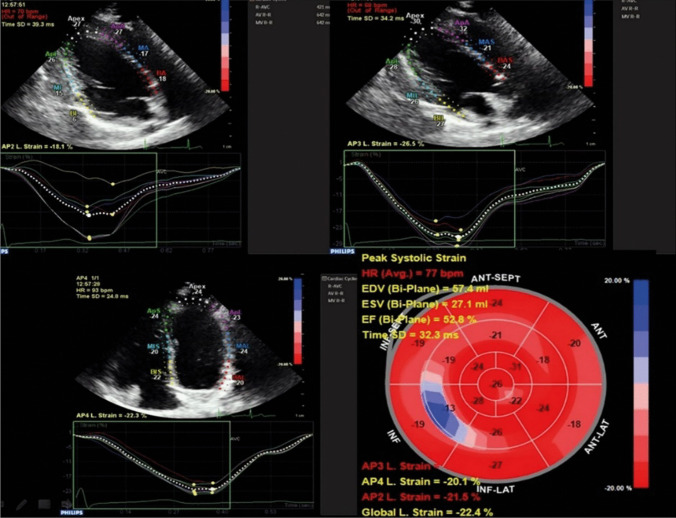
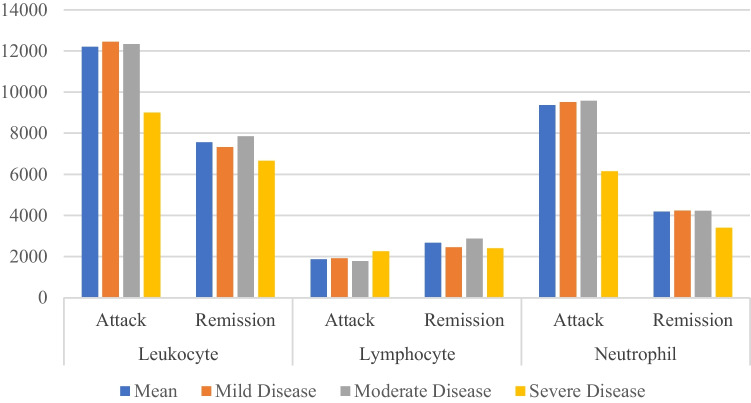
Familial Mediterranean fever (FMF) is an autosomal recessive autoinflammatory disease characterized by recurring serosal inflammation. Cardiac involvement in FMF commonly manifests as pericarditis and pericardial effusion; however, there is limited research on myocardial function. This study aimed to assess cardiac functions during active inflammation and remission periods of FMF patients and investigate the cardiac effects of inflammation during the attack period. Thirty-eight FMF patients without additional cardiac diseases were included in the study. Demographic characteristics, clinical symptoms, family history, and MEFV gene analysis results were obtained retrospectively. Blood tests, blood pressure measurements, electrocardiogram evaluations, conventional echocardiography, and speckle tracking echocardiography were performed during the attack and remission periods. Disease severity was assessed using the Pras scoring system. During the attack period, FMF patients exhibited significantly higher leukocyte count, neutrophil count, C-reactive protein, and erythrocyte sedimentation rate compared to the remission period (p < 0.005). Speckle tracking echocardiography revealed decreased function in the inferior segments of the left ventricle during the attack period (p < 0.005). Right ventricular function was more affected in the moderate disease group. FMF patients with lymphopenia during the attack demonstrated more impaired right ventricular function compared to those with normal lymphocyte count. Conclusions: FMF patients experience cardiac abnormalities during active inflammation, highlighting the importance of monitoring cardiac functions in these patients. Speckle tracking echocardiography can provide valuable insights into cardiac involvement in FMF. These findings emphasize the cardiac impact of FMF inflammation and the significance of long-term cardiac function monitoring in the management of FMF patients. What is Known: • The current literature lacks studies investigating myocardial function in the pediatric population during the attack period of this particular disease. • Our objective was to assess the alterations in cardiac function during the attack and remission periods, considering clinical manifestations, disease severity, acute phase reactant levels, and mutation type. We also evaluated the pattern of cardiac involvement and the affected cardiac areas by comparing remission and attack periods. What is New: • Several studies have demonstrated a rise in the prevalence of ischemic cardiac disease and mortality among individuals with FMF. • Investigating cardiac involvement during the attack period in FMF patients can provide valuable insights for the prevention of long-term complications.
家族性地中海热(FMF)是一种常染色体隐性自身炎症性疾病,其特征为反复发作的浆膜炎。FMF 中的心脏受累通常表现为心包炎和心包积液;然而,对于心肌功能的研究有限。本研究旨在评估 FMF 患者在炎症活动期和缓解期的心脏功能,并研究炎症发作期间的心脏影响。研究纳入了 38 名无其他心脏疾病的 FMF 患者。回顾性获取人口统计学特征、临床症状、家族史和 MEFV 基因分析结果。在发作期和缓解期进行血液检查、血压测量、心电图评估、常规超声心动图和斑点追踪超声心动图检查。使用 Pras 评分系统评估疾病严重程度。在发作期,FMF 患者的白细胞计数、中性粒细胞计数、C 反应蛋白和红细胞沉降率明显高于缓解期(p<0.005)。斑点追踪超声心动图显示发作期左心室下壁功能下降(p<0.005)。中度疾病组中右心室功能受影响更大。发作期淋巴细胞减少的 FMF 患者的右心室功能较淋巴细胞计数正常的患者受损更严重。结论:FMF 患者在炎症活动期出现心脏异常,提示在这些患者中监测心脏功能的重要性。斑点追踪超声心动图可提供 FMF 中心脏受累的有价值信息。这些发现强调了 FMF 炎症对心脏的影响以及在 FMF 患者管理中进行长期心脏功能监测的重要性。已知内容:• 当前文献缺乏关于该特定疾病发作期间儿科人群心肌功能的研究。• 我们的目的是评估在发作期和缓解期期间心脏功能的变化,考虑临床表现、疾病严重程度、急性期反应物水平和突变类型。我们还通过比较缓解期和发作期评估了心脏受累的模式和受累的心脏区域。新内容:• 几项研究表明,FMF 患者中缺血性心脏病和死亡率的患病率上升。• 研究 FMF 患者在炎症发作期间的心脏受累可以为预防长期并发症提供有价值的信息。