Wu Zhipeng, Geng Nan, Liu Zhao, Pan Wen, Zhu Yueke, Shan Jing, Shi Hongbo, Han Ying, Ma Yingmin, Liu Bo
Department of Respiratory and Critical Care Medicine, Beijing Youan Hospital, Capital Medical University, No. 8, Xi Tou Tiao, Youanmenwai Street, Fengtai District, Beijing City, 100069, People's Republic of China.
Beijing Institute of Hepatology, Beijing Youan Hospital, Capital Medical University, Beijing, 100069, People's Republic of China.
Virol J. 2024 Apr 26;21(1):96. doi: 10.1186/s12985-024-02367-1.
There is still limited research on the prognostic value of Presepsin as a biomarker for predicting the outcome of COVID-19 patients. Additionally, research on the combined predictive value of Presepsin with clinical scoring systems and inflammation markers for disease prognosis is lacking.
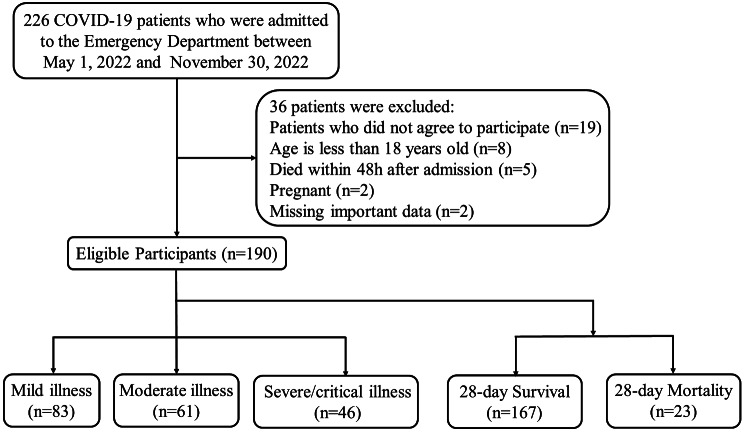
A total of 226 COVID-19 patients admitted to Beijing Youan Hospital's emergency department from May to November 2022 were screened. Demographic information, laboratory measurements, and blood samples for Presepsin levels were collected upon admission. The predictive value of Presepsin, clinical scoring systems, and inflammation markers for 28-day mortality was analyzed.
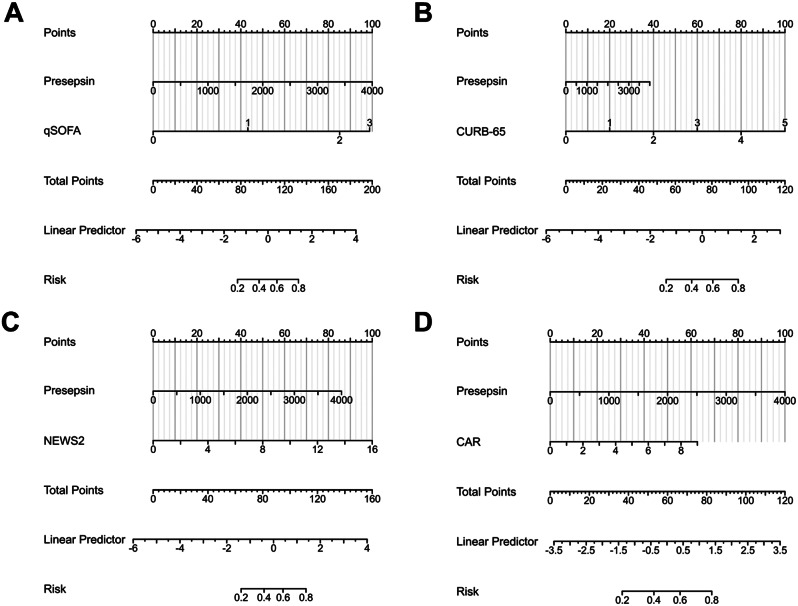
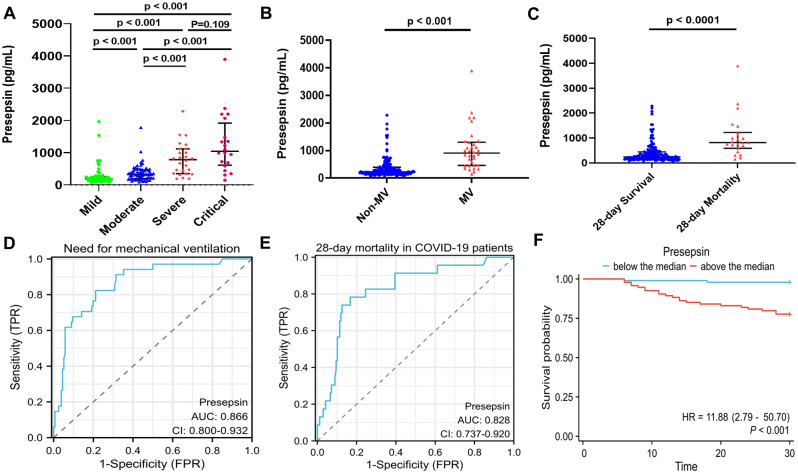
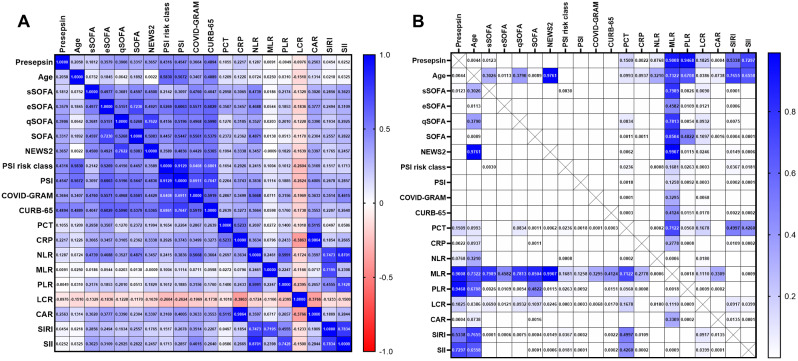
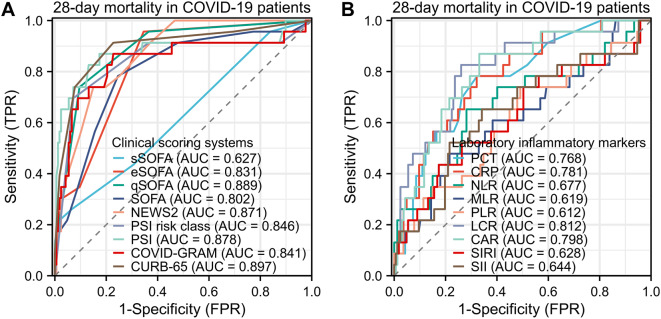
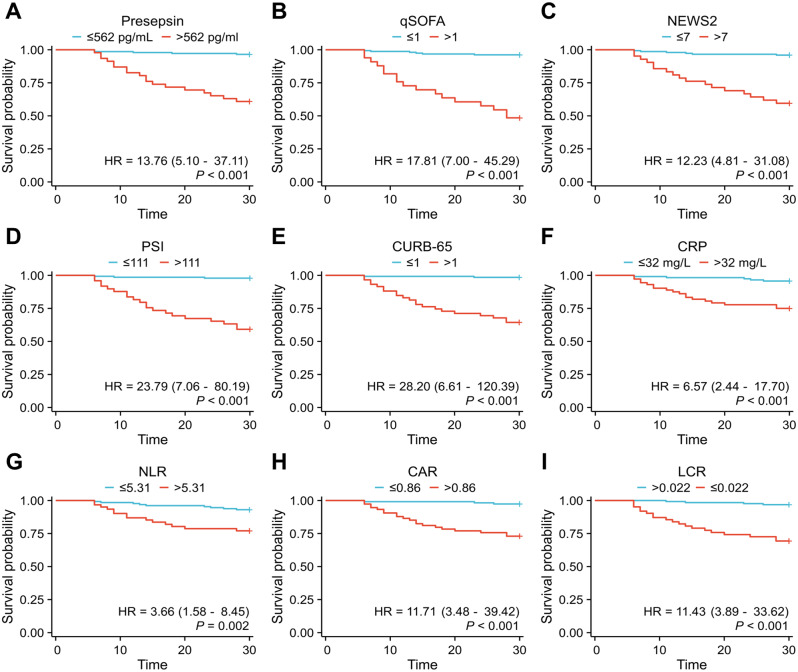
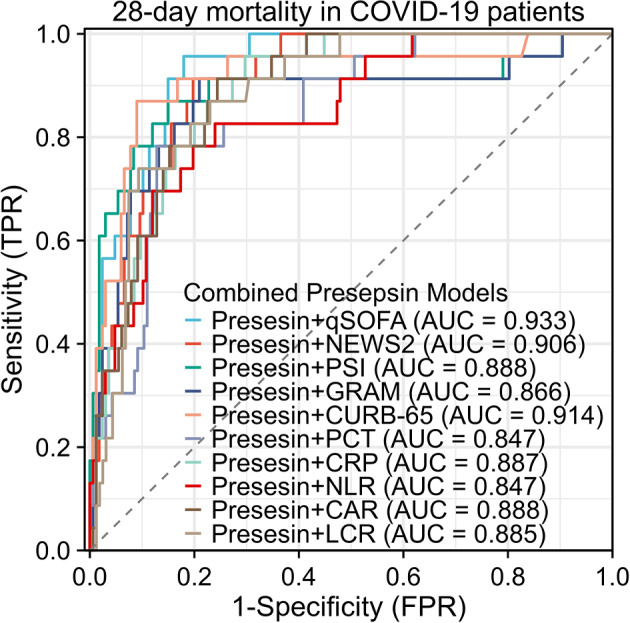
A total of 190 patients were analyzed, 83 (43.7%) were mild, 61 (32.1%) were moderate, and 46 (24.2%) were severe/critically ill. 23 (12.1%) patients died within 28 days. The Presepsin levels in severe/critical patients were significantly higher compared to moderate and mild patients (p < 0.001). Presepsin showed significant predictive value for 28-day mortality in COVID-19 patients, with an area under the ROC curve of 0.828 (95% CI: 0.737-0.920). Clinical scoring systems and inflammation markers also played a significant role in predicting 28-day outcomes. After Cox regression adjustment, Presepsin, qSOFA, NEWS2, PSI, CURB-65, CRP, NLR, CAR, and LCR were identified as independent predictors of 28-day mortality in COVID-19 patients (all p-values < 0.05). Combining Presepsin with clinical scoring systems and inflammation markers further enhanced the predictive value for patient prognosis.
Presepsin is a favorable indicator for the prognosis of COVID-19 patients, and its combination with clinical scoring systems and inflammation markers improved prognostic assessment.
关于可溶性髓系细胞触发受体-1(Presepsin)作为预测新型冠状病毒肺炎(COVID-19)患者预后生物标志物的研究仍然有限。此外,缺乏Presepsin与临床评分系统及炎症标志物对疾病预后的联合预测价值的研究。
筛选了2022年5月至11月入住北京佑安医院急诊科的226例COVID-19患者。入院时收集人口统计学信息、实验室检测结果以及用于检测Presepsin水平的血样。分析了Presepsin、临床评分系统和炎症标志物对28天死亡率的预测价值。
共分析了190例患者,其中83例(43.7%)为轻症,61例(32.1%)为中症,46例(24.2%)为重症/危重症。重症/危重症患者的Presepsin水平显著高于中症和轻症患者(p < 0.001)。Presepsin对COVID-19患者28天死亡率具有显著预测价值,ROC曲线下面积为0.828(95%CI:0.737 - 0.920)。临床评分系统和炎症标志物在预测28天预后方面也发挥了重要作用。经过Cox回归调整后,Presepsin、快速序贯器官衰竭评估(qSOFA)、国家早期预警评分2(NEWS2)、肺炎严重指数(PSI)、社区获得性肺炎改良英国胸科学会(CURB-65)评分、C反应蛋白(CRP)、中性粒细胞与淋巴细胞比值(NLR)、冠状病毒感染相关指标(CAR)和淋巴细胞与C反应蛋白比值(LCR)被确定为COVID-19患者28天死亡率的独立预测因素(所有p值 < 0.05)。将Presepsin与临床评分系统和炎症标志物相结合进一步提高了对患者预后的预测价值。
Presepsin是COVID-19患者预后的良好指标,其与临床评分系统和炎症标志物的联合改善了预后评估。