
基于TMT的定量蛋白质组学分析揭示了细胞增殖和凋亡在……肠道再生中的关键作用。
TMT-Based Quantitative Proteomic Analysis Reveals the Key Role of Cell Proliferation and Apoptosis in Intestine Regeneration of .
作者信息
Zeng Chuili, Xiao Ke, Shi Qilin, Zhan Xu, Li Chenghua
机构信息
State Key Laboratory for Managing Biotic and Chemical Threats to the Quality and Safety of Agro-Products, Ningbo University, Ningbo 315211, China.
Laboratory for Marine Fisheries Science and Food Production Processes, Qingdao National Laboratory for Marine Science and Technology, Qingdao 266071, China.
出版信息
Int J Mol Sci. 2024 Apr 11;25(8):4250. doi: 10.3390/ijms25084250.
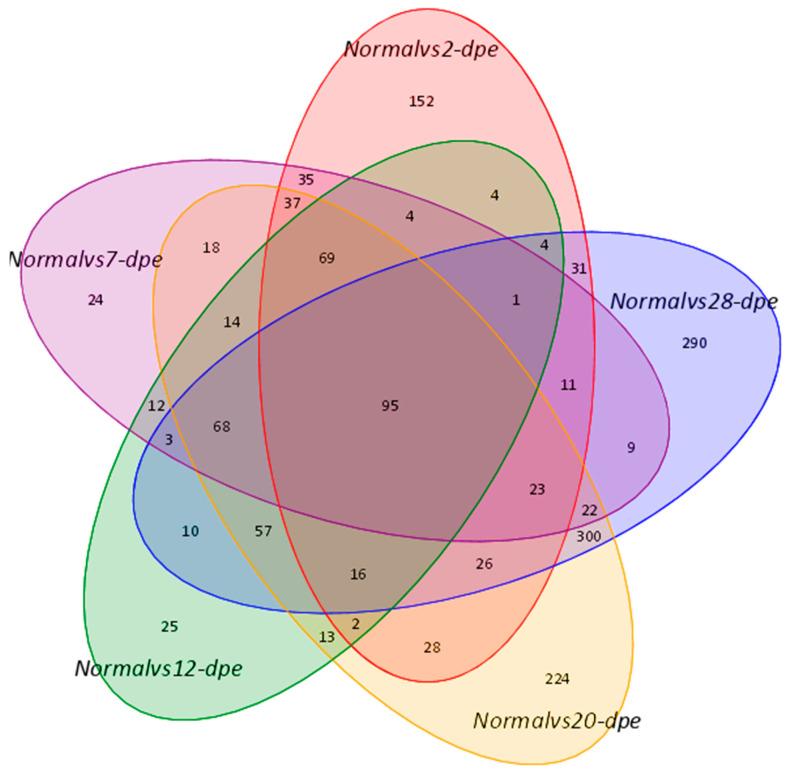
Sea cucumbers are widely known for their powerful regenerative abilities, which allow them to regenerate a complete digestive tract within a relatively short time following injury or autotomy. Recently, even though the histological changes and cellular events in the processes of intestinal regeneration have been extensively studied, the molecular machinery behind this faculty remains unclear. In this study, tandem mass tag (TMT)-based quantitation was utilized to investigate protein abundance changes during the process of intestine regeneration. Approximately 538, 445, 397, 1012, and 966 differential proteins (DEPs) were detected ( < 0.05) between the normal and 2, 7, 12, 20, and 28 dpe stages, respectively. These DEPs also mainly focus on pathways of cell proliferation and apoptosis, which were further validated by 5-Ethynyl-2'-deoxyuridine (EdU) or Tunel-based flow cytometry assay. These findings provide a reference for a comprehensive understanding of the regulatory mechanisms of various stages of intestinal regeneration and provide a foundation for subsequent research on changes in cell fate in echinoderms.
海参以其强大的再生能力而广为人知,这使它们能够在受伤或自切后的相对短时间内再生出完整的消化道。最近,尽管肠道再生过程中的组织学变化和细胞事件已得到广泛研究,但这种能力背后的分子机制仍不清楚。在本研究中,利用基于串联质谱标签(TMT)的定量分析来研究肠道再生过程中蛋白质丰度的变化。在正常阶段与损伤后2、7、12、20和28天(dpe)阶段之间,分别检测到约538、445、397、1012和966种差异蛋白质(DEP,P<0.05)。这些DEP也主要集中在细胞增殖和凋亡途径上,这通过基于5-乙炔基-2'-脱氧尿苷(EdU)或Tunel的流式细胞术分析得到进一步验证。这些发现为全面了解肠道再生各阶段的调控机制提供了参考,并为后续研究棘皮动物细胞命运变化奠定了基础。



 Zotero 插件