
肾移植中的缺血再灌注损伤:机制与潜在治疗靶点
Ischemia-Reperfusion Injury in Kidney Transplantation: Mechanisms and Potential Therapeutic Targets.
作者信息
Lasorsa Francesco, Rutigliano Monica, Milella Martina, d'Amati Antonio, Crocetto Felice, Pandolfo Savio Domenico, Barone Biagio, Ferro Matteo, Spilotros Marco, Battaglia Michele, Ditonno Pasquale, Lucarelli Giuseppe
机构信息
Department of Precision and Regenerative Medicine and Ionian Area-Urology, Andrology and Kidney Transplantation Unit, University of Bari "Aldo Moro", 70124 Bari, Italy.
Department of Precision and Regenerative Medicine and Ionian Area-Pathology Unit, University of Bari "Aldo Moro", 70124 Bari, Italy.
出版信息
Int J Mol Sci. 2024 Apr 14;25(8):4332. doi: 10.3390/ijms25084332.
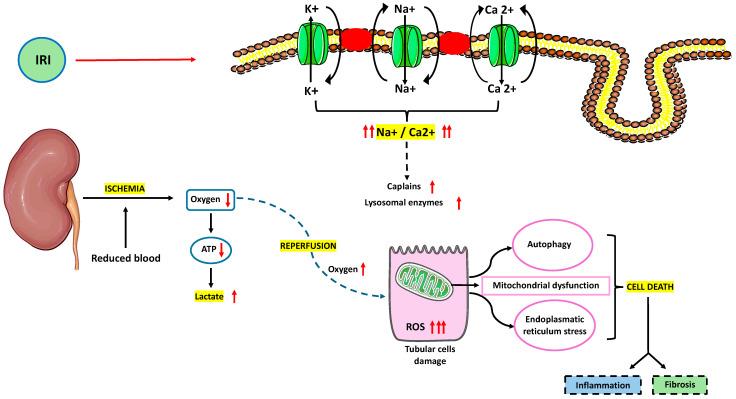
Kidney transplantation offers a longer life expectancy and a better quality of life than dialysis to patients with end-stage kidney disease. Ischemia-reperfusion injury (IRI) is thought to be a cornerstone in delayed or reduced graft function and increases the risk of rejection by triggering the immunogenicity of the organ. IRI is an unavoidable event that happens when the blood supply is temporarily reduced and then restored to an organ. IRI is the result of several biological pathways, such as transcriptional reprogramming, apoptosis and necrosis, innate and adaptive immune responses, and endothelial dysfunction. Tubular cells mostly depend on fatty acid (FA) β-oxidation for energy production since more ATP molecules are yielded per substrate molecule than glucose oxidation. Upon ischemia-reperfusion damage, the innate and adaptive immune system activates to achieve tissue clearance and repair. Several cells, cytokines, enzymes, receptors, and ligands are known to take part in these events. The complement cascade might start even before organ procurement in deceased donors. However, additional experimental and clinical data are required to better understand the pathogenic events that take place during this complex process.
对于终末期肾病患者,肾移植比透析能提供更长的预期寿命和更好的生活质量。缺血再灌注损伤(IRI)被认为是导致移植肾功能延迟或降低的关键因素,并且通过触发器官的免疫原性增加排斥反应的风险。IRI是一种不可避免的事件,当器官的血液供应暂时减少然后恢复时就会发生。IRI是多种生物学途径的结果,如转录重编程、凋亡和坏死、固有免疫和适应性免疫反应以及内皮功能障碍。肾小管细胞主要依赖脂肪酸(FA)β氧化来产生能量,因为每个底物分子产生的ATP分子比葡萄糖氧化更多。在缺血再灌注损伤时,固有免疫系统和适应性免疫系统被激活以实现组织清除和修复。已知几种细胞、细胞因子、酶、受体和配体参与这些事件。补体级联反应甚至可能在已故供体器官获取之前就开始。然而,需要更多的实验和临床数据来更好地理解这一复杂过程中发生的致病事件。

 Zotero 插件