Simonin Yannick
Pathogenesis and Control of Chronic and Emerging Infections, University of Montpellier, INSERM, EFS, 34000 Montpellier, France.
Viruses. 2024 Apr 12;16(4):599. doi: 10.3390/v16040599.
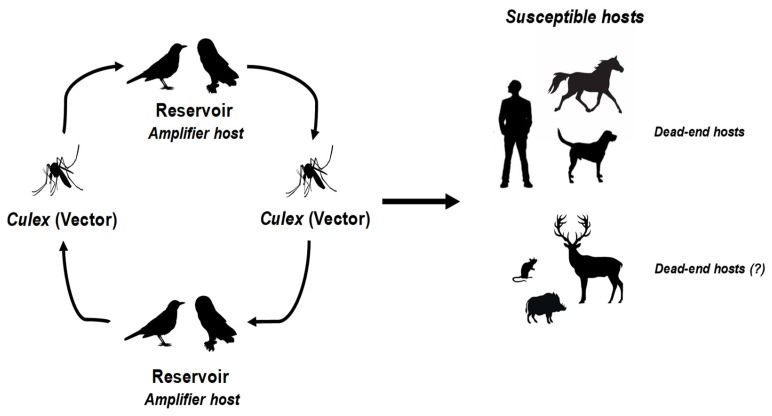
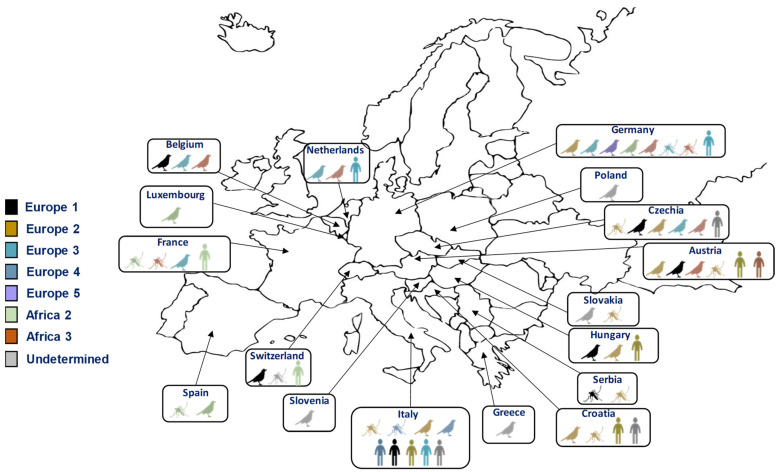
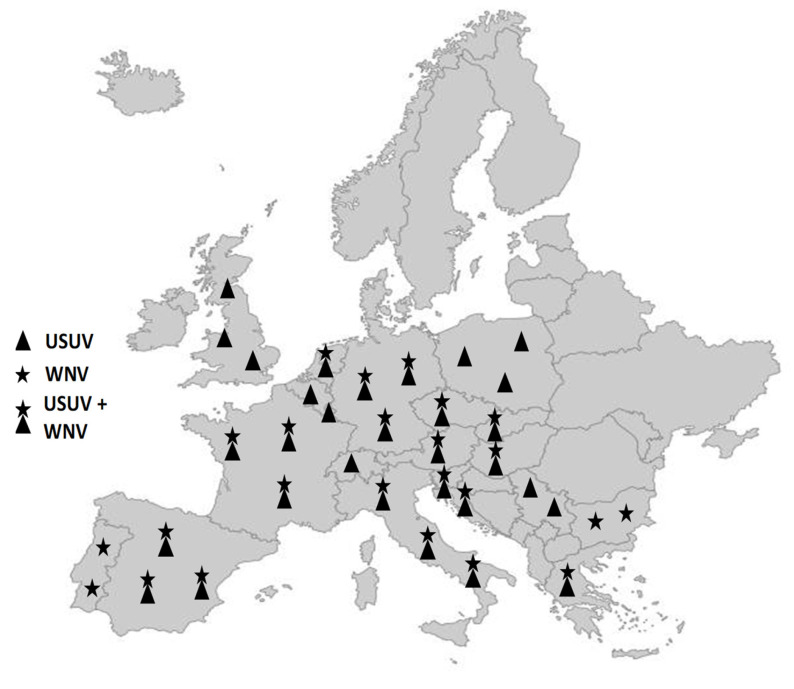
West Nile Virus (WNV) and Usutu Virus (USUV) are both neurotropic mosquito-borne viruses belonging to the family. These closely related viruses mainly follow an enzootic cycle involving mosquitoes as vectors and birds as amplifying hosts, but humans and other mammals can also be infected through mosquito bites. WNV was first identified in Uganda in 1937 and has since spread globally, notably in Europe, causing periodic outbreaks associated with severe cases of neuroinvasive diseases such as meningitis and encephalitis. USUV was initially isolated in 1959 in Swaziland and has also spread to Europe, primarily affecting birds and having a limited impact on human health. There has been a recent expansion of these viruses' geographic range in Europe, facilitated by factors such as climate change, leading to increased human exposure. While sharing similar biological traits, ecology, and epidemiology, there are significant distinctions in their pathogenicity and their impact on both human and animal health. While WNV has been more extensively studied and is a significant public health concern in many regions, USUV has recently been gaining attention due to its emergence in Europe and the diversity of its circulating lineages. Understanding the pathophysiology, ecology, and transmission dynamics of these viruses is important to the implementation of effective surveillance and control measures. This perspective provides a brief overview of the current situation of these two viruses in Europe and outlines the significant challenges that need to be addressed in the coming years.
西尼罗河病毒(WNV)和乌苏图病毒(USUV)均为嗜神经性蚊媒病毒,属于同一病毒科。这些密切相关的病毒主要遵循一种以蚊子为传播媒介、鸟类为扩增宿主的地方性疫源流行周期,但人类和其他哺乳动物也可能通过蚊虫叮咬而被感染。西尼罗河病毒于1937年在乌干达首次被发现,此后已传播至全球,尤其是在欧洲,引发了与脑膜炎和脑炎等严重神经侵袭性疾病病例相关的周期性疫情。乌苏图病毒最初于1959年在斯威士兰被分离出来,也已传播至欧洲,主要影响鸟类,对人类健康的影响有限。近年来,在气候变化等因素的推动下,这些病毒在欧洲的地理分布范围有所扩大,导致人类接触机会增加。虽然它们具有相似的生物学特性、生态学和流行病学特征,但在致病性以及对人类和动物健康的影响方面存在显著差异。虽然西尼罗河病毒已得到更广泛的研究,并且在许多地区都是一个重大的公共卫生问题,但由于乌苏图病毒在欧洲的出现及其流行谱系的多样性,它最近也受到了关注。了解这些病毒的病理生理学、生态学和传播动态对于实施有效的监测和控制措施至关重要。本观点简要概述了这两种病毒在欧洲的现状,并概述了未来几年需要应对的重大挑战。