• 文献检索
  • 文档翻译
  • 深度研究
  • 学术资讯
  • Suppr Zotero 插件Zotero 插件
  • 邀请有礼
  • 套餐&价格
  • 历史记录
应用&插件
Suppr Zotero 插件Zotero 插件浏览器插件Mac 客户端Windows 客户端微信小程序
定价
高级版会员购买积分包购买API积分包
服务
文献检索文档翻译深度研究API 文档MCP 服务
关于我们
关于 Suppr公司介绍联系我们用户协议隐私条款
关注我们

Suppr 超能文献

核心技术专利:CN118964589B侵权必究
粤ICP备2023148730 号-1Suppr @ 2026

文献检索

告别复杂PubMed语法,用中文像聊天一样搜索,搜遍4000万医学文献。AI智能推荐,让科研检索更轻松。

立即免费搜索

文件翻译

保留排版,准确专业,支持PDF/Word/PPT等文件格式,支持 12+语言互译。

免费翻译文档

深度研究

AI帮你快速写综述,25分钟生成高质量综述,智能提取关键信息,辅助科研写作。

立即免费体验

使用人类血浆的多组学和机器学习分析鉴定新冠后状况患者生物标志物的方案。

Protocol to identify biomarkers in patients with post-COVID condition using multi-omics and machine learning analysis of human plasma.

机构信息

Department of Physiology, University of Alberta, Edmonton, AB T6G 2H7, Canada; Mazankowski Alberta Heart Institute, University of Alberta, Edmonton, AB T6G 2S2, Canada.

Department of Chemical and Materials Engineering, University of Alberta, Edmonton, AB T6G 1H9, Canada.

出版信息

STAR Protoc. 2024 Jun 21;5(2):103041. doi: 10.1016/j.xpro.2024.103041. Epub 2024 Apr 27.

DOI:10.1016/j.xpro.2024.103041
PMID:38678567
原文链接:https://pmc.ncbi.nlm.nih.gov/articles/PMC11068918/
Abstract

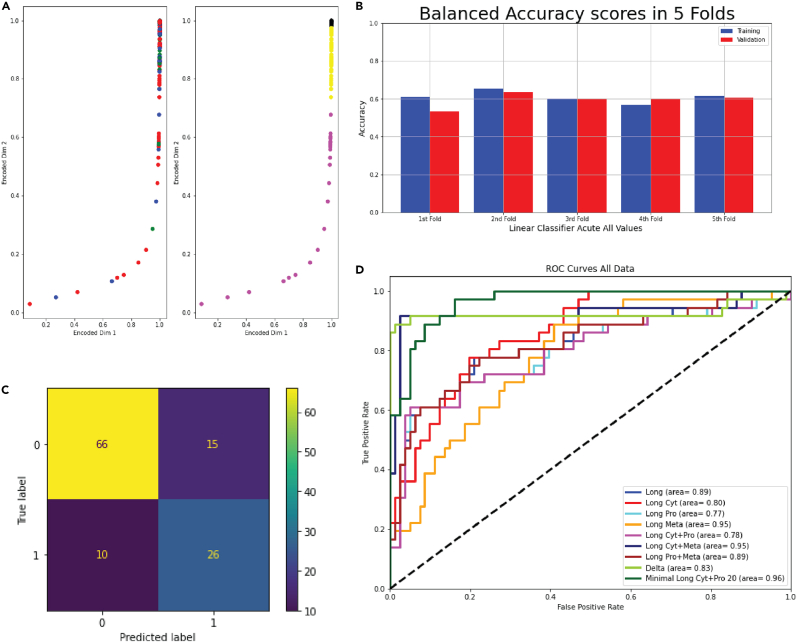
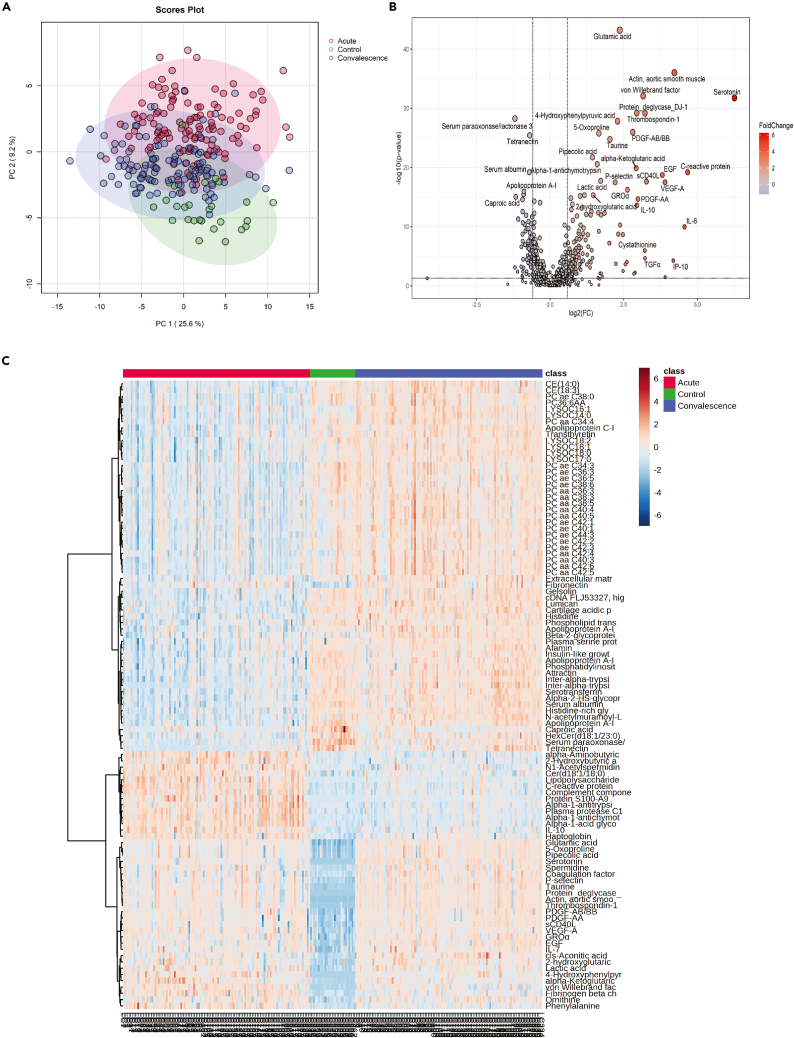
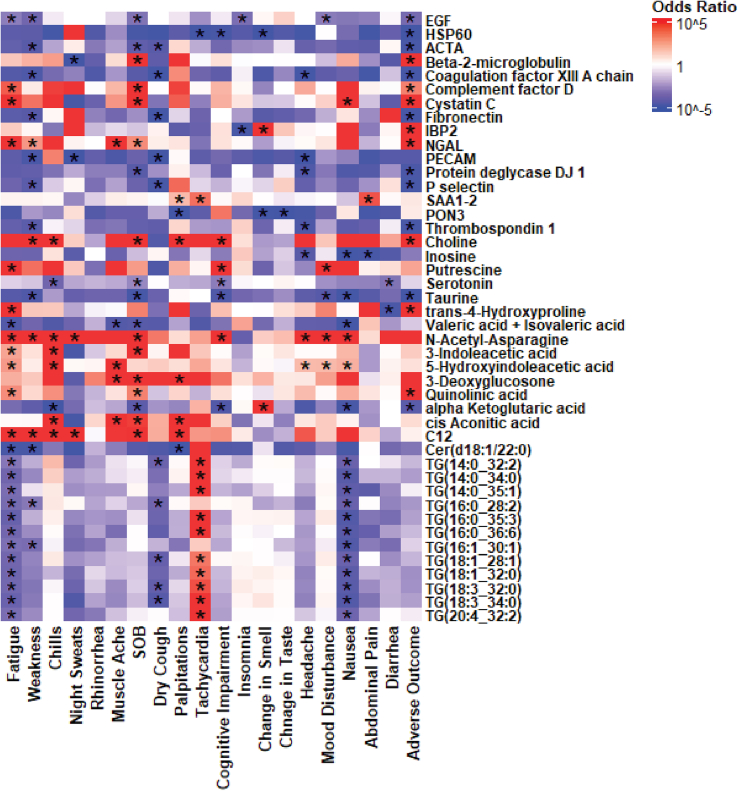
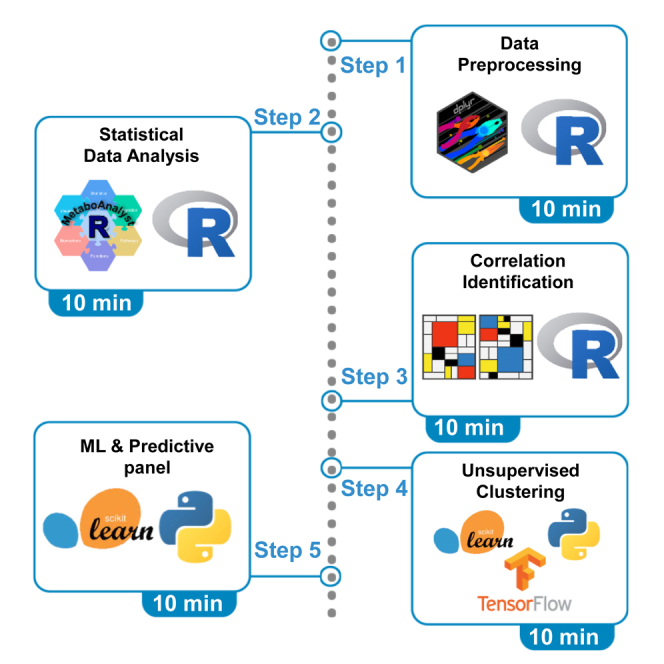
Here, we present a workflow for analyzing multi-omics data of plasma samples in patients with post-COVID condition (PCC). Applicable to various diseases, we outline steps for data preprocessing and integrating diverse assay datasets. Then, we detail statistical analysis to unveil plasma profile changes and identify biomarker-clinical variable associations. The last two steps discuss machine learning techniques for unsupervised clustering of patients based on their inherent molecular similarities and feature selection to identify predictive biomarkers. For complete details on the use and execution of this protocol, please refer to Wang et al..

摘要

在这里,我们提出了一种分析新冠后(post-COVID)患者血浆样本多组学数据的工作流程。该方法适用于各种疾病,概述了数据预处理和整合不同检测数据集的步骤。然后,我们详细介绍了统计分析,以揭示血浆谱变化,并确定生物标志物与临床变量的关联。最后两个步骤讨论了基于患者内在分子相似性的无监督聚类和特征选择的机器学习技术,以识别预测生物标志物。有关本方案使用和执行的详细信息,请参考 Wang 等人的研究。
https://cdn.ncbi.nlm.nih.gov/pmc/blobs/d039/11068918/45ead581186b/gr3.jpg
https://cdn.ncbi.nlm.nih.gov/pmc/blobs/d039/11068918/ec3e258b3500/fx1.jpg
https://cdn.ncbi.nlm.nih.gov/pmc/blobs/d039/11068918/863551b4228f/gr1.jpg
https://cdn.ncbi.nlm.nih.gov/pmc/blobs/d039/11068918/9885f4315a50/gr2.jpg
https://cdn.ncbi.nlm.nih.gov/pmc/blobs/d039/11068918/45ead581186b/gr3.jpg
https://cdn.ncbi.nlm.nih.gov/pmc/blobs/d039/11068918/ec3e258b3500/fx1.jpg
https://cdn.ncbi.nlm.nih.gov/pmc/blobs/d039/11068918/863551b4228f/gr1.jpg
https://cdn.ncbi.nlm.nih.gov/pmc/blobs/d039/11068918/9885f4315a50/gr2.jpg
https://cdn.ncbi.nlm.nih.gov/pmc/blobs/d039/11068918/45ead581186b/gr3.jpg

相似文献

1
Protocol to identify biomarkers in patients with post-COVID condition using multi-omics and machine learning analysis of human plasma.使用人类血浆的多组学和机器学习分析鉴定新冠后状况患者生物标志物的方案。
STAR Protoc. 2024 Jun 21;5(2):103041. doi: 10.1016/j.xpro.2024.103041. Epub 2024 Apr 27.
2
MixOmics Integration of Biological Datasets Identifies Highly Correlated Variables of COVID-19 Severity.生物数据集的MixOmics整合识别出与新冠病毒疾病严重程度高度相关的变量。
Int J Mol Sci. 2025 May 15;26(10):4743. doi: 10.3390/ijms26104743.
3
Development of a multiomics model for identification of predictive biomarkers for COVID-19 severity: a retrospective cohort study.开发多组学模型以识别 COVID-19 严重程度的预测生物标志物:一项回顾性队列研究。
Lancet Digit Health. 2022 Sep;4(9):e632-e645. doi: 10.1016/S2589-7500(22)00112-1. Epub 2022 Jul 11.
4
Proteomic analysis of post-COVID condition: Insights from plasma and pellet blood fractions.新冠后状况的蛋白质组学分析:来自血浆和沉淀血部分的见解。
J Infect Public Health. 2024 Dec;17(12):102571. doi: 10.1016/j.jiph.2024.102571. Epub 2024 Oct 23.
5
A comprehensive review of machine learning techniques for multi-omics data integration: challenges and applications in precision oncology.多组学数据整合的机器学习技术综合综述:精准肿瘤学中的挑战与应用
Brief Funct Genomics. 2024 Sep 27;23(5):549-560. doi: 10.1093/bfgp/elae013.
6
Multi-omics data integration identifies novel biomarkers and patient subgroups in inflammatory bowel disease.多组学数据整合识别出炎症性肠病中的新型生物标志物和患者亚组。
J Crohns Colitis. 2025 Jan 11;19(1). doi: 10.1093/ecco-jcc/jjae197.
7
Novel COVID-19 biomarkers identified through multi-omics data analysis: N-acetyl-4-O-acetylneuraminic acid, N-acetyl-L-alanine, N-acetyltriptophan, palmitoylcarnitine, and glycerol 1-myristate.通过多组学数据分析鉴定的新型 COVID-19 生物标志物:N-乙酰-4-O-乙酰神经氨酸、N-乙酰-L-丙氨酸、N-乙酰色氨酸、棕榈酰肉碱和肉豆蔻酸 1-肉豆蔻酯。
Intern Emerg Med. 2024 Aug;19(5):1439-1458. doi: 10.1007/s11739-024-03547-1. Epub 2024 Feb 28.
8
Advance computational tools for multiomics data learning.多组学数据学习的先进计算工具。
Biotechnol Adv. 2024 Dec;77:108447. doi: 10.1016/j.biotechadv.2024.108447. Epub 2024 Sep 7.
9
The Impact of Serum/Plasma Proteomics on SARS-CoV-2 Diagnosis and Prognosis.血清/血浆蛋白质组学对 SARS-CoV-2 诊断和预后的影响。
Int J Mol Sci. 2024 Aug 8;25(16):8633. doi: 10.3390/ijms25168633.
10
Protocol for CAROM: A machine learning tool to predict post-translational regulation from metabolic signatures.CAROM 方案:一种基于代谢特征预测翻译后调控的机器学习工具
STAR Protoc. 2022 Oct 29;3(4):101799. doi: 10.1016/j.xpro.2022.101799. eCollection 2022 Dec 16.

引用本文的文献

1
The Omics Landscape of Long COVID-A Comprehensive Systematic Review to Advance Biomarker, Target and Drug Discovery.长新冠的组学全景——推进生物标志物、靶点和药物发现的全面系统综述
Allergy. 2025 Apr;80(4):932-948. doi: 10.1111/all.16526. Epub 2025 Mar 14.