Santiago-Maldonado Xaimara, Rodríguez-Martínez José A, López Luis, Cunci Lisandro, Bayro Marvin, Nicolau Eduardo
Department of Chemistry, University of Puerto Rico San Juan PR 00925-2437 USA
Department of Biology, University of Puerto Rico San Juan PR 00925-2437 USA
RSC Adv. 2024 Apr 26;14(20):13787-13800. doi: 10.1039/d4ra02384f. eCollection 2024 Apr 25.
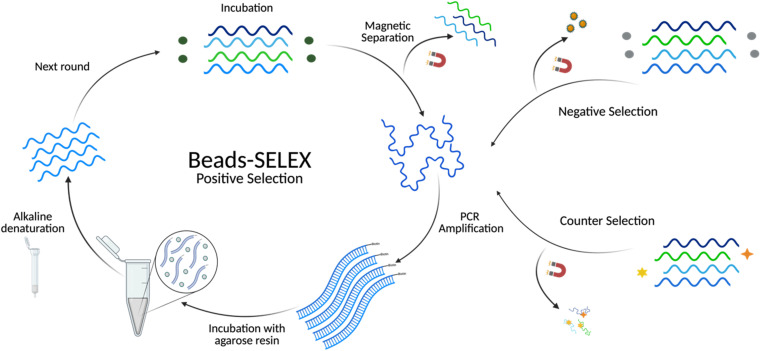
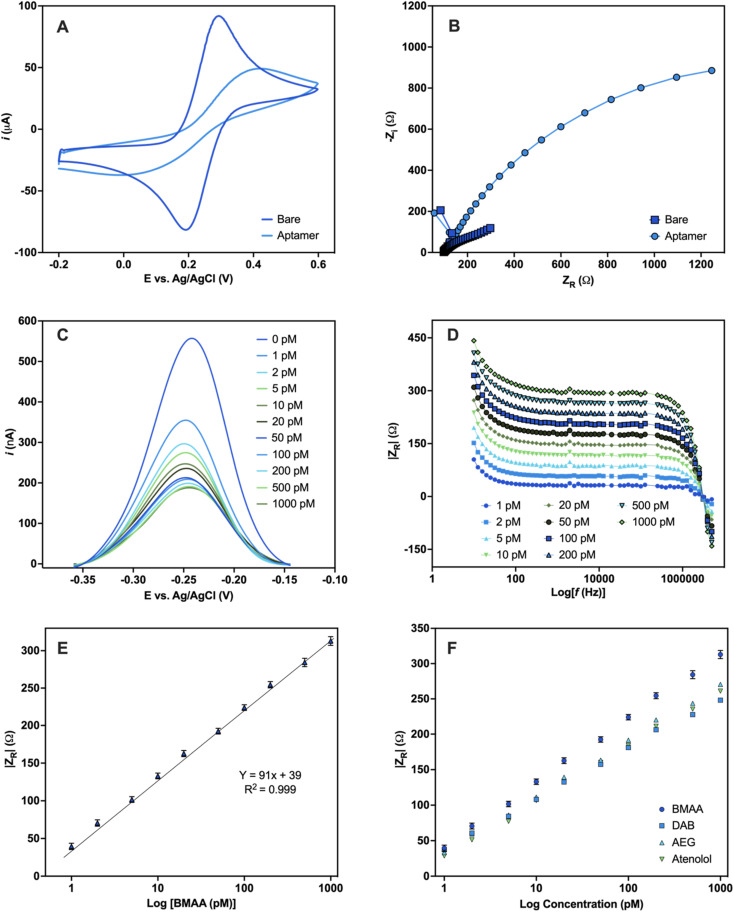
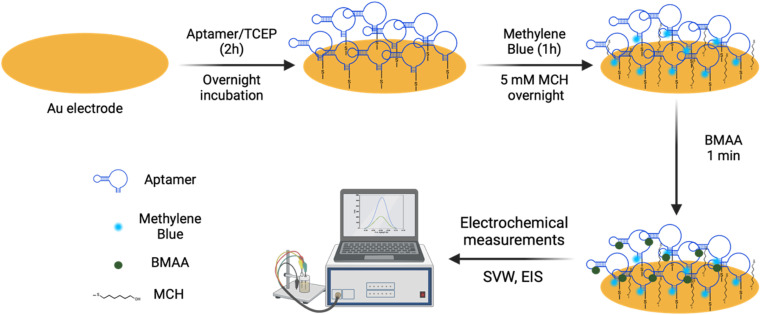
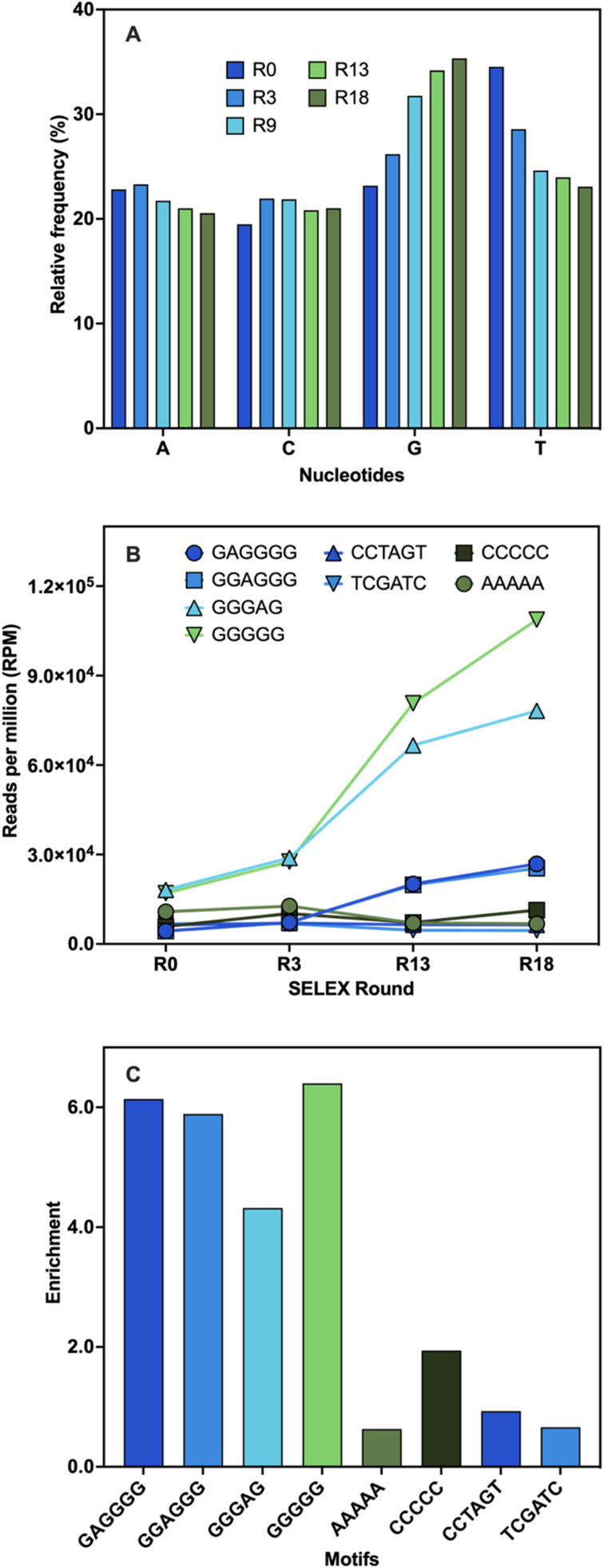
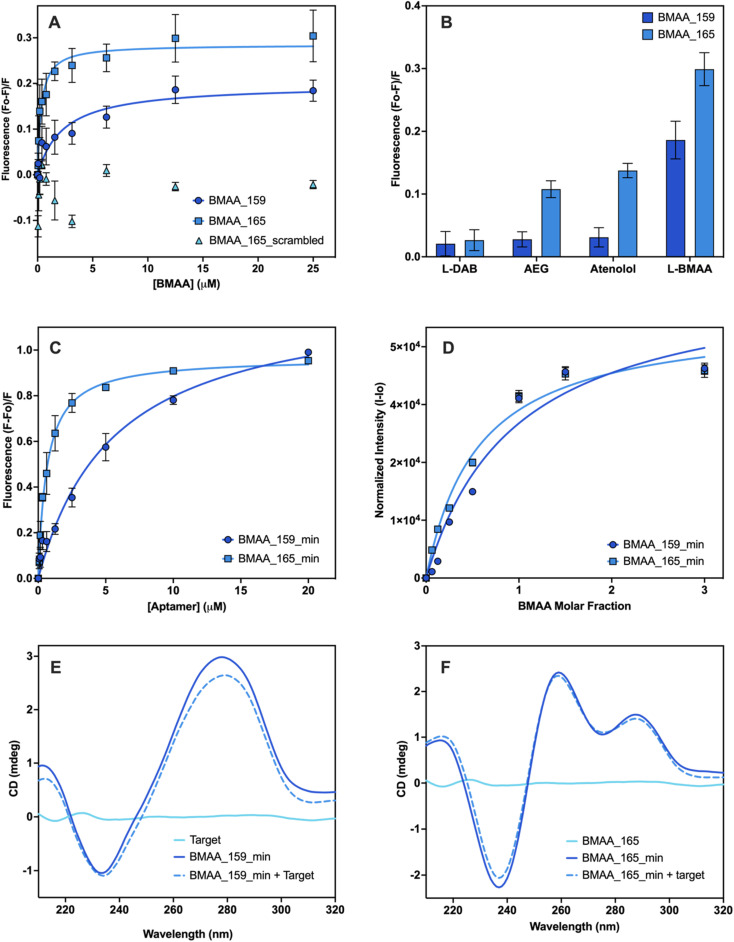
Scientists have established a connection between environmental exposure to toxins like β--methylamino-l-alanine (BMAA) and a heightened risk of neurodegenerative disorders. BMAA is a byproduct from certain strains of cyanobacteria that are present in ecosystems worldwide and is renowned for its bioaccumulation and biomagnification in seafood. The sensitivity, selectivity, and reproducibility of the current analytical techniques are insufficient to support efforts regarding food safety and environment monitoring adequately. This work outlines the selection of BMAA-specific DNA aptamers the systematic evolution of ligands through exponential enrichment (SELEX). Screening and characterization of the full-length aptamers was achieved using the SYBR Green (SG) fluorescence displacement assay. Aptamers BMAA_159 and BMAA_165 showed the highest binding affinities, with dissociation constants () of 2.2 ± 0.1 μM and 0.32 ± 0.02 μM, respectively. After truncation, the binding affinity was confirmed using a BMAA-conjugated fluorescence assay. The values for BMAA_159_min and BMAA_165_min were 6 ± 1 μM and 0.63 ± 0.02 μM, respectively. Alterations in the amino proton region studied using solution nuclear magnetic resonance (NMR) provided further evidence of aptamer-target binding. Additionally, circular dichroism (CD) spectroscopy revealed that BMAA_165_min forms hybrid G-quadruplex (G4) structures. Finally, BMAA_165_min was used in the development of an electrochemical aptamer-based (EAB) sensor that accomplished sensitive and selective detection of BMAA with a limit of detection (LOD) of 1.13 ± 0.02 pM.
科学家们已经确定,环境中接触β-甲基氨基-L-丙氨酸(BMAA)等毒素与神经退行性疾病风险增加之间存在联系。BMAA是某些蓝藻菌株产生的副产物,这些蓝藻存在于全球生态系统中,以其在海鲜中的生物累积和生物放大作用而闻名。当前分析技术的灵敏度、选择性和可重复性不足以充分支持食品安全和环境监测工作。这项工作概述了通过指数富集配体系统进化技术(SELEX)筛选BMAA特异性DNA适配体的过程。使用SYBR Green(SG)荧光位移分析法对全长适配体进行筛选和表征。适配体BMAA_159和BMAA_165表现出最高的结合亲和力,解离常数(KD)分别为2.2±0.1μM和0.32±0.02μM。截短后,使用BMAA偶联荧光分析法确认了结合亲和力。BMAA_159_min和BMAA_165_min的KD值分别为6±1μM和0.63±0.02μM。使用溶液核磁共振(NMR)研究氨基质子区域的变化,进一步证明了适配体与靶标的结合。此外,圆二色性(CD)光谱显示BMAA_165_min形成了杂合G-四链体(G4)结构。最后,BMAA_165_min被用于开发一种基于适配体的电化学(EAB)传感器,该传感器实现了对BMAA的灵敏和选择性检测检出限(LOD)为1.13±0.02 pM。