• 文献检索
  • 文档翻译
  • 深度研究
  • 学术资讯
  • Suppr Zotero 插件Zotero 插件
  • 邀请有礼
  • 套餐&价格
  • 历史记录
应用&插件
Suppr Zotero 插件Zotero 插件浏览器插件Mac 客户端Windows 客户端微信小程序
定价
高级版会员购买积分包购买API积分包
服务
文献检索文档翻译深度研究API 文档MCP 服务
关于我们
关于 Suppr公司介绍联系我们用户协议隐私条款
关注我们

Suppr 超能文献

核心技术专利:CN118964589B侵权必究
粤ICP备2023148730 号-1Suppr @ 2026

文献检索

告别复杂PubMed语法,用中文像聊天一样搜索,搜遍4000万医学文献。AI智能推荐,让科研检索更轻松。

立即免费搜索

文件翻译

保留排版,准确专业,支持PDF/Word/PPT等文件格式,支持 12+语言互译。

免费翻译文档

深度研究

AI帮你快速写综述,25分钟生成高质量综述,智能提取关键信息,辅助科研写作。

立即免费体验

对罕见基因组项目中罕见病诊断的变异优先级方法的批判性评估。

Critical assessment of variant prioritization methods for rare disease diagnosis within the rare genomes project.

机构信息

Division of Genetics and Genomics, Boston Children's Hospital, Harvard Medical School, Boston, MA, USA.

Program in Medical and Population Genetics, Broad Institute of MIT and Harvard, Cambridge, MA, USA.

出版信息

Hum Genomics. 2024 Apr 29;18(1):44. doi: 10.1186/s40246-024-00604-w.

DOI:10.1186/s40246-024-00604-w
PMID:38685113
原文链接:https://pmc.ncbi.nlm.nih.gov/articles/PMC11057178/
Abstract

BACKGROUND

A major obstacle faced by families with rare diseases is obtaining a genetic diagnosis. The average "diagnostic odyssey" lasts over five years and causal variants are identified in under 50%, even when capturing variants genome-wide. To aid in the interpretation and prioritization of the vast number of variants detected, computational methods are proliferating. Knowing which tools are most effective remains unclear. To evaluate the performance of computational methods, and to encourage innovation in method development, we designed a Critical Assessment of Genome Interpretation (CAGI) community challenge to place variant prioritization models head-to-head in a real-life clinical diagnostic setting.

METHODS

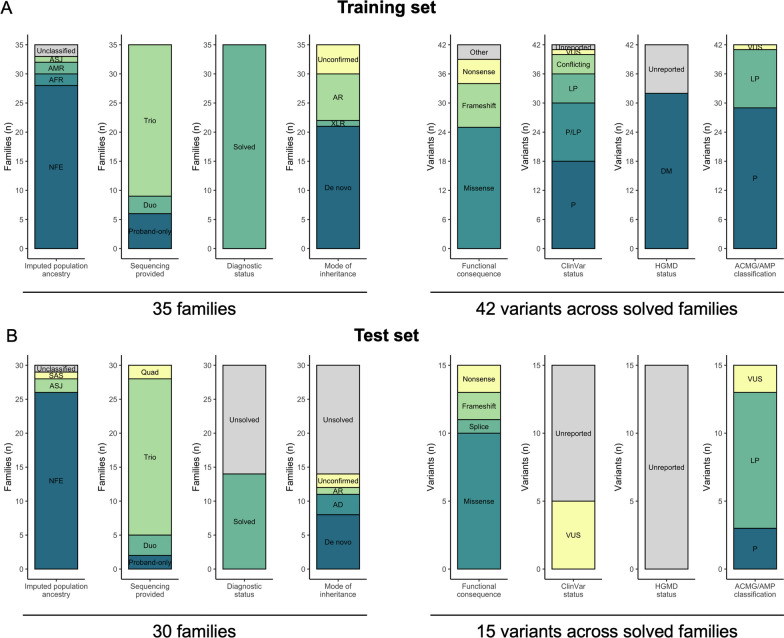
We utilized genome sequencing (GS) data from families sequenced in the Rare Genomes Project (RGP), a direct-to-participant research study on the utility of GS for rare disease diagnosis and gene discovery. Challenge predictors were provided with a dataset of variant calls and phenotype terms from 175 RGP individuals (65 families), including 35 solved training set families with causal variants specified, and 30 unlabeled test set families (14 solved, 16 unsolved). We tasked teams to identify causal variants in as many families as possible. Predictors submitted variant predictions with estimated probability of causal relationship (EPCR) values. Model performance was determined by two metrics, a weighted score based on the rank position of causal variants, and the maximum F-measure, based on precision and recall of causal variants across all EPCR values.

RESULTS

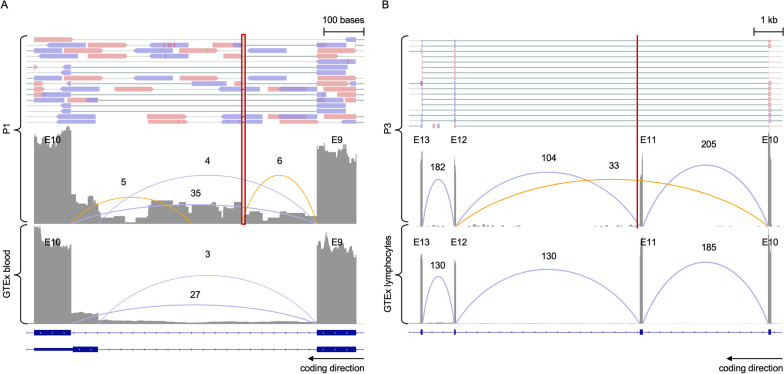
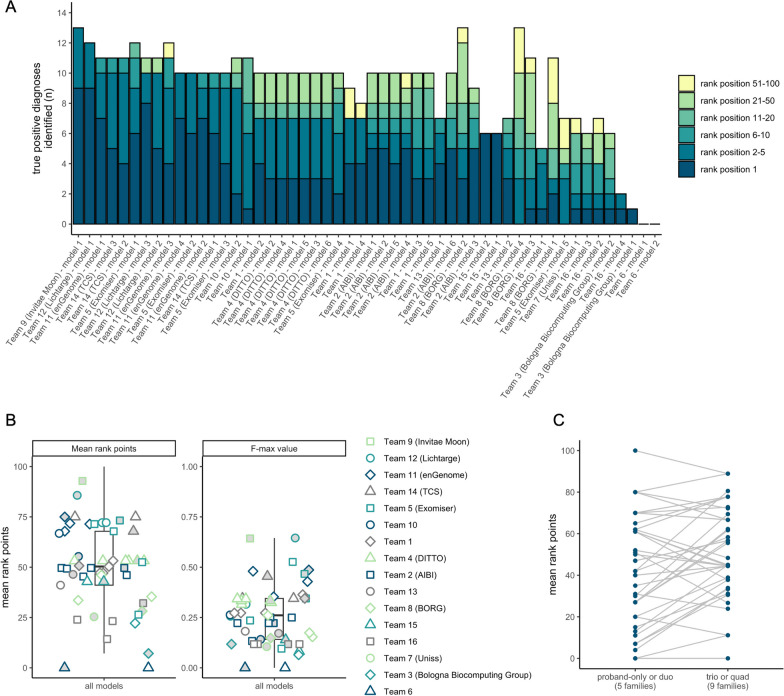
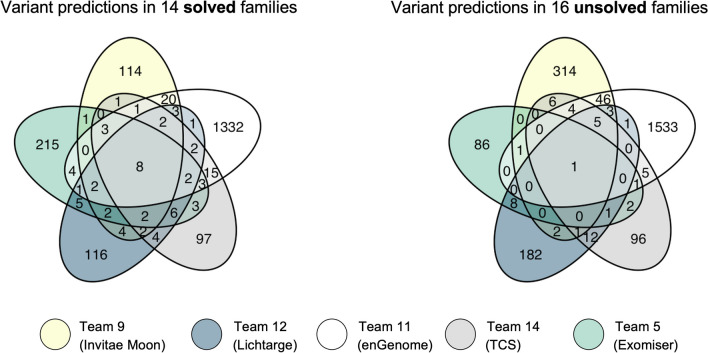
Sixteen teams submitted predictions from 52 models, some with manual review incorporated. Top performers recalled causal variants in up to 13 of 14 solved families within the top 5 ranked variants. Newly discovered diagnostic variants were returned to two previously unsolved families following confirmatory RNA sequencing, and two novel disease gene candidates were entered into Matchmaker Exchange. In one example, RNA sequencing demonstrated aberrant splicing due to a deep intronic indel in ASNS, identified in trans with a frameshift variant in an unsolved proband with phenotypes consistent with asparagine synthetase deficiency.

CONCLUSIONS

Model methodology and performance was highly variable. Models weighing call quality, allele frequency, predicted deleteriousness, segregation, and phenotype were effective in identifying causal variants, and models open to phenotype expansion and non-coding variants were able to capture more difficult diagnoses and discover new diagnoses. Overall, computational models can significantly aid variant prioritization. For use in diagnostics, detailed review and conservative assessment of prioritized variants against established criteria is needed.

摘要

背景

罕见病患者家庭面临的主要障碍是获得基因诊断。平均“诊断探索”超过五年,即使在全基因组范围内捕获变异,也只有不到 50%的患者能确定病因。为了帮助解释和优先考虑大量检测到的变异,计算方法正在大量涌现。目前尚不清楚哪些工具最有效。为了评估计算方法的性能,并鼓励方法开发方面的创新,我们设计了一个基因组解读关键评估(CAGI)社区挑战,将变异优先级模型置于真实临床诊断环境中进行直接比较。

方法

我们利用在罕见基因组项目(RGP)中对参与者进行直接测序(GS)的数据,这是一项关于 GS 在罕见病诊断和基因发现中的效用的研究。预测器提供了来自 175 名 RGP 个体(65 个家庭)的变异调用和表型术语数据集,包括 35 个具有指定因果变异的解决训练集家庭,以及 30 个未标记的测试集家庭(14 个已解决,16 个未解决)。我们的任务是尽可能多地识别出家庭中的因果变异。预测器提交了具有因果关系估计概率(EPCR)值的变异预测。模型性能通过两个指标来确定,一个是基于因果变异排名位置的加权分数,另一个是基于所有 EPCR 值的因果变异精度和召回率的最大 F 分数。

结果

有 16 个团队提交了 52 个模型的预测结果,其中一些模型包含手动审查。表现最好的模型在排名前 5 位的变异中召回了多达 13 个因果变异。在进行了确认性 RNA 测序后,新发现的诊断性变异被返回到两个之前未解决的家庭中,两个新的疾病基因候选者被输入到 Matchmaker Exchange 中。在一个例子中,由于 ASNS 中一个深内含子插入/缺失导致的异常剪接,通过与一个未解决的先证者的移码变异在 trans 中被鉴定出来,该先证者的表型与天冬酰胺合成酶缺乏一致。

结论

模型方法和性能差异很大。在识别因果变异时,综合考虑了变异质量、等位基因频率、预测的有害性、分离和表型的模型是有效的,而对表型扩展和非编码变异开放的模型则能够捕捉到更困难的诊断并发现新的诊断。总的来说,计算模型可以显著帮助变异优先级排序。为了在诊断中使用,需要对优先考虑的变异进行详细的审查,并根据既定标准进行保守评估。
https://cdn.ncbi.nlm.nih.gov/pmc/blobs/4ecb/11057178/5709d67b89df/40246_2024_604_Fig4_HTML.jpg
https://cdn.ncbi.nlm.nih.gov/pmc/blobs/4ecb/11057178/61511a0c50cb/40246_2024_604_Fig1_HTML.jpg
https://cdn.ncbi.nlm.nih.gov/pmc/blobs/4ecb/11057178/00eb20c3dd95/40246_2024_604_Fig2_HTML.jpg
https://cdn.ncbi.nlm.nih.gov/pmc/blobs/4ecb/11057178/fbee65bea7b8/40246_2024_604_Fig3_HTML.jpg
https://cdn.ncbi.nlm.nih.gov/pmc/blobs/4ecb/11057178/5709d67b89df/40246_2024_604_Fig4_HTML.jpg
https://cdn.ncbi.nlm.nih.gov/pmc/blobs/4ecb/11057178/61511a0c50cb/40246_2024_604_Fig1_HTML.jpg
https://cdn.ncbi.nlm.nih.gov/pmc/blobs/4ecb/11057178/00eb20c3dd95/40246_2024_604_Fig2_HTML.jpg
https://cdn.ncbi.nlm.nih.gov/pmc/blobs/4ecb/11057178/fbee65bea7b8/40246_2024_604_Fig3_HTML.jpg
https://cdn.ncbi.nlm.nih.gov/pmc/blobs/4ecb/11057178/5709d67b89df/40246_2024_604_Fig4_HTML.jpg

相似文献

1
Critical assessment of variant prioritization methods for rare disease diagnosis within the rare genomes project.对罕见基因组项目中罕见病诊断的变异优先级方法的批判性评估。
Hum Genomics. 2024 Apr 29;18(1):44. doi: 10.1186/s40246-024-00604-w.
2
Critical assessment of variant prioritization methods for rare disease diagnosis within the Rare Genomes Project.罕见基因组计划中罕见病诊断变异优先级排序方法的批判性评估
medRxiv. 2023 Aug 4:2023.08.02.23293212. doi: 10.1101/2023.08.02.23293212.
3
Uncovering recessive alleles in rare Mendelian disorders by genome sequencing of 174 individuals with monoallelic pathogenic variants.通过对174名单等位基因致病变异个体进行基因组测序,发现罕见孟德尔疾病中的隐性等位基因。
Eur J Hum Genet. 2025 Jan;33(1):56-64. doi: 10.1038/s41431-024-01694-9. Epub 2024 Sep 27.
4
Explicable prioritization of genetic variants by integration of rule-based and machine learning algorithms for diagnosis of rare Mendelian disorders.基于规则和机器学习算法的遗传变异可解释优先级排序,用于罕见孟德尔疾病的诊断。
Hum Genomics. 2024 Mar 21;18(1):28. doi: 10.1186/s40246-024-00595-8.
5
Structural and non-coding variants increase the diagnostic yield of clinical whole genome sequencing for rare diseases.结构变异和非编码变异增加了临床全基因组测序在罕见病诊断中的收益。
Genome Med. 2023 Nov 9;15(1):94. doi: 10.1186/s13073-023-01240-0.
6
Artificial intelligence enables comprehensive genome interpretation and nomination of candidate diagnoses for rare genetic diseases.人工智能能够全面解读基因组并为罕见遗传病提名候选诊断。
Genome Med. 2021 Oct 14;13(1):153. doi: 10.1186/s13073-021-00965-0.
7
CAVaLRi: An Algorithm for Rapid Identification of Diagnostic Germline Variation.CAVaLRi:一种快速识别诊断性种系变异的算法。
Hum Mutat. 2024 Apr 29;2024:6411444. doi: 10.1155/2024/6411444. eCollection 2024.
8
Increasing phenotypic annotation improves the diagnostic rate of exome sequencing in a rare neuromuscular disorder.增加表型注释可提高罕见神经肌肉疾病外显子组测序的诊断率。
Hum Mutat. 2019 Oct;40(10):1797-1812. doi: 10.1002/humu.23792. Epub 2019 Jun 23.
9
CAGI4 SickKids clinical genomes challenge: A pipeline for identifying pathogenic variants.CAGI4 病童临床基因组挑战:一种识别致病变异的流程。
Hum Mutat. 2017 Sep;38(9):1169-1181. doi: 10.1002/humu.23257. Epub 2017 Jun 27.
10
A visual and curatorial approach to clinical variant prioritization and disease gene discovery in genome-wide diagnostics.一种用于全基因组诊断中临床变异优先级排序和疾病基因发现的可视化与策展方法。
Genome Med. 2016 Feb 2;8(1):13. doi: 10.1186/s13073-016-0261-8.

引用本文的文献

1
Gene-based calibration of high-throughput functional assays for clinical variant classification.用于临床变异分类的高通量功能测定的基于基因的校准
bioRxiv. 2025 May 4:2025.04.29.651326. doi: 10.1101/2025.04.29.651326.
2
Digenic variant interpretation with hypothesis-driven explainable AI.基于假设驱动的可解释人工智能的双基因变异解读
NAR Genom Bioinform. 2025 Mar 29;7(2):lqaf029. doi: 10.1093/nargab/lqaf029. eCollection 2025 Jun.
3
Towards a standard benchmark for phenotype-driven variant and gene prioritisation algorithms: PhEval - Phenotypic inference Evaluation framework.

本文引用的文献

1
CAGI, the Critical Assessment of Genome Interpretation, establishes progress and prospects for computational genetic variant interpretation methods.CAGI,即基因组解读的关键评估,旨在评估计算遗传变异解读方法的进展和前景。
Genome Biol. 2024 Feb 22;25(1):53. doi: 10.1186/s13059-023-03113-6.
2
Advancing Understanding of Inequities in Rare Disease Genomics.推进罕见病基因组学中不公平现象的认识。
Clin Ther. 2023 Aug;45(8):745-753. doi: 10.1016/j.clinthera.2023.06.010. Epub 2023 Jul 28.
3
Calibration of computational tools for missense variant pathogenicity classification and ClinGen recommendations for PP3/BP4 criteria.
迈向用于表型驱动的变异体和基因优先级排序算法的标准基准:PhEval - 表型推断评估框架。
BMC Bioinformatics. 2025 Mar 22;26(1):87. doi: 10.1186/s12859-025-06105-4.
4
A Perspective on Artificial Intelligence for Molecular Pathologists.分子病理学家对人工智能的展望
J Mol Diagn. 2025 May;27(5):323-335. doi: 10.1016/j.jmoldx.2025.01.005. Epub 2025 Feb 13.
5
Identification of positions in human aldolase a that are neutral for apparent K.鉴定人醛缩酶 a 中对表观 K. 为中性的位置。
Arch Biochem Biophys. 2024 Nov;761:110183. doi: 10.1016/j.abb.2024.110183. Epub 2024 Oct 24.
6
Forecasting dominance of SARS-CoV-2 lineages by anomaly detection using deep AutoEncoders.利用深度自编码器的异常检测预测 SARS-CoV-2 谱系的优势度。
Brief Bioinform. 2024 Sep 23;25(6). doi: 10.1093/bib/bbae535.
7
Towards a standard benchmark for phenotype-driven variant and gene prioritisation algorithms: PhEval - Phenotypic inference Evaluation framework.迈向用于表型驱动的变异和基因优先级排序算法的标准基准:PhEval - 表型推断评估框架。
bioRxiv. 2025 Feb 20:2024.06.13.598672. doi: 10.1101/2024.06.13.598672.
8
VarChat: the generative AI assistant for the interpretation of human genomic variations.VarChat:用于解读人类基因组变异的生成式人工智能助手。
Bioinformatics. 2024 Mar 29;40(4). doi: 10.1093/bioinformatics/btae183.
9
An AI-based approach driven by genotypes and phenotypes to uplift the diagnostic yield of genetic diseases.一种由基因型和表型驱动的基于人工智能的方法,以提高遗传疾病的诊断率。
Hum Genet. 2025 Mar;144(2-3):159-171. doi: 10.1007/s00439-023-02638-x. Epub 2024 Mar 23.
10
Functional genomics and small molecules in mitochondrial neurodevelopmental disorders.线粒体神经发育障碍中的功能基因组学和小分子。
Neurotherapeutics. 2024 Jan;21(1):e00316. doi: 10.1016/j.neurot.2024.e00316. Epub 2024 Jan 19.
计算工具的校准用于错义变异致病性分类和 ClinGen 对 PP3/BP4 标准的建议。
Am J Hum Genet. 2022 Dec 1;109(12):2163-2177. doi: 10.1016/j.ajhg.2022.10.013. Epub 2022 Nov 21.
4
The Gene Curation Coalition: A global effort to harmonize gene-disease evidence resources.基因保存联盟:全球协同统一基因-疾病证据资源
Genet Med. 2022 Aug;24(8):1732-1742. doi: 10.1016/j.gim.2022.04.017. Epub 2022 May 4.
5
Phenotype-driven approaches to enhance variant prioritization and diagnosis of rare disease.基于表型的方法提高罕见病变异的优先级和诊断。
Hum Mutat. 2022 Aug;43(8):1071-1081. doi: 10.1002/humu.24380. Epub 2022 Apr 27.
6
Clinical implementation of RNA sequencing for Mendelian disease diagnostics.RNA 测序在孟德尔疾病诊断中的临床应用。
Genome Med. 2022 Apr 5;14(1):38. doi: 10.1186/s13073-022-01019-9.
7
seqr: A web-based analysis and collaboration tool for rare disease genomics.seqr:一个用于罕见病基因组学的基于网络的分析和协作工具。
Hum Mutat. 2022 Jun;43(6):698-707. doi: 10.1002/humu.24366. Epub 2022 Mar 21.
8
A machine learning approach based on ACMG/AMP guidelines for genomic variant classification and prioritization.基于 ACMG/AMP 指南的基因组变异分类和优先级的机器学习方法。
Sci Rep. 2022 Feb 15;12(1):2517. doi: 10.1038/s41598-022-06547-3.
9
100,000 Genomes Pilot on Rare-Disease Diagnosis in Health Care - Preliminary Report.10 万基因组计划在医疗保健中的罕见病诊断 - 初步报告。
N Engl J Med. 2021 Nov 11;385(20):1868-1880. doi: 10.1056/NEJMoa2035790.
10
Clustered mutations in the GRIK2 kainate receptor subunit gene underlie diverse neurodevelopmental disorders.簇集突变导致 GRIK2 型谷氨酸受体亚基基因异常,从而引发多种神经发育障碍。
Am J Hum Genet. 2021 Sep 2;108(9):1692-1709. doi: 10.1016/j.ajhg.2021.07.007. Epub 2021 Aug 9.