
恢复在抗阻训练微周期构建中的重要性。
The Importance of Recovery in Resistance Training Microcycle Construction.
作者信息
Sousa Colby A, Zourdos Michael C, Storey Adam G, Helms Eric R
机构信息
Sport Performance Research Institute New Zealand (SPRINZ), Auckland University of Technology, Auckland, New Zealand.
Exercise Science and Health Promotion, Muscle Physiology Laboratory, Florida Atlantic University, Boca Raton, United States.
出版信息
J Hum Kinet. 2024 Apr 15;91(Spec Issue):205-223. doi: 10.5114/jhk/186659. eCollection 2024 Mar.
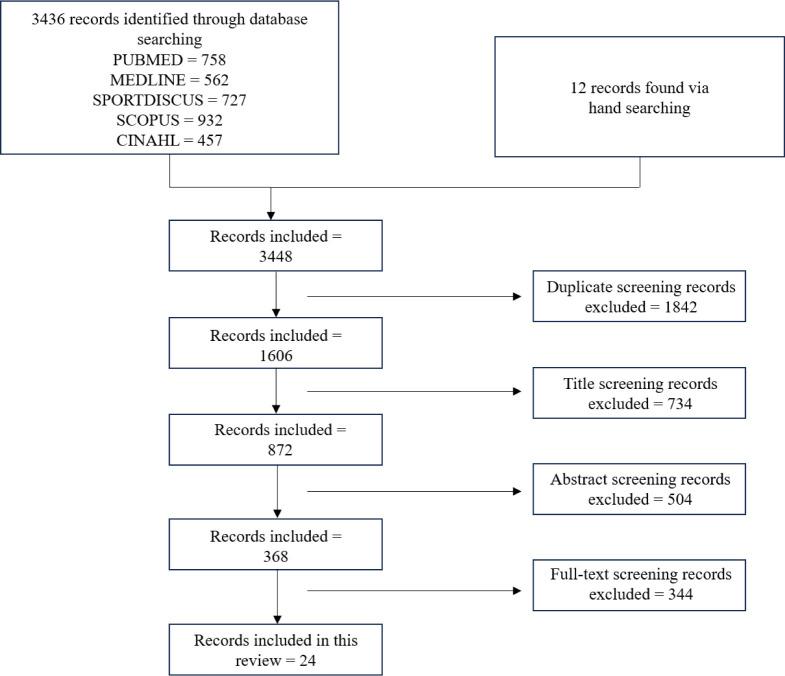
Systemic resistance training aims to enhance performance by balancing stress, fatigue and recovery. While fatigue is expected, insufficient recovery may temporarily impair performance. The aim of this review was to examine evidence regarding manipulation of resistance training variables on subsequent effects on recovery and performance. PubMed, Medline, SPORTDiscus, Scopus and CINAHL were searched. Only studies that investigated recovery between resistance training sessions were selected, with a total of 24 articles included for review. Training to failure may lengthen recovery times, potentially impairing performance; however, it may be suitable if implemented strategically ensuring adequate recovery between sessions of similar exercises or muscle groups. Higher volumes may increase recovery demands, especially when paired with training to failure, however, with wide variation in individual responses, it is suggested to start with lower volume, monitor recovery, and gradually increase training volume if appropriate. Exercises emphasising the lower body, multi-joint movements, greater muscle recruitment, eccentric contractions, and/or the lengthened position may require longer recovery times. Adjusting volume and frequency of these exercises can affect recovery demands depending on the goals and training logistics. Daily undulating programming may maximise performance on priority sessions while maintaining purposeful and productive easy days. For example, active recovery in the form of training opposing muscle groups, light aerobic cardio, or low-volume power-type training may improve recovery and potentially elicit a post activation potentiation priming effect compared to passive recovery. However, it is possible that training cessation may be adequate for allowing sufficient recovery prior to sessions of importance.
全身性抗阻训练旨在通过平衡压力、疲劳和恢复来提高运动表现。虽然疲劳是预期会出现的,但恢复不足可能会暂时损害运动表现。本综述的目的是研究关于抗阻训练变量的调整对后续恢复和运动表现影响的证据。检索了PubMed、Medline、SPORTDiscus、Scopus和CINAHL数据库。仅选择了调查抗阻训练课次之间恢复情况的研究,共纳入24篇文章进行综述。训练至力竭可能会延长恢复时间,潜在地损害运动表现;然而,如果策略性地实施,确保相似练习或肌肉群的课次之间有足够的恢复,那么训练至力竭可能是合适的。更高的训练量可能会增加恢复需求,尤其是与训练至力竭相结合时,然而,个体反应差异很大,建议从较低的训练量开始,监测恢复情况,并在适当的时候逐渐增加训练量。强调下肢、多关节运动、更大的肌肉募集、离心收缩和/或伸展姿势的练习可能需要更长的恢复时间。根据目标和训练安排调整这些练习的训练量和频率会影响恢复需求。每日波动式训练计划可能会在优先课次上最大化运动表现,同时保持有目的且有效的轻松日。例如,与被动恢复相比,以训练对侧肌肉群、轻度有氧心肺运动或低训练量力量型训练形式进行的主动恢复可能会改善恢复情况,并可能引发激活后增强的启动效应。然而,在重要课次之前停止训练可能足以实现充分恢复。
 Zotero 插件