John F. Hardesty, MD, Department of Ophthalmology and Visual Sciences.
Department of Medicine, and.
J Clin Invest. 2024 May 1;134(9):e178296. doi: 10.1172/JCI178296.
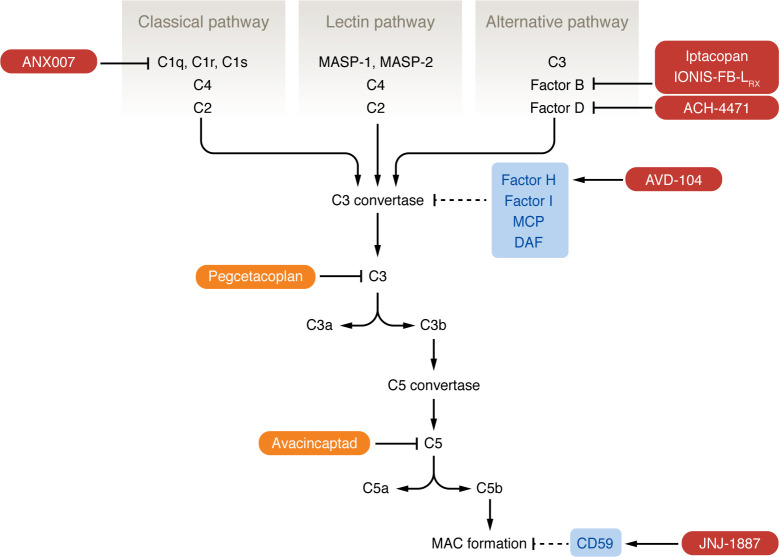
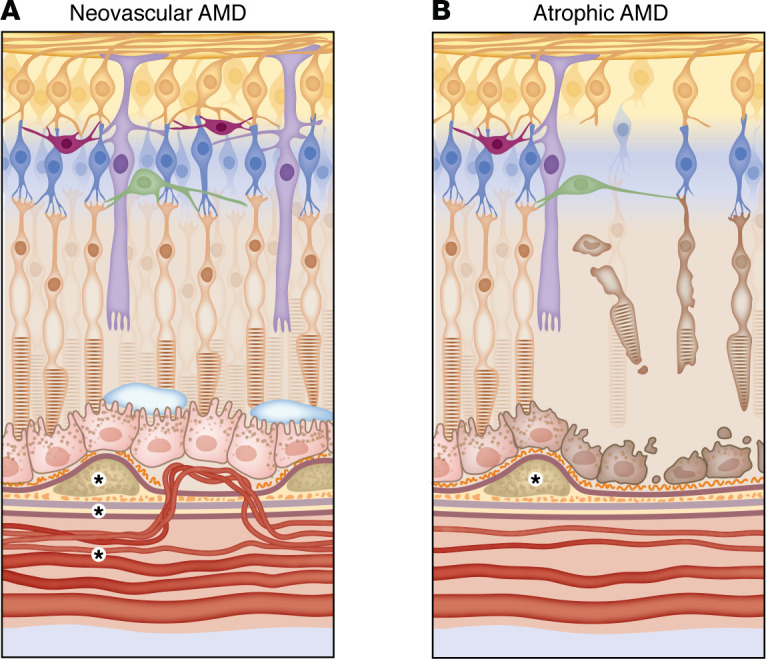
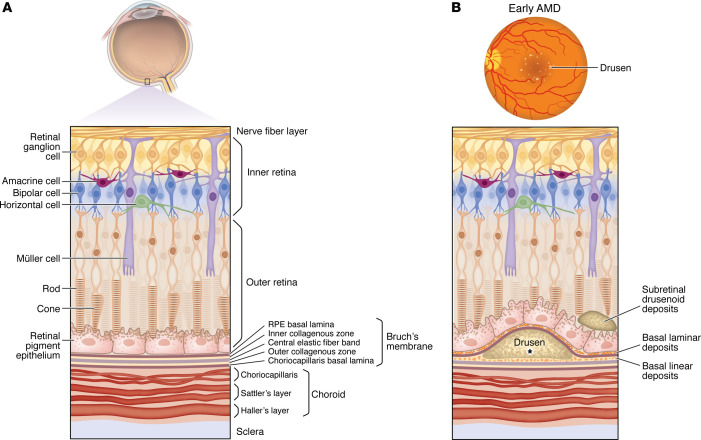
Careful regulation of the complement system is critical for enabling complement proteins to titrate immune defense while also preventing collateral tissue damage from poorly controlled inflammation. In the eye, this balance between complement activity and inhibition is crucial, as a low level of basal complement activity is necessary to support ocular immune privilege, a prerequisite for maintaining vision. Dysregulated complement activation contributes to parainflammation, a low level of inflammation triggered by cellular damage that functions to reestablish homeostasis, or outright inflammation that disrupts the visual axis. Complement dysregulation has been implicated in many ocular diseases, including glaucoma, diabetic retinopathy, and age-related macular degeneration (AMD). In the last two decades, complement activity has been the focus of intense investigation in AMD pathogenesis, leading to the development of novel therapeutics for the treatment of atrophic AMD. This Review outlines recent advances and challenges, highlighting therapeutic approaches that have advanced to clinical trials, as well as providing a general overview of the complement system in the posterior segment of the eye and selected ocular diseases.
谨慎调节补体系统对于使补体蛋白能够在滴定免疫防御的同时,防止因炎症失控而导致的组织损伤具有重要意义。在眼睛中,补体活性和抑制之间的这种平衡至关重要,因为基底补体活性的低水平对于支持眼部免疫特权是必要的,而眼部免疫特权是维持视力的前提。补体失调激活会导致副炎症,即细胞损伤引发的低水平炎症,其功能是重建体内平衡,或者是破坏视觉轴的炎症。补体失调与许多眼部疾病有关,包括青光眼、糖尿病性视网膜病变和年龄相关性黄斑变性(AMD)。在过去的二十年中,补体活性一直是 AMD 发病机制研究的焦点,导致了针对萎缩性 AMD 治疗的新型疗法的开发。本综述概述了最新进展和挑战,重点介绍了已推进到临床试验的治疗方法,以及概述了后节段眼睛中的补体系统和选定的眼部疾病。