International Institute for Population Sciences, Mumbai, Maharashtra, 400088, India.
Reprod Health. 2024 May 1;21(1):60. doi: 10.1186/s12978-024-01802-4.
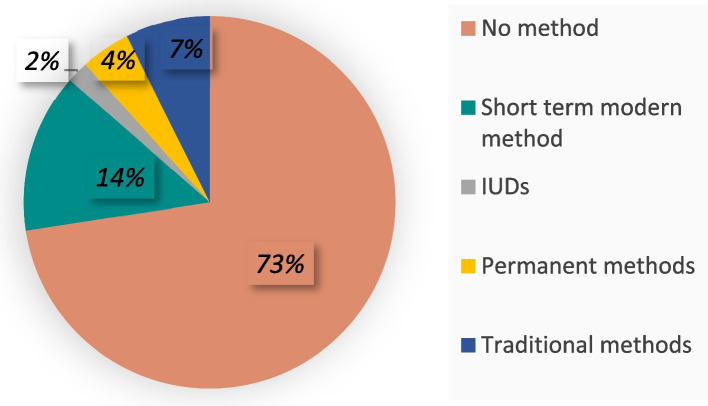
Putting an end to the silent pandemic of unsafe abortion is a major public health concern globally. Adoption of post-abortion contraception is documented as a significant contributor to reduce the number of unintended pregnancies and number of induced abortions. This study aimed at investigating the post abortion contraceptive behavior of Indian women exploring the determinants of post-abortion contraceptive uptake. Retrospective calendar data for 6,862 women aged 15-49 years from fifth round of National Family Health Survey (2019-2021) was used for the study. Multinomial logistic regression method was used to model the determinant factors to post-abortion contraceptive uptake. 72.6% women reported adopting no method of contraception after the abortion procedure. A total of 27.4% women adopted some method of contraception after abortion. 14% women preferred adopting short term modern methods. Women in early reproductive age group which is the most vulnerable group in experiencing unintended pregnancies are less likely to adopt any contraceptive method after abortion. Uptake of post abortion contraception is quite low in India. Effort should be taken in the direction of bringing awareness through provision of targeted contraceptive counselling after abortion.
终止不安全堕胎造成的无声流行疫情是全球主要的公共卫生关注点。采用堕胎后避孕被记录为减少意外怀孕和人工流产数量的重要因素。本研究旨在调查印度妇女堕胎后的避孕行为,探索影响堕胎后采用避孕措施的决定因素。本研究使用了第五轮国家家庭健康调查(2019-2021 年)中 6862 名年龄在 15-49 岁的妇女的回顾性日历数据。采用多项逻辑回归方法对影响堕胎后采用避孕措施的决定因素进行建模。72.6%的妇女报告在堕胎后没有采用任何避孕方法。共有 27.4%的妇女在堕胎后采用了某种避孕方法。14%的妇女更喜欢采用短期现代方法。在经历意外怀孕方面最脆弱的早期生育年龄组的妇女,在堕胎后采用任何避孕方法的可能性较小。印度堕胎后采用避孕措施的比例相当低。应努力通过提供堕胎后的针对性避孕咨询来提高认识。