Cisneros-Mejorado Abraham Jotssel, Ordaz Rainald Pablo, Garay Edith, Arellano Rogelio O
Instituto de Neurobiología, Laboratorio de Neurofisiología Celular, Universidad Nacional Autónoma de México, Juriquilla, Mexico.
Front Cell Neurosci. 2024 Apr 17;18:1369730. doi: 10.3389/fncel.2024.1369730. eCollection 2024.
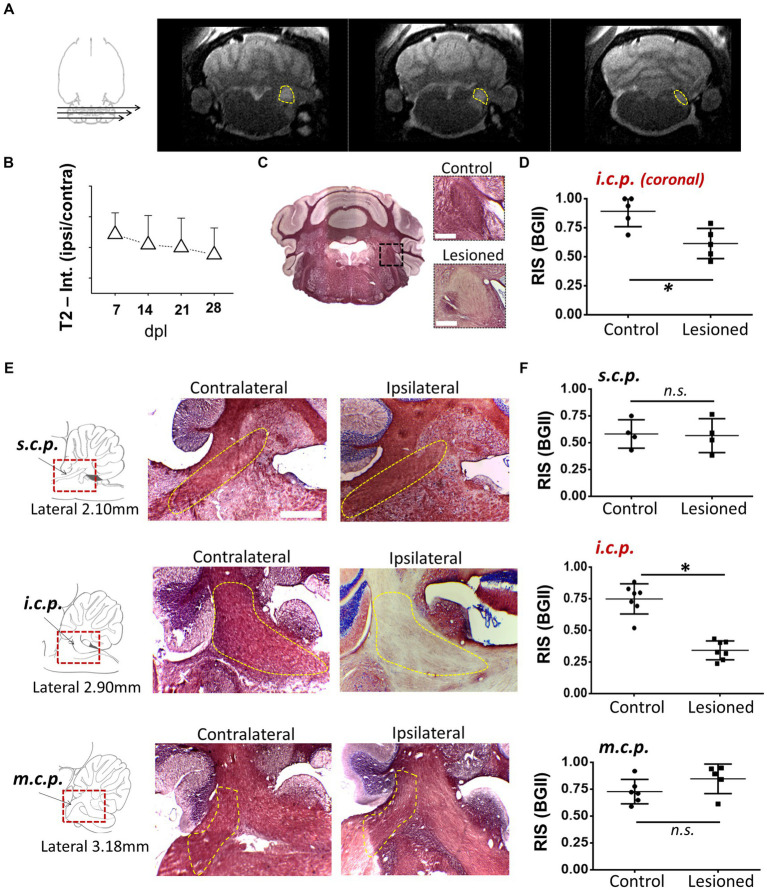
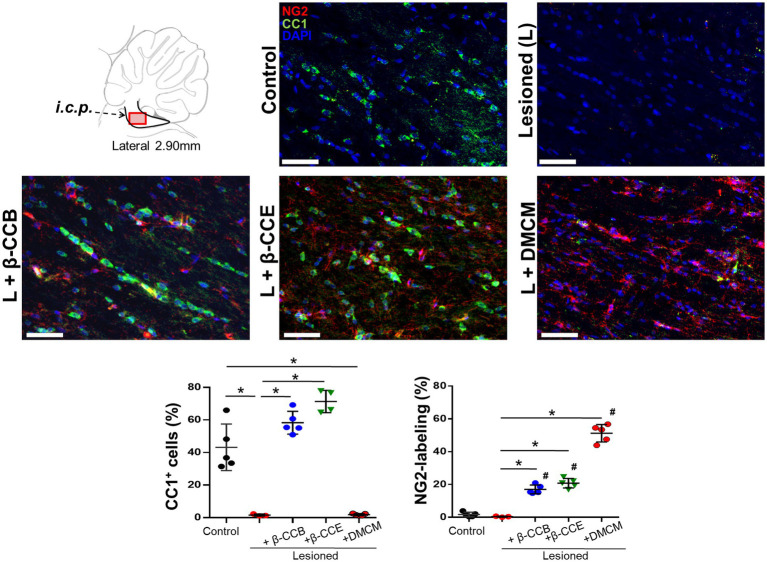
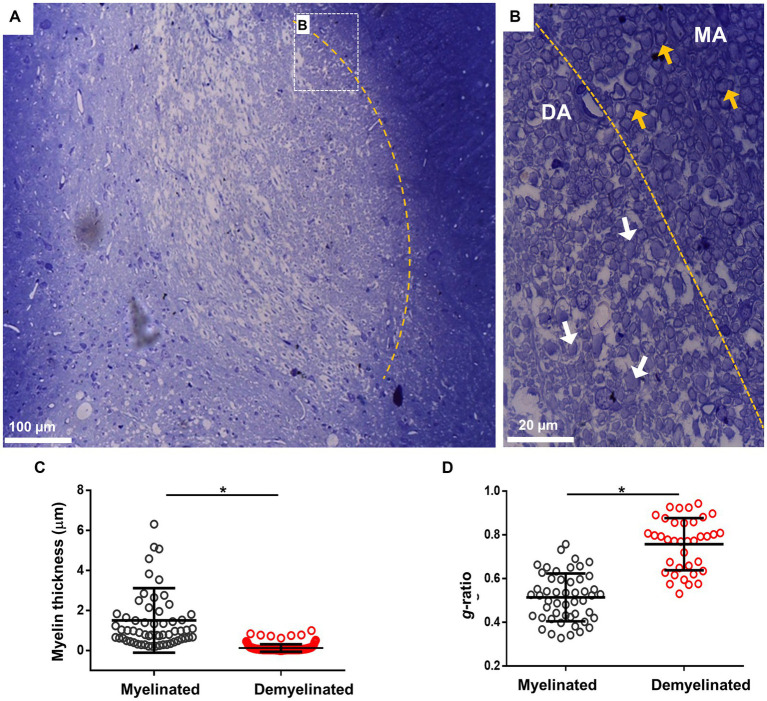
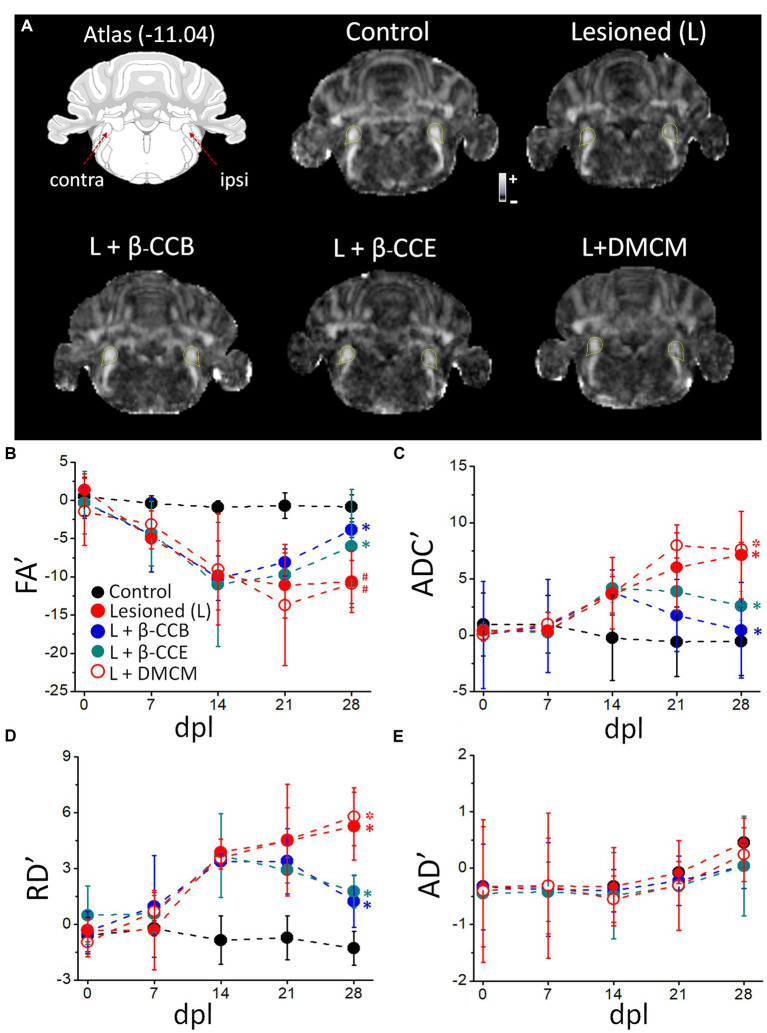
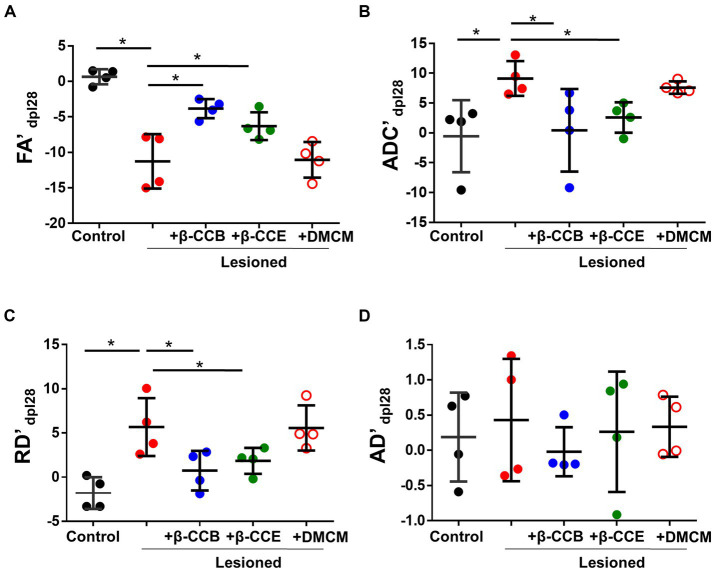
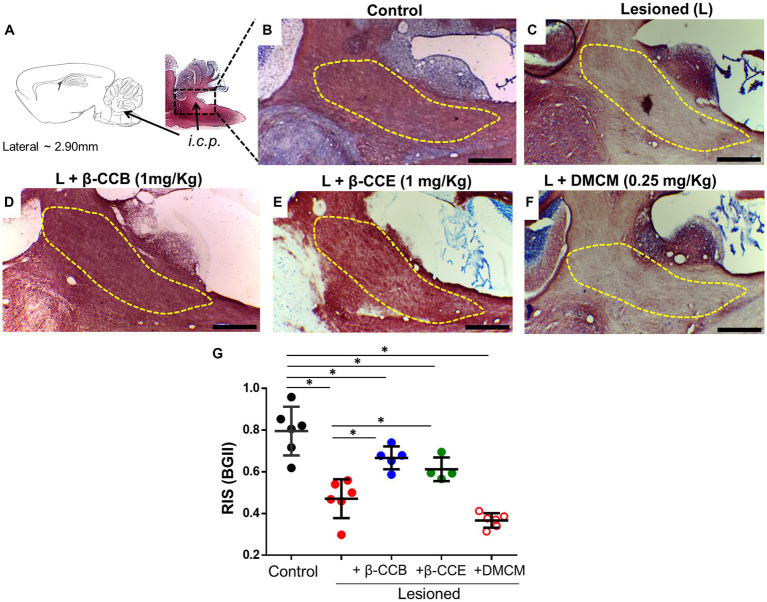
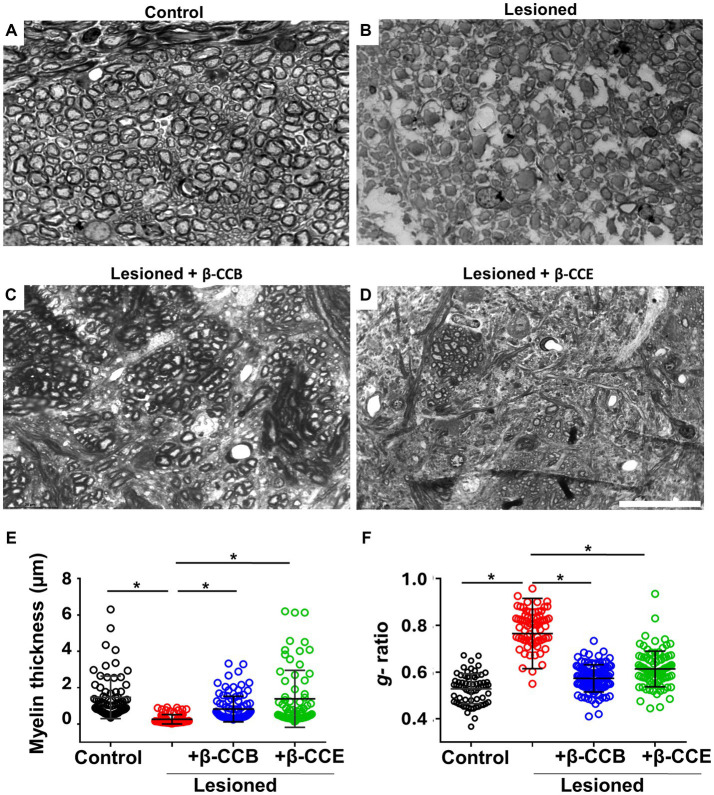
Demyelination is typically followed by a remyelination process through mature oligodendrocytes (OLs) differentiated from precursor cells (OPCs) recruited into the lesioned areas, however, this event usually results in uncompleted myelination. Potentiation of the remyelination process is an important target for designing effective therapeutic strategies against white matter loss. Here, it was evaluated the remyelinating effect of different β-carbolines that present differential allosteric modulation on the GABA receptor expressed in OLs. For this, we used a focalized demyelination model in the inferior cerebellar peduncle () of rats (DRICP model), in which, demyelination by ethidium bromide (0.05%) stereotaxic injection was confirmed histologically by staining with Black-Gold II (BGII) and toluidine blue. In addition, a longitudinal analysis with diffusion-weighted magnetic resonance imaging (dMRI) was made by computing fractional anisotropy (FA), apparent diffusion coefficient (ADC) and diffusivity parameters to infer microstructural changes. First, dMRI analysis revealed FA decreases together with ADC and radial diffusivity (RD) increases after demyelination, which correlates with histological BGII observations. Then, we evaluated the effect produced by three allosteric GABA receptor modulators, the N-butyl-β-carboline-3-carboxylate (β-CCB), ethyl 9H-pyrido [3,4-b]indole-3-carboxylate (β-CCE), and 4-ethyl-6,7-dimethoxy-9H-pyrido [3,4-b]indole-3-carboxylic acid methyl ester (DMCM). The results indicated that daily systemic β-CCB (1 mg/Kg) or β-CCE (1 mg/Kg) administration for 2 weeks, but not DMCM (0.35 mg/Kg), in lesioned animals increased FA and decreased ADC or RD, suggesting myelination improvement. This was supported by BGII staining analysis that showed a recovery of myelin content. Also, it was quantified by immunohistochemistry both NG2 and CC1 cellular population in the different experimental sceneries. Data indicated that either β-CCB or β-CCE, but not DMCM, produced an increase in the population of CC1 cells in the lesioned area. Finally, it was also calculated the -ratio of myelinated axons and observed a similar value in those lesioned animals treated with β-CCB or β-CCE compared to controls. Thus, using the DRICP model, it was observed that either β-CCB or β-CCE, positive modulators of the GABA receptor in OLs, had a potent promyelinating effect.
脱髓鞘之后通常会经历一个再髓鞘化过程,即通过从招募到损伤区域的前体细胞(OPC)分化而来的成熟少突胶质细胞(OL)进行再髓鞘化,然而,这一过程通常会导致髓鞘形成不完全。增强再髓鞘化过程是设计针对白质损失的有效治疗策略的一个重要靶点。在此,评估了不同的β-咔啉对OL中表达的GABA受体具有不同变构调节作用时的再髓鞘化效果。为此,我们在大鼠的小脑下脚(DRICP模型)中使用了局灶性脱髓鞘模型,其中,通过用黑金II(BGII)和甲苯胺蓝染色在组织学上证实了通过立体定向注射溴化乙锭(0.05%)造成的脱髓鞘。此外,通过计算分数各向异性(FA)、表观扩散系数(ADC)和扩散率参数进行扩散加权磁共振成像(dMRI)的纵向分析,以推断微观结构变化。首先,dMRI分析显示脱髓鞘后FA降低,同时ADC和径向扩散率(RD)增加,这与组织学BGII观察结果相关。然后,我们评估了三种变构GABA受体调节剂,即N-丁基-β-咔啉-3-羧酸酯(β-CCB)、9H-吡啶并[3,4-b]吲哚-3-羧酸乙酯(β-CCE)和4-乙基-6,7-二甲氧基-9H-吡啶并[3,4-b]吲哚-3-羧酸甲酯(DMCM)所产生的效果。结果表明,在损伤动物中,每天全身给予β-CCB(1mg/Kg)或β-CCE(1mg/Kg),持续2周,但不是DMCM(0.35mg/Kg),会增加FA并降低ADC或RD,表明髓鞘形成得到改善。BGII染色分析支持了这一点,该分析显示髓磷脂含量有所恢复。此外,通过免疫组织化学对不同实验场景中的NG2和CC1细胞群体进行了定量。数据表明,β-CCB或β-CCE,但不是DMCM,会使损伤区域的CC1细胞群体增加。最后,还计算了有髓轴突的-比率,观察到与对照组相比,用β-CCB或β-CCE治疗的损伤动物中的该比率相似。因此,使用DRICP模型,观察到OL中GABA受体的阳性调节剂β-CCB或β-CCE具有强大的促髓鞘形成作用。