Dobaño-López Cèlia, Valero Juan García, Araujo-Ayala Ferran, Nadeu Ferran, Gava Fabien, Faria Carla, Norlund Marine, Morin Renaud, Bernes-Lasserre Pascale, Arenas Fabian, Grau Marta, López Cristina, López-Oreja Irene, Serrat Neus, Martínez-Farran Ares, Hernández Lluís, Playa-Albinyana Heribert, Giménez Rubén, Beà Silvia, Campo Elías, Lagarde Jean-Michel, López-Guillermo Armando, Magnano Laura, Colomer Dolors, Bezombes Christine, Pérez-Galán Patricia
Fundació de Recerca Clínic Barcelona - Institut d'Investigacions Biomèdiques August Pi i Sunyer, Barcelona, Spain.
Centro de Investigación Biomédica en Red-Oncología (CIBERONC), Madrid, Spain.
Blood Cancer J. 2024 May 2;14(1):75. doi: 10.1038/s41408-024-01041-7.
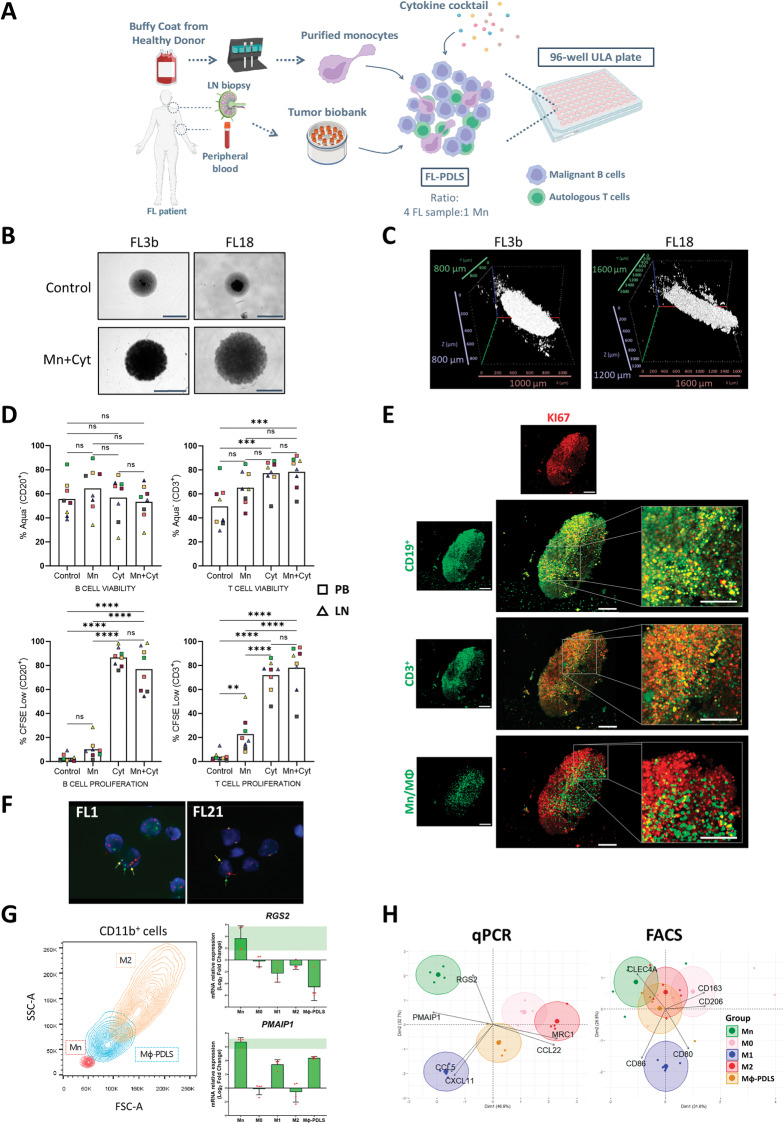
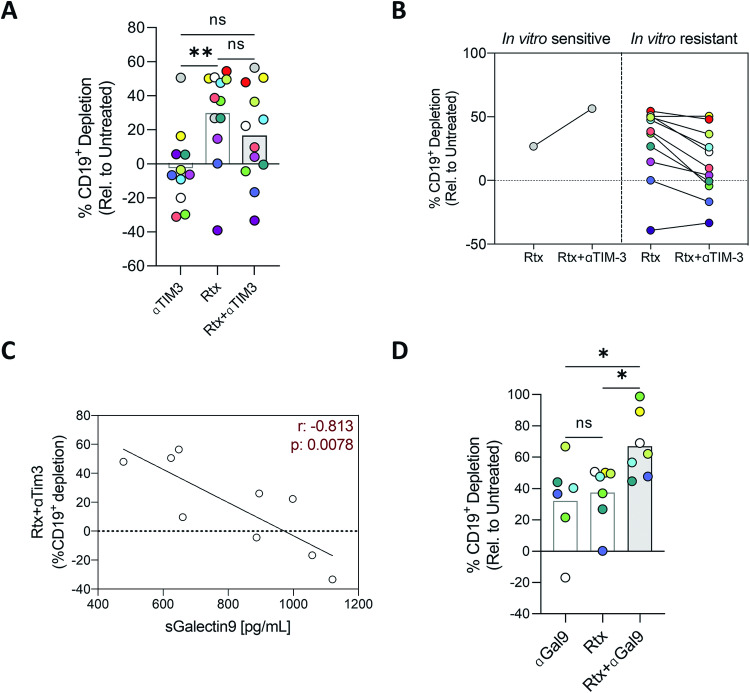
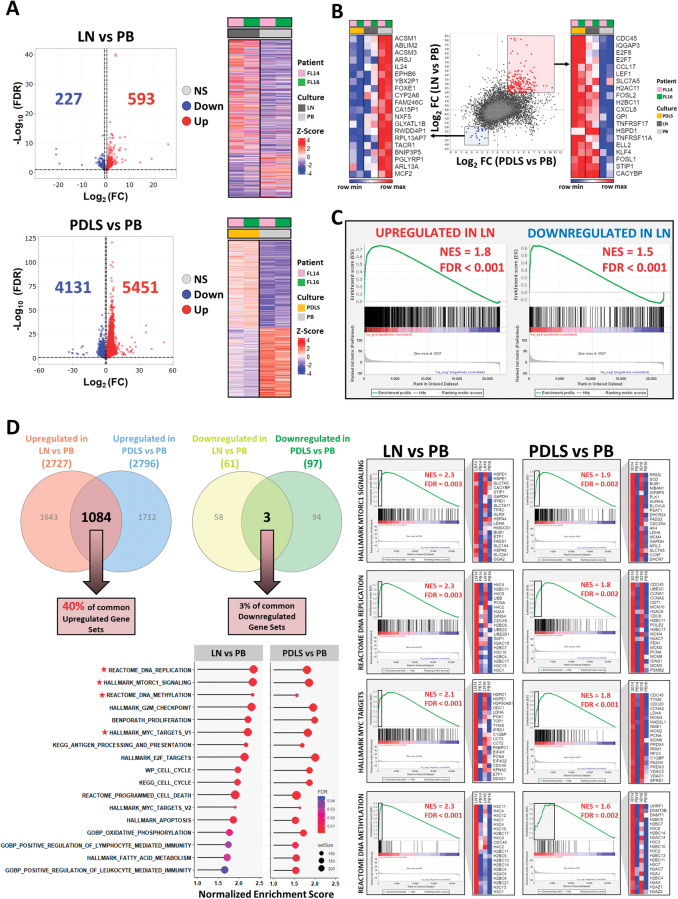
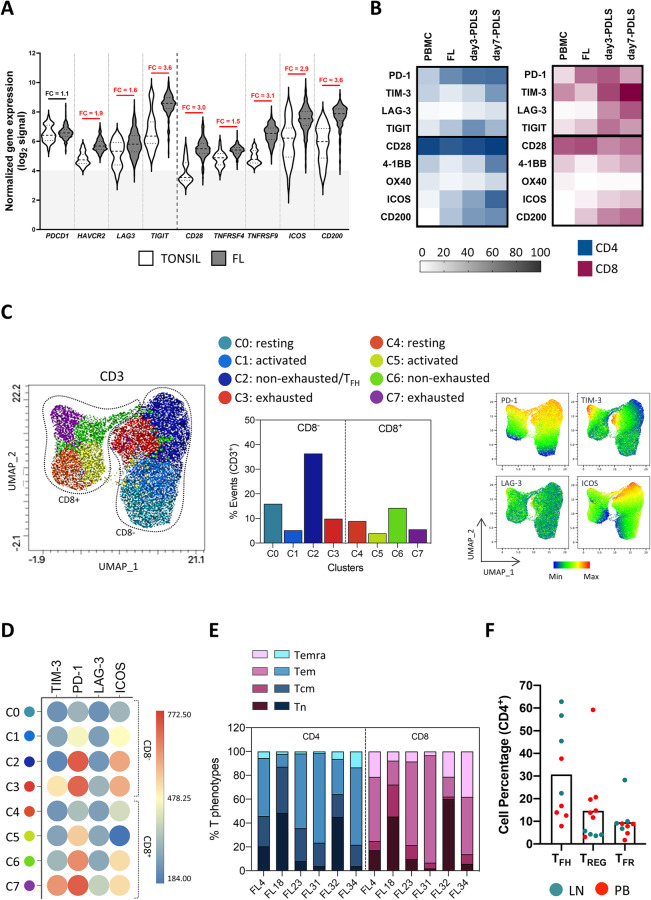
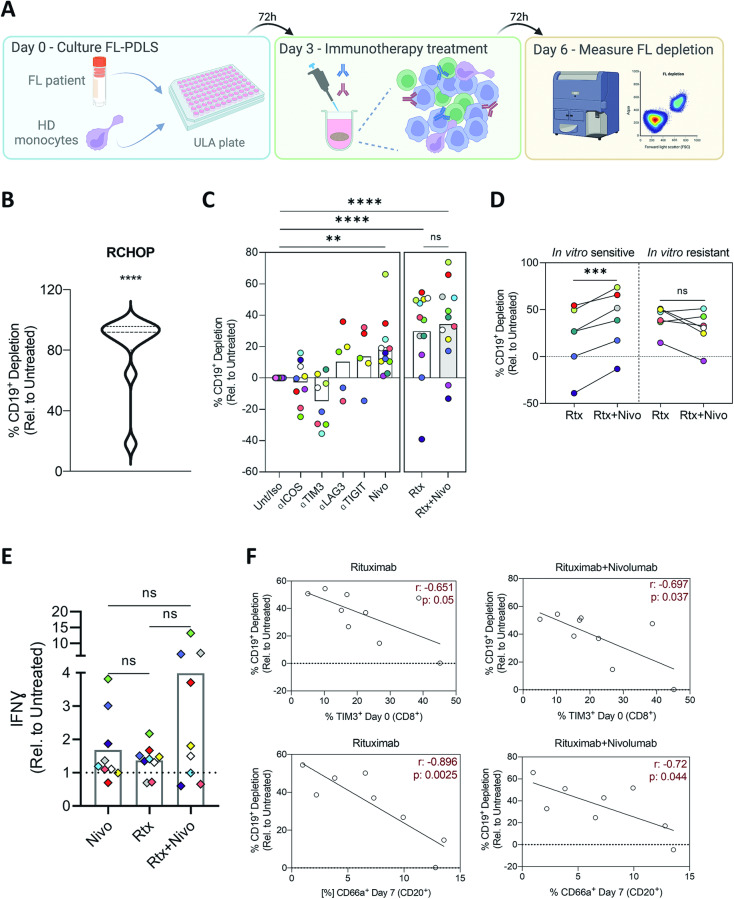
Follicular lymphoma (FL), the most common indolent non-Hodgkin lymphoma, constitutes a paradigm of immune tumor microenvironment (TME) contribution to disease onset, progression, and heterogenous clinical outcome. Here we present the first FL-Patient Derived Lymphoma Spheroid (FL-PDLS), including fundamental immune actors and features of TME in FL lymph nodes (LNs). FL-PDLS is organized in disc-shaped 3D structures composed of proliferating B and T cells, together with macrophages with an intermediate M1/M2 phenotype. FL-PDLS recapitulates the most relevant B-cell transcriptional pathways present in FL-LN (proliferation, epigenetic regulation, mTOR, adaptive immune system, among others). The T cell compartment in the FL-PDLS preserves CD4 subsets (follicular helper, regulatory, and follicular regulatory), also encompassing the spectrum of activation/exhaustion phenotypes in CD4 and CD8 populations. Moreover, this system is suitable for chemo and immunotherapy testing, recapitulating results obtained in the clinic. FL-PDLS allowed uncovering that soluble galectin-9 limits rituximab, rituximab, plus nivolumab/TIM-3 antitumoral activities. Blocking galectin-9 improves rituximab efficacy, highlighting galectin-9 as a novel immunotherapeutic target in FL. In conclusion, FL-PDLS maintains the crosstalk between malignant B cells and the immune LN-TME and constitutes a robust and multiplexed pre-clinical tool to perform drug screening in a patient-derived system, advancing toward personalized therapeutic approaches.
滤泡性淋巴瘤(FL)是最常见的惰性非霍奇金淋巴瘤,是免疫肿瘤微环境(TME)对疾病发生、进展和异质性临床结果产生影响的一个范例。在此,我们展示了首个源自滤泡性淋巴瘤患者的淋巴瘤球体(FL-PDLS),其中包括FL淋巴结(LN)中的基本免疫成分和TME特征。FL-PDLS呈盘状3D结构,由增殖的B细胞和T细胞以及具有中间M1/M2表型的巨噬细胞组成。FL-PDLS概括了FL-LN中存在的最相关的B细胞转录途径(增殖、表观遗传调控、mTOR、适应性免疫系统等)。FL-PDLS中的T细胞区室保留了CD4亚群(滤泡辅助性T细胞、调节性T细胞和滤泡调节性T细胞),还涵盖了CD4和CD8群体中的激活/耗竭表型谱。此外,该系统适用于化疗和免疫治疗测试,可再现临床获得的结果。FL-PDLS使我们发现可溶性半乳糖凝集素-9会限制利妥昔单抗、利妥昔单抗联合纳武单抗/TIM-3的抗肿瘤活性。阻断半乳糖凝集素-9可提高利妥昔单抗的疗效,突出了半乳糖凝集素-9作为FL中的新型免疫治疗靶点。总之,FL-PDLS维持了恶性B细胞与免疫LN-TME之间的相互作用,构成了一种强大且多功能的临床前工具,可在患者来源的系统中进行药物筛选,朝着个性化治疗方法迈进。