Wallace H. Coulter Department of Biomedical Engineering, Georgia Institute of Technology and Emory University, Atlanta, GA, USA.
Department of Pediatrics, Emory University School of Medicine, Atlanta, GA, USA.
Nat Biomed Eng. 2024 Sep;8(9):1124-1141. doi: 10.1038/s41551-024-01211-9. Epub 2024 May 2.
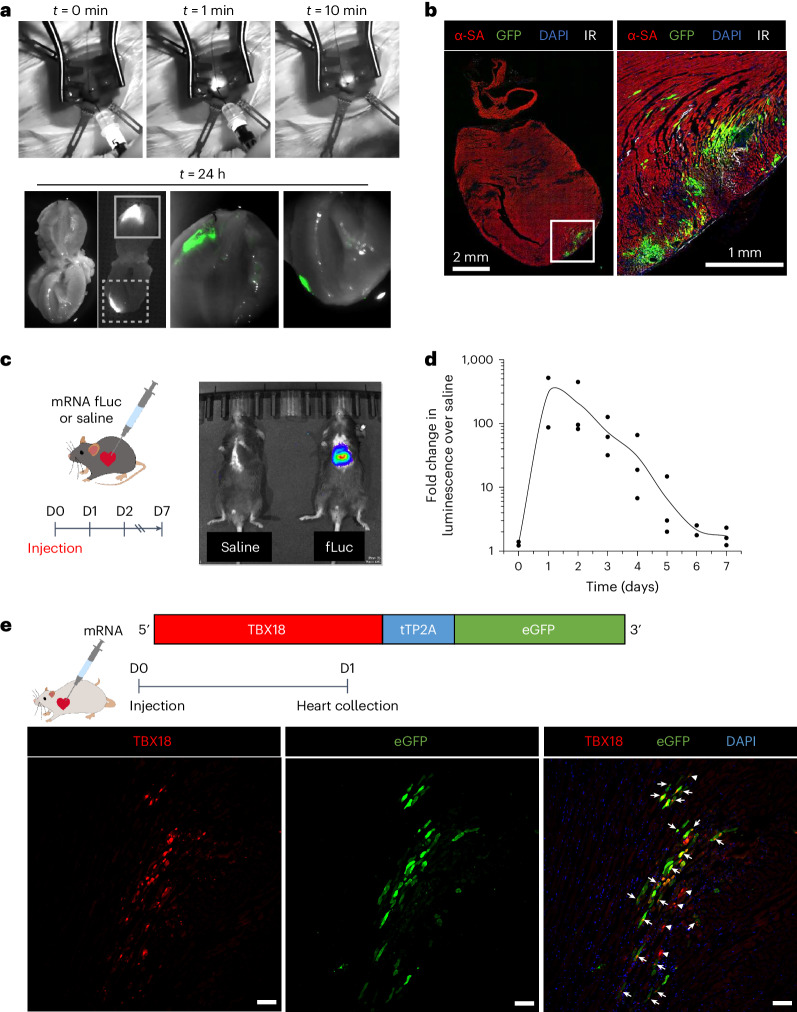
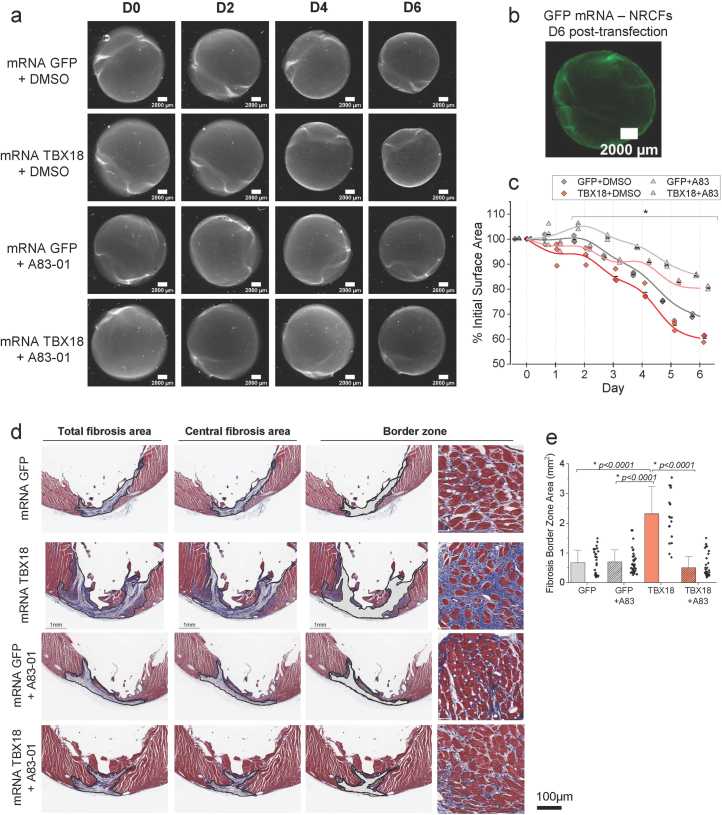
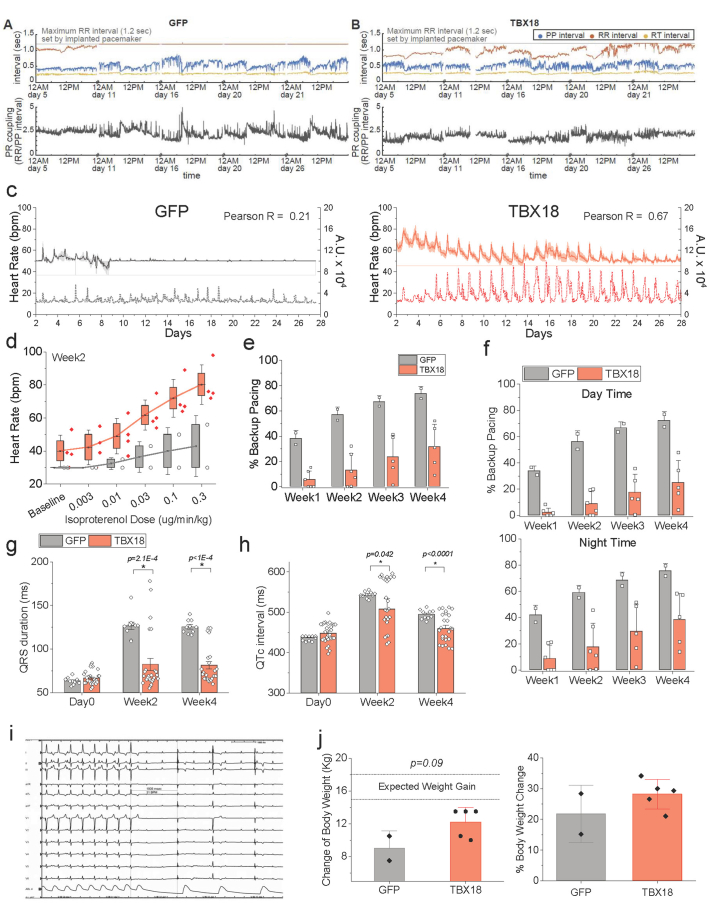
The adenovirus-mediated somatic transfer of the embryonic T-box transcription factor 18 (TBX18) gene can convert chamber cardiomyocytes into induced pacemaker cells. However, the translation of therapeutic TBX18-induced cardiac pacing faces safety challenges. Here we show that the myocardial expression of synthetic TBX18 mRNA in animals generates de novo pacing and limits innate and inflammatory immune responses. In rats, intramyocardially injected mRNA remained localized, whereas direct myocardial injection of an adenovirus carrying a reporter gene resulted in diffuse expression and in substantial spillover to the liver, spleen and lungs. Transient expression of TBX18 mRNA in rats led to de novo automaticity and pacemaker properties and, compared with the injection of adenovirus, to substantial reductions in the expression of inflammatory genes and in activated macrophage populations. In rodent and clinically relevant porcine models of complete heart block, intramyocardially injected TBX18 mRNA provided rate-adaptive cardiac pacing for one month that strongly correlated with the animal's sinus rhythm and physical activity. TBX18 mRNA may aid the development of biological pacemakers.
腺病毒介导的胚胎 T 盒转录因子 18(TBX18)基因的体细胞转移可以将腔室心肌细胞转化为诱导性起搏细胞。然而,治疗性 TBX18 诱导性心脏起搏的转化面临着安全性挑战。在这里,我们表明,动物心肌中合成 TBX18 mRNA 的表达产生了新的起搏,并限制了固有和炎症免疫反应。在大鼠中,注射到心肌内的 mRNA 保持局部化,而直接向心肌注射携带报告基因的腺病毒则导致弥漫性表达,并大量溢出到肝脏、脾脏和肺部。TBX18 mRNA 在大鼠中的短暂表达导致了新的自动性和起搏特性,与注射腺病毒相比,炎症基因的表达和活化的巨噬细胞群显著减少。在完全心脏阻滞的啮齿动物和临床相关的猪模型中,注射到心肌内的 TBX18 mRNA 提供了一个月的心率适应性心脏起搏,与动物的窦性节律和体力活动密切相关。TBX18 mRNA 可能有助于生物起搏器的发展。