Jari Yassine, Roche Nicolas, Chaker Necibi Mohamed, Zahra Falil Fatima, Tayibi Saida, Lyamlouli Karim, Chehbouni Abdelghani, Gourich Bouchaib
International Water Research Institute (IWRI), Mohammed VI Polytechnic University, Ben Guerir, 43150, Morocco.
Aix-Marseille University, CNRS, IRD, INRAE, Coll France, CEREGE, CEDEX, 13454, Aix-en-Provence, France.
Heliyon. 2024 Apr 16;10(9):e29645. doi: 10.1016/j.heliyon.2024.e29645. eCollection 2024 May 15.
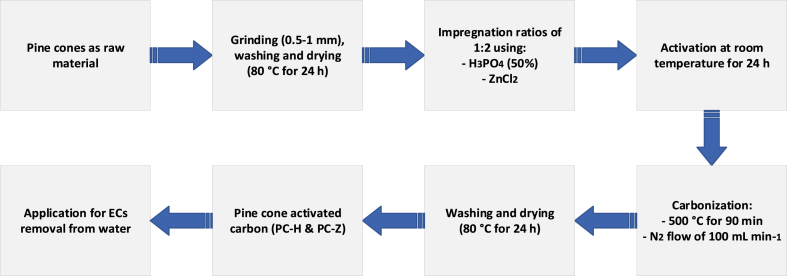
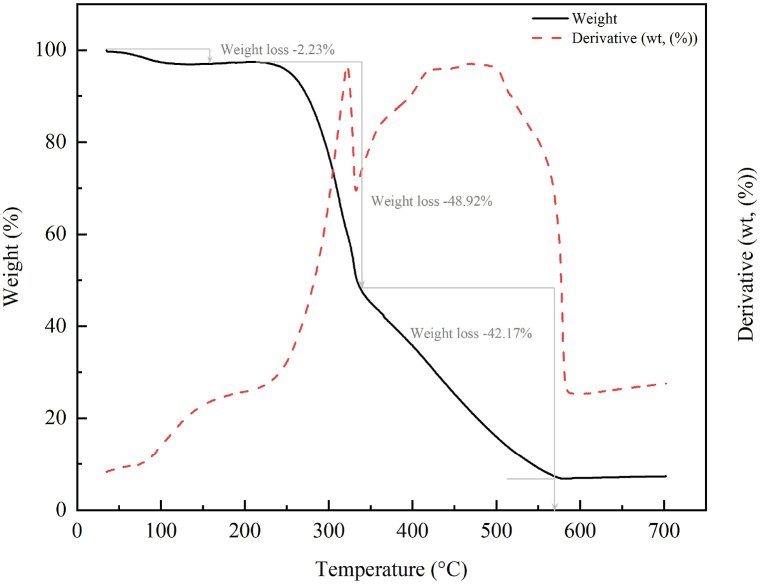
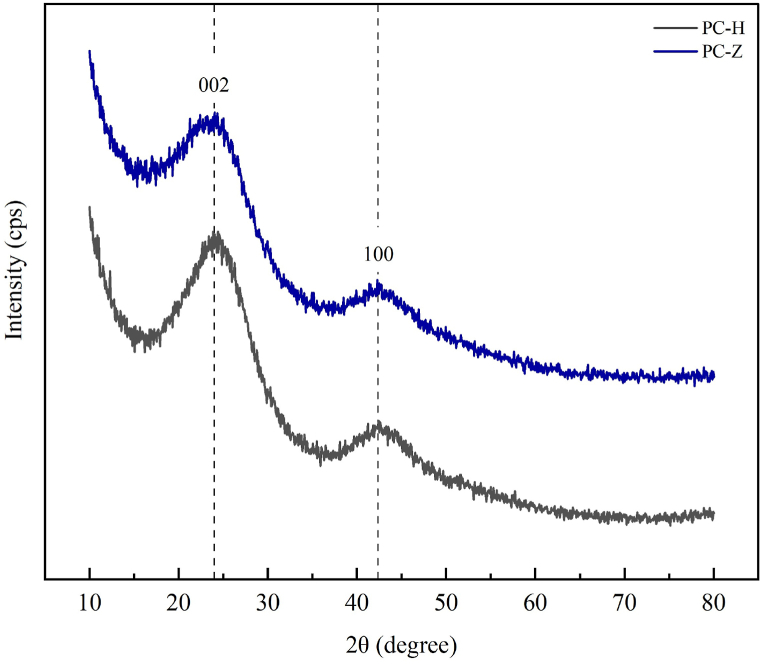
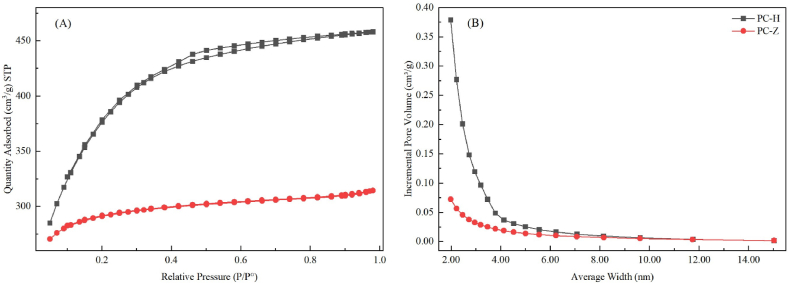
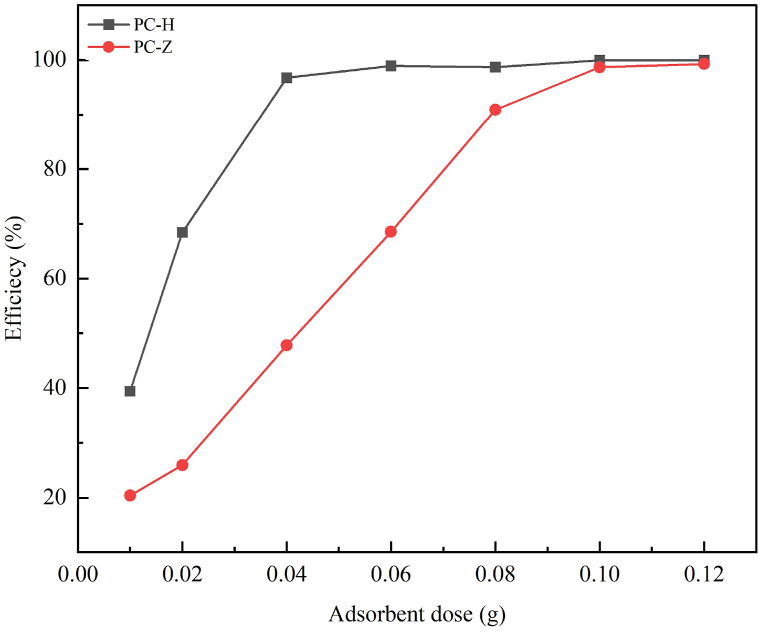
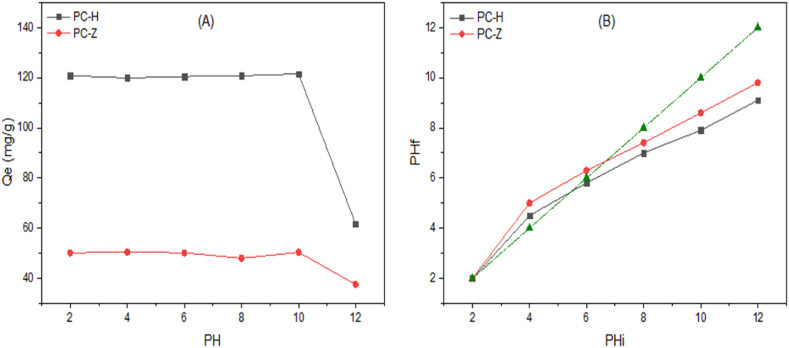
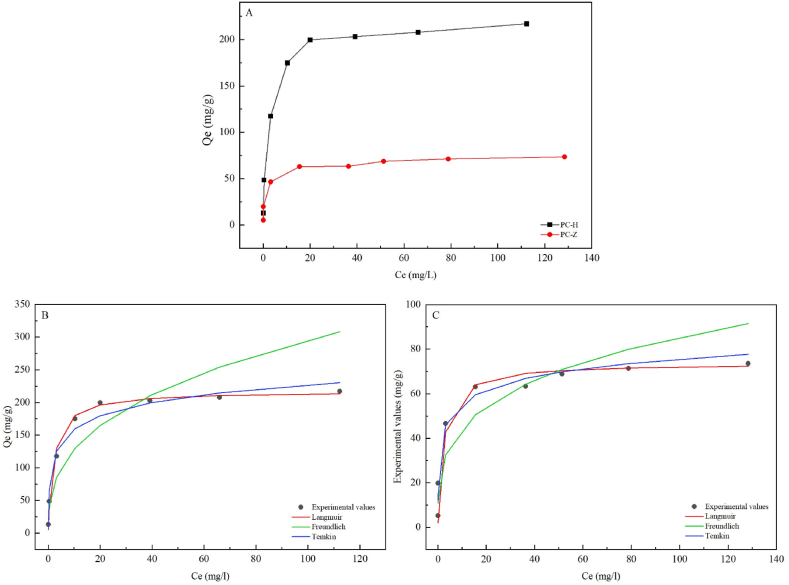
Porous-activated carbons (ACs) derived from Moroccan pine cones (PC) were synthesised by a two step-chemical activation/carbonisation method using phosphoric acid (PC-H) and zinc chloride (PC-Z) as activating agents and used for the adsorption of bisphenol A (BPA) from water. Several techniques (TGA/DTA, FT-IR, XRD, SEM and BET) were used to determine the surface area and pore characterisation and variations during the preparation of the adsorbents. The modification significantly increased the surface area of both ACs, resulting in values of 1369.03 m g and 1018.86 m g for PC-H and PC-Z, respectively. Subsequent adsorption tests were carried out, varying parameters including adsorbent dosage, pH, initial BPA concentration, and contact time. Therefore, the highest adsorption capacity was observed when the BPA molecules were in their neutral form. High pH values were found to be unfavourable for the removal of bisphenol A from water. The results showed that BPA adsorption kinetics and isotherms followed pseudo-second-order and Langmuir models. Thermodynamic studies indicated that the adsorption was spontaneous and endothermic. Besides, the regeneration of spent adsorbents demonstrated their reusability. The adsorption mechanisms can be attributed to physical adsorption, hydrogen bonds, electrostatic forces, hydrophobic interactions, and π-π intermolecular forces.
采用两步化学活化/碳化法,以磷酸(PC-H)和氯化锌(PC-Z)作为活化剂,合成了源自摩洛哥松果(PC)的多孔活性炭(ACs),并将其用于从水中吸附双酚A(BPA)。使用了几种技术(热重/差示热分析、傅里叶变换红外光谱、X射线衍射、扫描电子显微镜和比表面积分析)来测定吸附剂制备过程中的表面积、孔隙特征及变化。改性显著增加了两种活性炭的表面积,PC-H和PC-Z的表面积分别达到1369.03 m²/g和1018.86 m²/g。随后进行了吸附试验,改变了包括吸附剂用量、pH值、初始双酚A浓度和接触时间等参数。因此,当双酚A分子呈中性形式时,观察到最高吸附容量。发现高pH值不利于从水中去除双酚A。结果表明,双酚A的吸附动力学和等温线符合准二级动力学模型和朗缪尔模型。热力学研究表明,吸附是自发的且为吸热过程。此外,对用过的吸附剂进行再生证明了它们的可重复使用性。吸附机制可归因于物理吸附、氢键、静电力、疏水相互作用和π-π分子间作用力。