Andrews Keith G, Horton Peter N, Coles Simon J
Department of Chemistry, Chemistry Research Laboratory, University of Oxford Oxford OX1 3TA UK.
Department of Chemistry, Durham University Lower Mount Joy, South Rd Durham DH1 3LE UK
Chem Sci. 2024 Apr 1;15(17):6536-6543. doi: 10.1039/d4sc00889h. eCollection 2024 May 1.
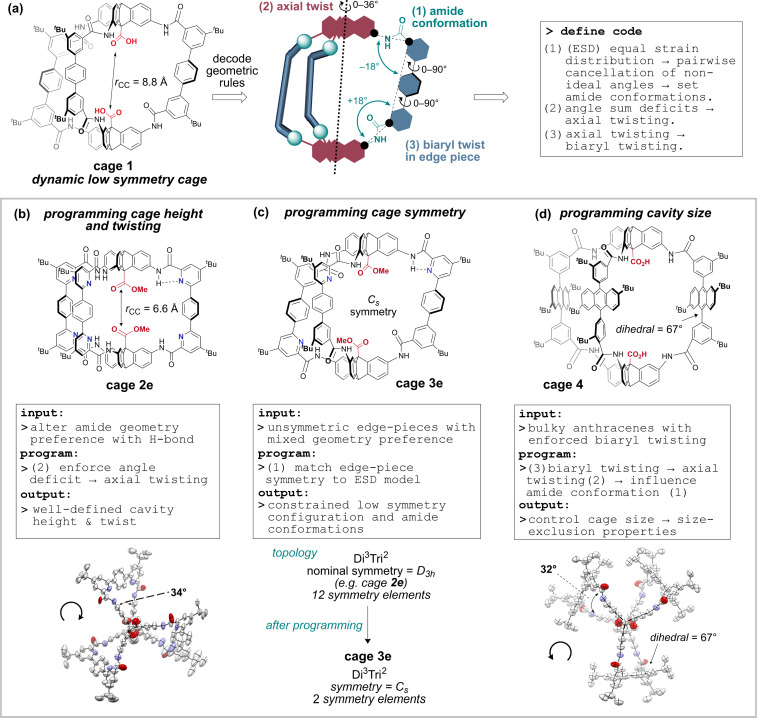
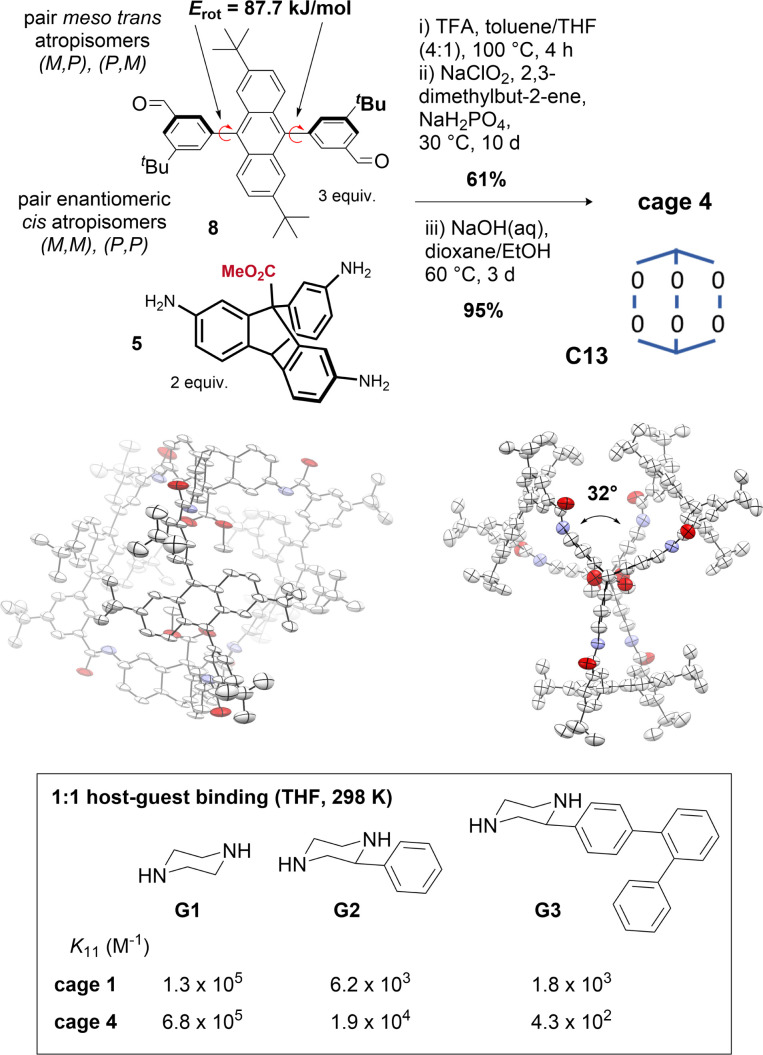
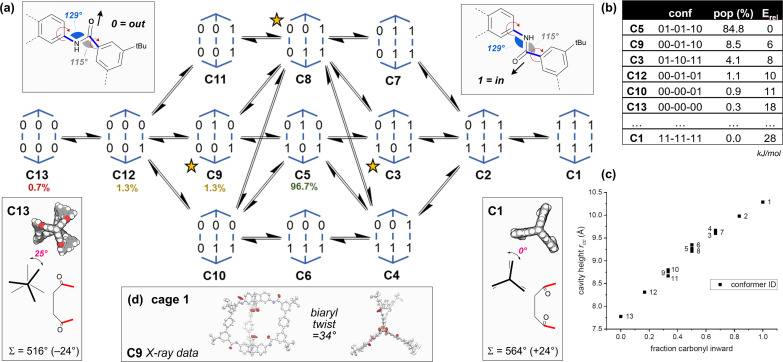
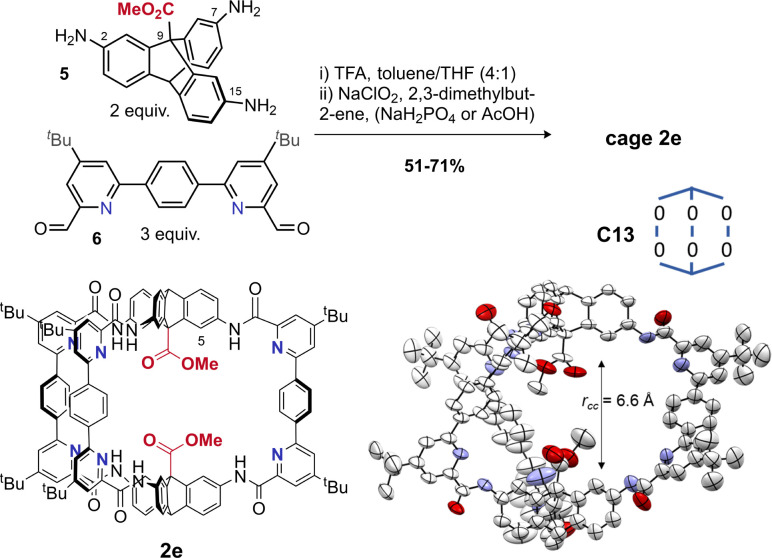
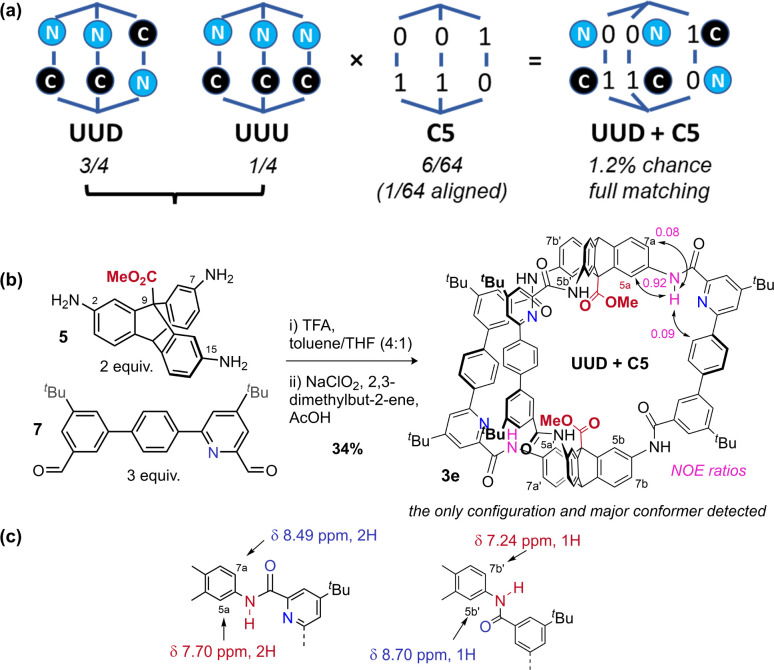
Integrating symmetry-reducing methods into self-assembly methodology is desirable to efficiently realise the full potential of molecular cages as hosts and catalysts. Although techniques have been explored for metal organic (coordination) cages, rational strategies to develop low symmetry organic cages remain limited. In this article, we describe rules to program the shape and symmetry of organic cage cavities by designing edge pieces that bias the orientation of the amide linkages. We apply the rules to synthesise cages with well-defined cavities, supported by evidence from crystallography, spectroscopy and modelling. Access to low-symmetry, self-assembled organic cages such as those presented, will widen the current bottleneck preventing study of organic enzyme mimics, and provide synthetic tools for novel functional material design.
将对称性降低方法整合到自组装方法中,对于有效实现分子笼作为主体和催化剂的全部潜力是很有必要的。尽管已经探索了用于金属有机(配位)笼的技术,但开发低对称性有机笼的合理策略仍然有限。在本文中,我们描述了通过设计使酰胺键取向产生偏差的边缘片段来规划有机笼腔形状和对称性的规则。我们应用这些规则合成了具有明确腔室的笼,晶体学、光谱学和建模提供了证据支持。获得如本文所述的低对称性、自组装有机笼,将拓宽目前阻碍有机酶模拟物研究的瓶颈,并为新型功能材料设计提供合成工具。