Department of Biochemistry, University of Oxford, Oxford, United Kingdom.
Wellcome Centre for Human Genetics, University of Oxford, Oxford, United Kingdom.
Front Immunol. 2024 Apr 18;15:1380386. doi: 10.3389/fimmu.2024.1380386. eCollection 2024.
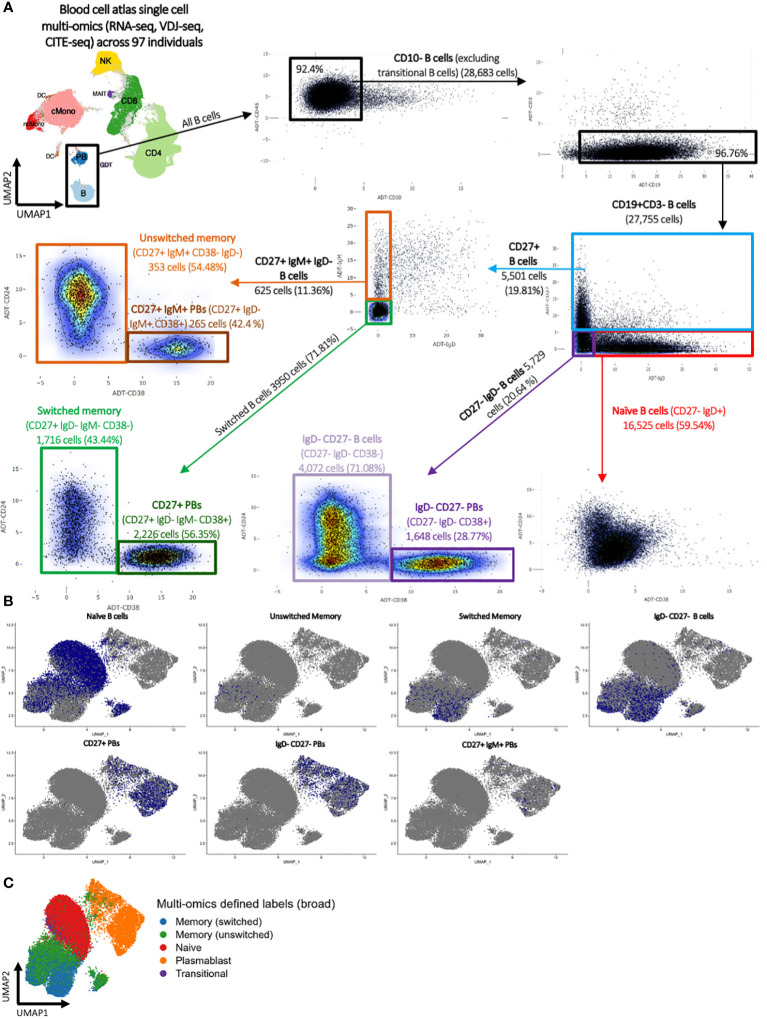
B cells play a pivotal role in adaptive immunity which has been extensively characterised primarily via flow cytometry-based gating strategies. This study addresses the discrepancies between flow cytometry-defined B cell subsets and their high-confidence molecular signatures using single-cell multi-omics approaches.
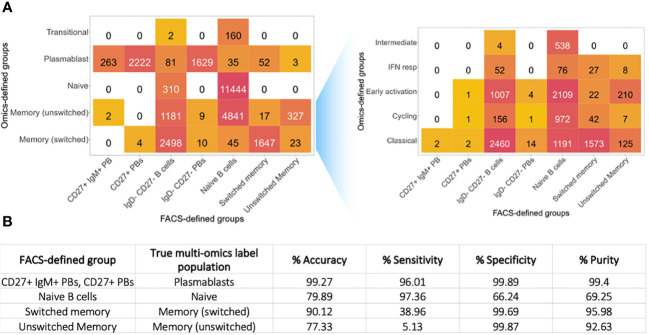
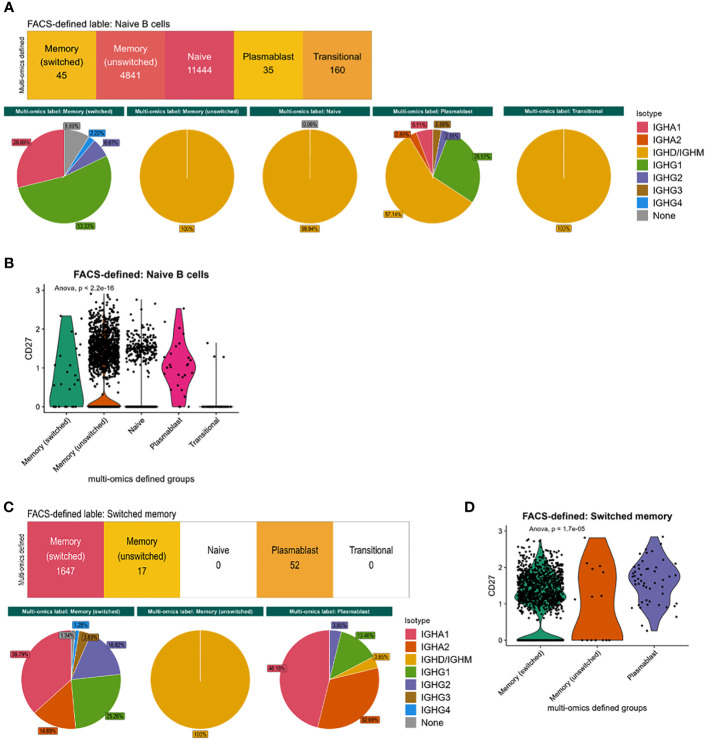
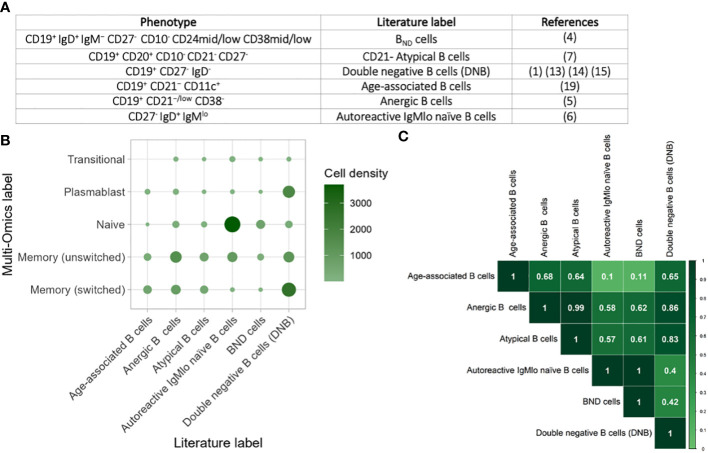
By analysing multi-omics single-cell data from healthy individuals and patients across diseases, we characterised the level and nature of cellular contamination within standard flow cytometric-based gating, resolved some of the ambiguities in the literature surrounding unconventional B cell subsets, and demonstrated the variable effects of flow cytometric-based gating cellular heterogeneity across diseases.
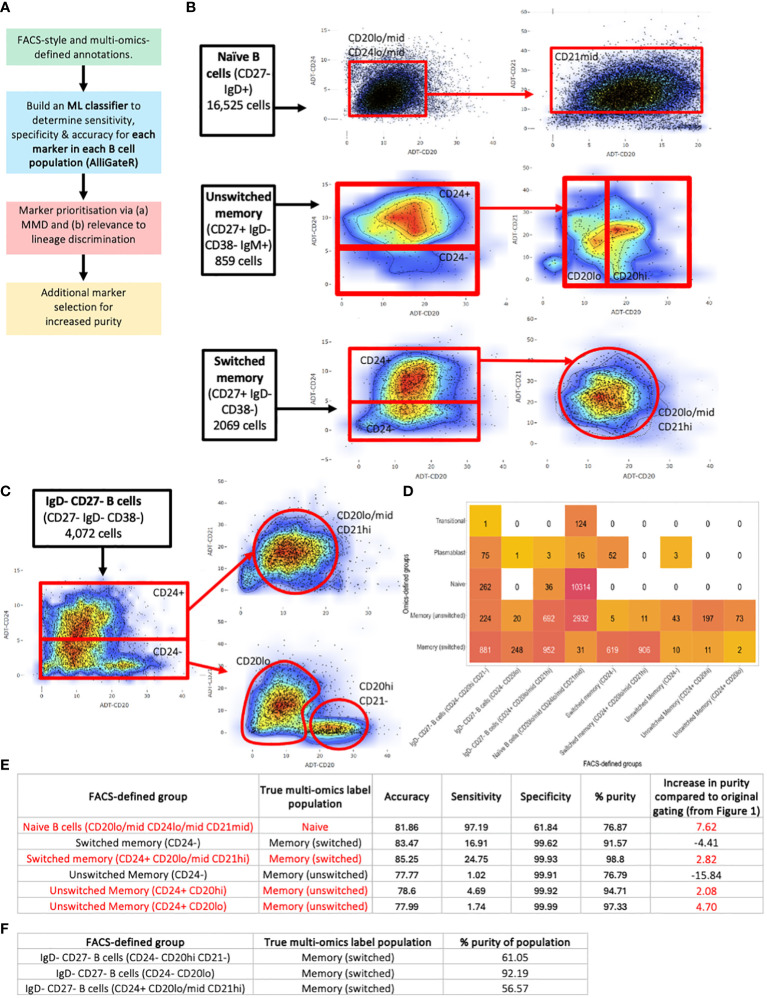
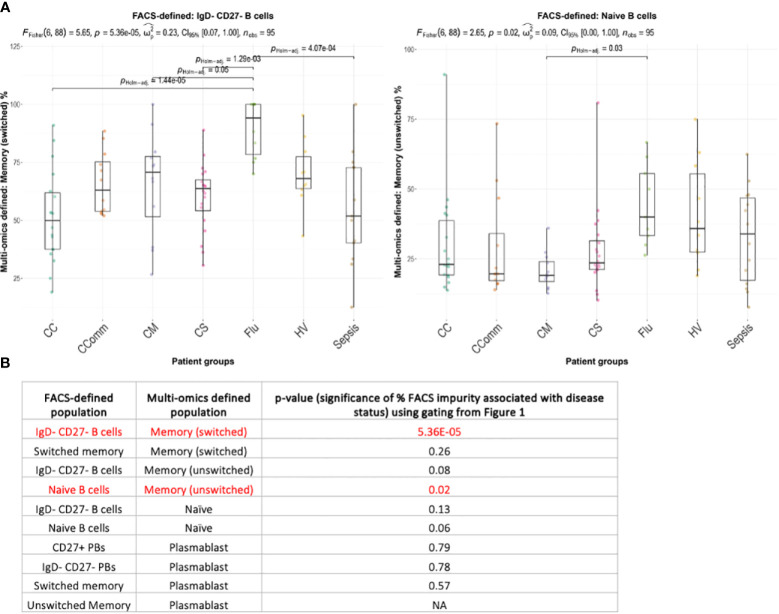
We showed that flow cytometric-defined B cell populations are heterogenous, and the composition varies significantly between disease states thus affecting the implications of functional studies performed on these populations. Importantly, this paper draws caution on findings about B cell selection and function of flow cytometric-sorted populations, and their roles in disease. As a solution, we developed a simple tool to identify additional markers that can be used to increase the purity of flow-cytometric gated immune cell populations based on multi-omics data (). Here, we demonstrate that additional non-linear CD20, CD21 and CD24 gating can increase the purity of both naïve and memory populations.
These findings underscore the need to reconsider B cell subset definitions within the literature and propose leveraging single-cell multi-omics data for refined characterisation. We show that single-cell multi-omics technologies represent a powerful tool to bridge the gap between surface marker-based annotations and the intricate molecular characteristics of B cell subsets.
B 细胞在适应性免疫中发挥着关键作用,其主要通过流式细胞术门控策略进行了广泛的描述。本研究使用单细胞多组学方法解决了流式细胞术定义的 B 细胞亚群与其高可信度分子特征之间的差异。
通过分析来自健康个体和各种疾病患者的多组学单细胞数据,我们描述了标准流式细胞术门控中细胞污染的程度和性质,解决了文献中关于非常规 B 细胞亚群的一些歧义,并展示了流式细胞术门控对疾病中细胞异质性的可变影响。
我们表明,流式细胞术定义的 B 细胞群体是异质的,其组成在疾病状态之间差异显著,从而影响对这些群体进行的功能研究的意义。重要的是,本文提请注意流式细胞术分选群体的 B 细胞选择和功能及其在疾病中的作用的发现。作为解决方案,我们开发了一种简单的工具,可根据多组学数据识别可用于增加流式细胞术门控免疫细胞群体纯度的其他标记物()。在这里,我们证明额外的非线性 CD20、CD21 和 CD24 门控可以增加幼稚和记忆群体的纯度。
这些发现强调了有必要重新考虑文献中 B 细胞亚群的定义,并提出利用单细胞多组学数据进行更精细的特征描述。我们表明,单细胞多组学技术代表了一种强大的工具,可以弥合基于表面标志物的注释与 B 细胞亚群复杂分子特征之间的差距。