From the National Institute for Occupational Safety and Health, Cincinnati, Ohio.
J Occup Environ Med. 2024 May 1;66(5):403-420. doi: 10.1097/JOM.0000000000003075. Epub 2024 Feb 20.
Unidentified or nonmitigated occupational illnesses and injuries can complicate disease management. The "occupational health" (OCCHLTH) mnemonic aims to raise awareness of work-related exposures and associated illnesses and injuries.
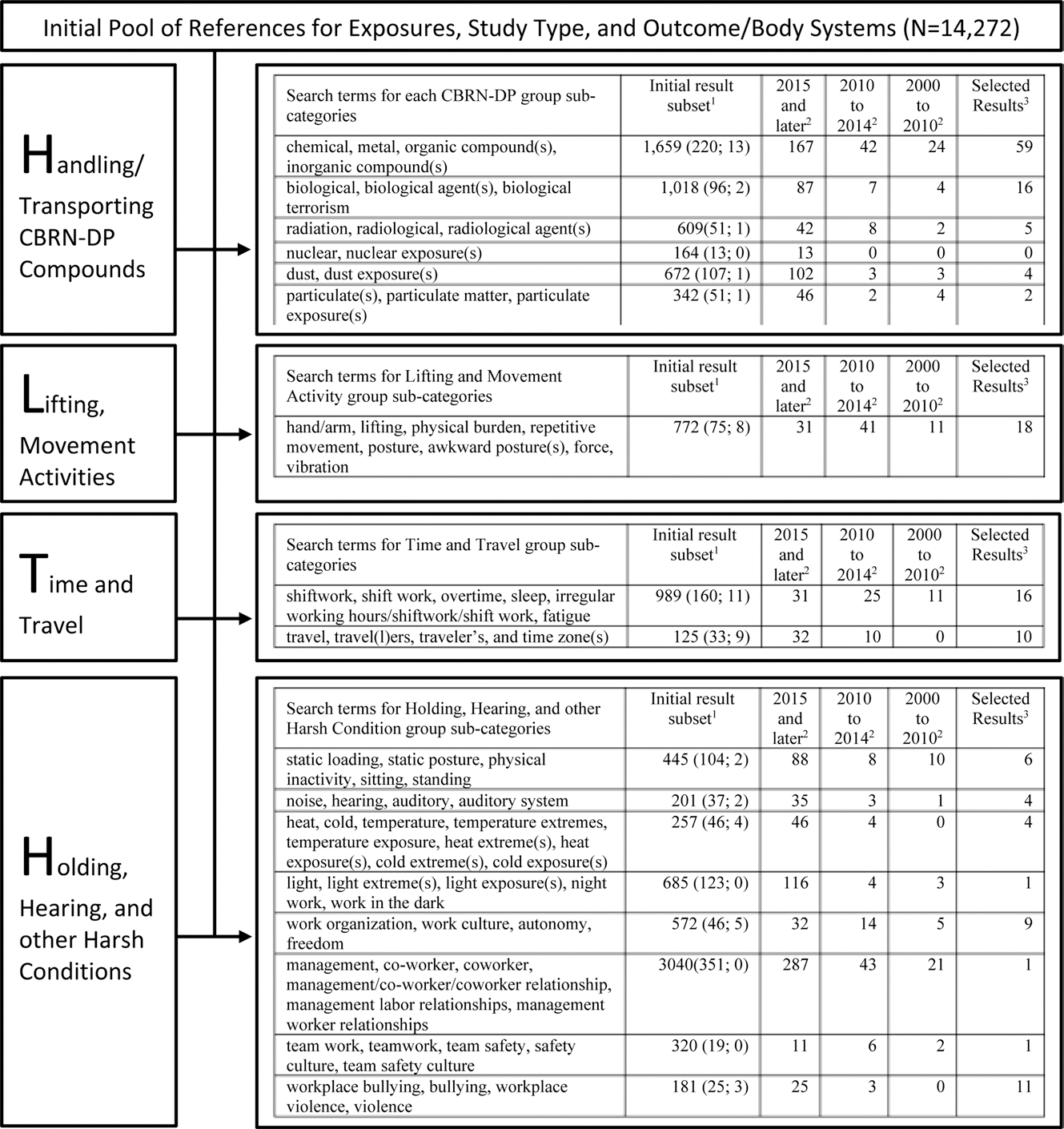
Occupational safety and health history-taking elements were combined with peer-reviewed information [from the PubMed database (first review January 1, 2000, to February 8, 2016; updated to February 8, 2021)] about workplace exposure-outcome associations to create the mnemonic.
Seven components constitute the OCCHLTH mnemonic. Literature results support its categories and subcategories. Three components represent symptom onset and health conditions. Four represent occupational exposures. Evaluating published occupational illness cases explored mnemonic applicability.
Awareness of occupational risk factors can affect clinical decision-making. The OCCHLTH mnemonic encourages consideration of occupational causes of illness and injury to optimize patient care. Further evaluation of the utility of the OCCHLTH mnemonic is needed.
未识别或未减轻的职业疾病和伤害可能使疾病管理复杂化。“职业健康”(OCCHLTH)记忆术旨在提高对与工作相关的暴露和相关疾病和伤害的认识。
将职业安全和健康病史采集要素与同行评审的信息(来自 PubMed 数据库[第一次审查日期为 2000 年 1 月 1 日,至 2016 年 2 月 8 日;更新至 2021 年 2 月 8 日])相结合,以了解工作场所暴露-结果关联,从而创建记忆术。
OCCHLTH 记忆术由七个部分组成。文献结果支持其类别和子类别。三个部分代表症状发作和健康状况。四个代表职业暴露。评估已发表的职业疾病病例探讨了记忆术的适用性。
对职业危险因素的认识会影响临床决策。OCCHLTH 记忆术鼓励考虑职业疾病和伤害的原因,以优化患者护理。需要进一步评估 OCCHLTH 记忆术的实用性。