Key Laboratory of Carcinogenesis and Translational Research (Ministry of Education/Beijing), Department of Early Drug Development Centre, Peking University Cancer Hospital and Institute, Beijing, 100142, China.
Department of Oncology, The Second Affiliated Hospital of Anhui Medical University, No.678 Furong Road, Economic and Technological Development Zone, Hefei, Anhui, China.
Cancer Immunol Immunother. 2024 May 7;73(7):119. doi: 10.1007/s00262-024-03677-7.
The programmed death 1 inhibitor toripalimab plus the angio-immuno kinase inhibitor surufatinib showed a tolerable safety profile and preliminary efficacy in patients with advanced solid tumors in a phase I study.
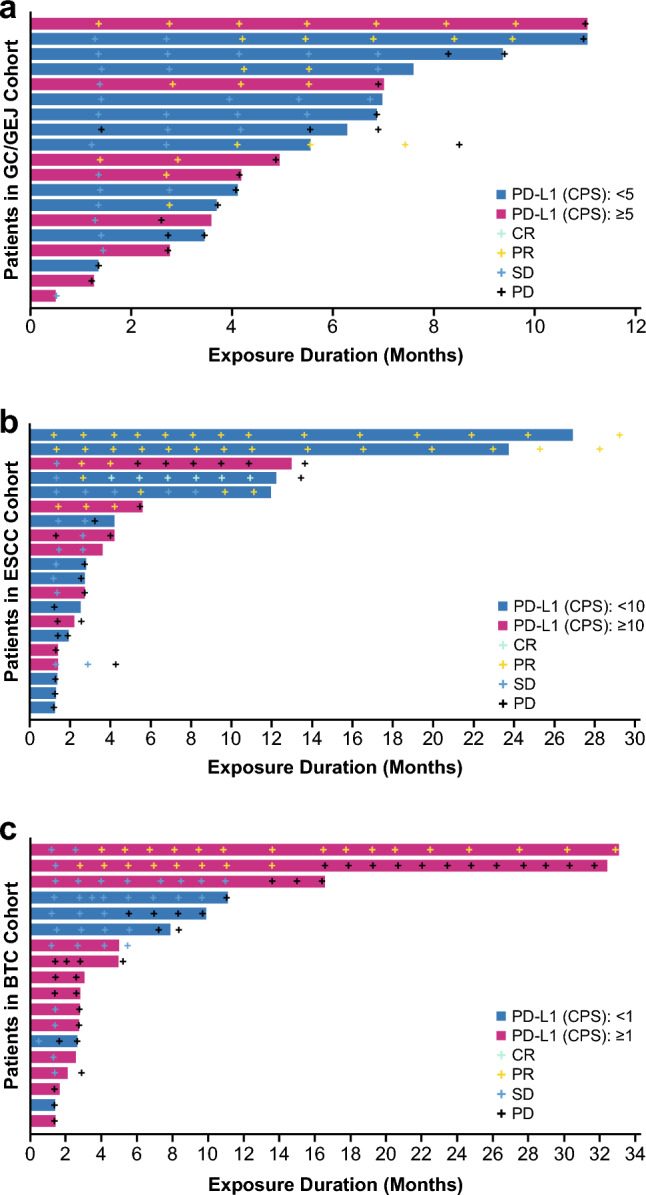
This open-label, multi-cohort study in China enrolled patients with advanced solid tumors who had failed or were intolerable to standard treatment into tumor-specific cohorts. Patients received surufatinib (250 mg orally, once daily) plus toripalimab (240 mg intravenously, once every three weeks). Results for three cohorts (gastric/gastroesophageal junction [GC/GEJ] adenocarcinoma, esophageal squamous cell carcinoma [ESCC], and biliary tract carcinoma [BTC]) are reported here. The primary endpoint was investigator-assessed objective response rate (ORR) per Response Evaluation criteria in Solid Tumors version 1.1.
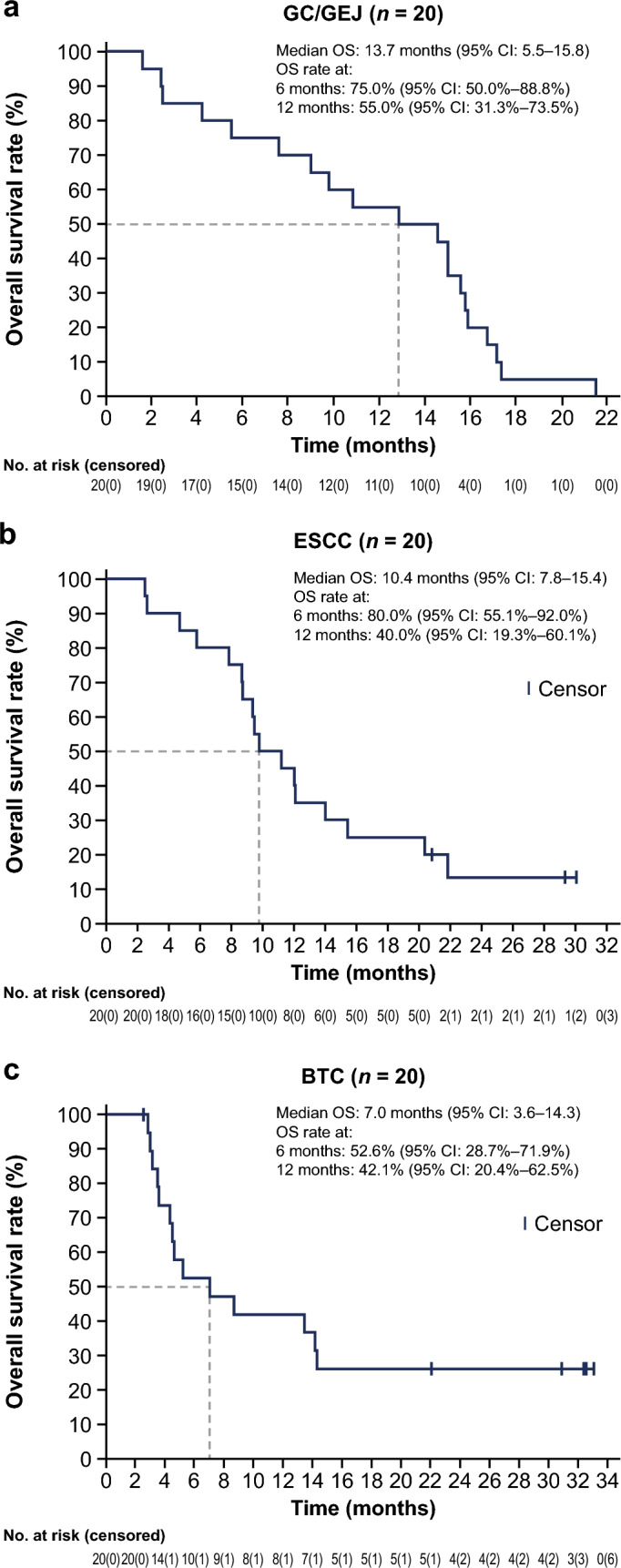
Between December 17, 2019, and January 29, 2021, 60 patients were enrolled (GC/GEJ, n = 20; ESCC, n = 20; BTC, n = 20). At data cutoff (February 28, 2023), ORRs were 31.6%, 30.0%, and 11.1%, respectively. Median progression-free survival was 4.1, 2.7, and 2.9 months, respectively. Median overall survival was 13.7, 10.4, and 7.0 months, respectively. Overall, grade ≥ 3 treatment-related adverse events occurred in 28 (46.7%) patients.
Surufatinib plus toripalimab showed promising antitumor activity and a tolerable safety profile in immunotherapy-naïve patients with GC/GEJ adenocarcinoma, ESCC, or BTC. These findings warrant further study in larger randomized trials comparing surufatinib plus toripalimab with standard therapies in these tumors.
gov NCT04169672.
在一项 I 期研究中,程序性死亡 1 抑制剂拓益联合血管免疫激酶抑制剂索凡替尼在晚期实体瘤患者中表现出可耐受的安全性和初步疗效。
本研究是在中国开展的一项开放性、多队列研究,入组了标准治疗失败或不耐受的晚期实体瘤患者,进入肿瘤特异性队列。患者接受索凡替尼(250mg 口服,每日 1 次)联合拓益(240mg 静脉注射,每 3 周 1 次)治疗。本研究报告了三个队列(胃/胃食管结合部腺癌[GC/GEJ]、食管鳞癌[ESCC]和胆管癌[BTC])的结果。主要终点为研究者评估的根据实体瘤反应评价标准 1.1 版(Response Evaluation criteria in Solid Tumors version 1.1,RECIST 1.1)判定的客观缓解率(ORR)。
2019 年 12 月 17 日至 2021 年 1 月 29 日期间,共入组 60 例患者(GC/GEJ,n=20;ESCC,n=20;BTC,n=20)。数据截止日期(2023 年 2 月 28 日)时,ORR 分别为 31.6%、30.0%和 11.1%。中位无进展生存期分别为 4.1、2.7 和 2.9 个月,中位总生存期分别为 13.7、10.4 和 7.0 个月。总体而言,28 例(46.7%)患者发生了≥3 级治疗相关不良事件。
在免疫治疗初治的 GC/GEJ 腺癌、ESCC 或 BTC 患者中,索凡替尼联合拓益显示出有前景的抗肿瘤活性和可耐受的安全性。这些发现支持在这些肿瘤中开展更大规模的随机试验,比较索凡替尼联合拓益与标准疗法的疗效。
gov NCT04169672。