Laboratorio de Bases Biológicas del Comportamiento, Facultad de Psicología, Universidad de La Sabana, Chía, Colombia.
Doctorado en Biociencias, Facultad de Ingeniería, Universidad de La Sabana, Chía, Colombia.
J Hum Genet. 2024 Aug;69(8):373-380. doi: 10.1038/s10038-024-01246-5. Epub 2024 May 7.
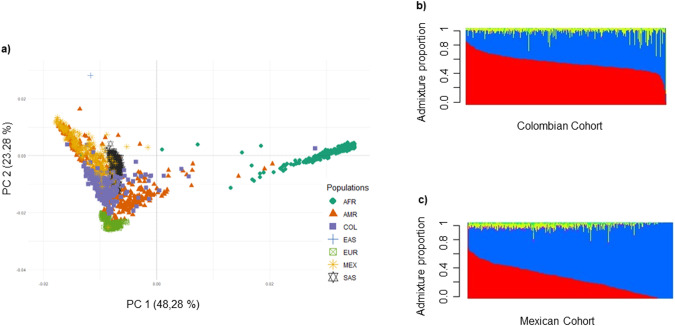
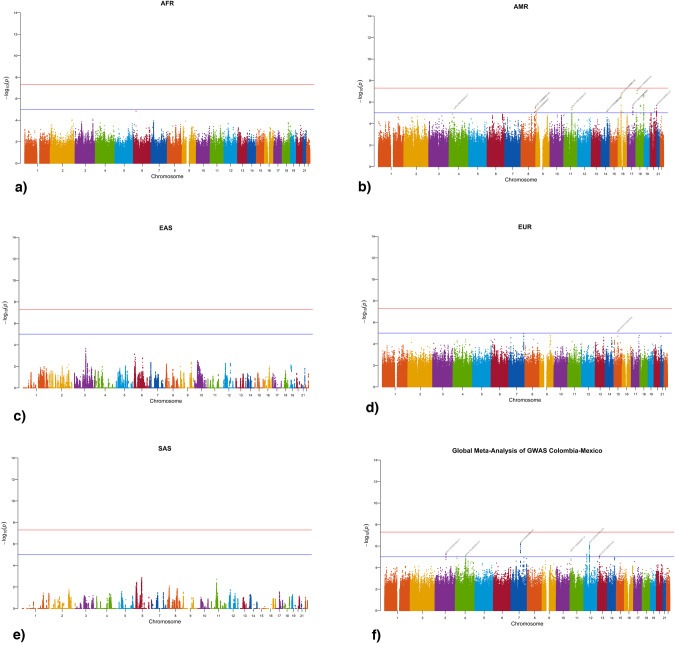
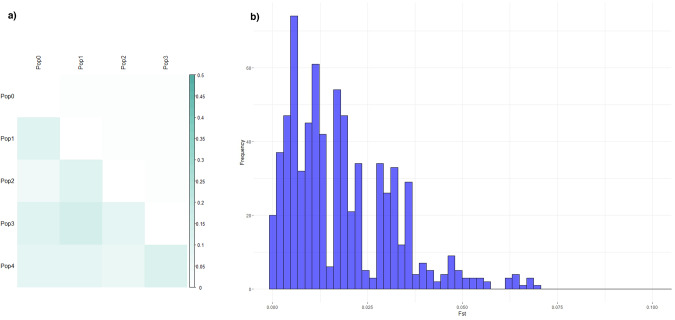
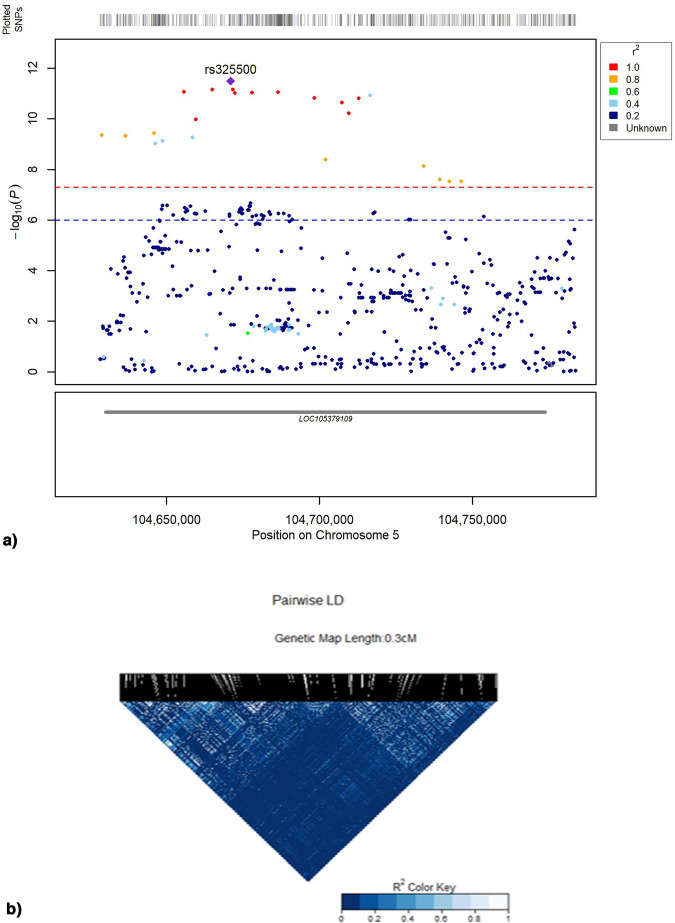
Contemporary research on the genomics of Attention Deficit Hyperactivity Disorder (ADHD) often underrepresents admixed populations of diverse genomic ancestries, such as Latin Americans. This study explores the relationship between admixture and genetic associations for ADHD in Colombian and Mexican cohorts. Some 546 participants in two groups, ADHD and Control, were genotyped with Infinium PsychArray®. Global ancestry levels were estimated using overall admixture proportions and principal component analysis, while local ancestry was determined using a method to estimate ancestral components along the genome. Genome-wide association analysis (GWAS) was conducted to identify significant associations. Differences between Colombia and Mexico were evaluated using appropriate statistical tests. 354 Single-nucleotide polymorphisms (SNPs) and Single-nucleotide variants (SNVs) related to some genes and intergenic regions exhibited suggestive significance (p-value < 510e-5) in the GWAS. None of the variants revealed genome-wide significance (p-value < 510e-8). The study identified a significant relationship between risk SNPs and the European component of admixture, notably observed in the LOC105379109 gene. Despite differences in risk association loci, such as FOXP2, our findings suggest a possible homogeneity in genetic variation's impact on ADHD between Colombian and Mexican populations. Current reference datasets for ADHD predominantly consist of samples with high European ancestry, underscoring the need for further research to enhance the representation of reference populations and improve the identification of ADHD risk traits in Latin Americans.
当代注意力缺陷多动障碍(ADHD)的基因组学研究经常对具有多种基因组背景的混合人群(如拉丁美洲人)代表性不足。本研究探讨了混合人群与 ADHD 遗传关联在哥伦比亚和墨西哥队列中的关系。两组共 546 名参与者(ADHD 组和对照组)使用 Infinium PsychArray® 进行了基因分型。通过总体混合比例和主成分分析来估计全球祖先水平,而通过一种估计沿基因组祖先成分的方法来确定局部祖先。进行全基因组关联分析(GWAS)以识别显著关联。使用适当的统计检验评估哥伦比亚和墨西哥之间的差异。354 个与某些基因和基因间区域相关的单核苷酸多态性(SNP)和单核苷酸变异(SNV)在 GWAS 中表现出显著意义(p 值 < 510e-5)。没有一个变体显示全基因组显著意义(p 值 < 510e-8)。该研究发现风险 SNP 与混合人群的欧洲成分之间存在显著关系,这在 LOC105379109 基因中尤为明显。尽管在 FOXP2 等风险关联基因座存在差异,但我们的研究结果表明,遗传变异对哥伦比亚和墨西哥人群 ADHD 的影响可能存在一定程度的同质性。目前 ADHD 的参考数据集主要由具有高欧洲祖先的样本组成,这突显了需要进一步研究以增强参考人群的代表性,并提高拉丁美洲人 ADHD 风险特征的识别能力。