Department of Nutritional Sciences, King's College London, London, UK.
Zoe Ltd, London, UK.
Nat Med. 2024 Jul;30(7):1888-1897. doi: 10.1038/s41591-024-02951-6. Epub 2024 May 8.
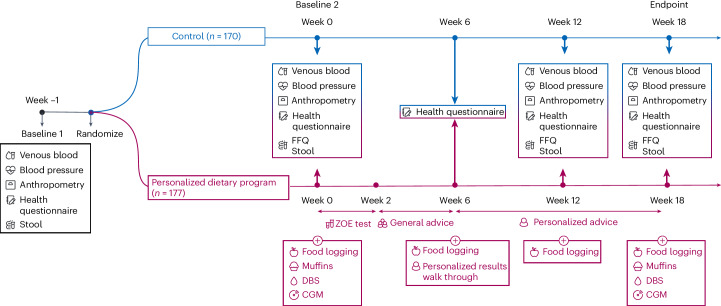
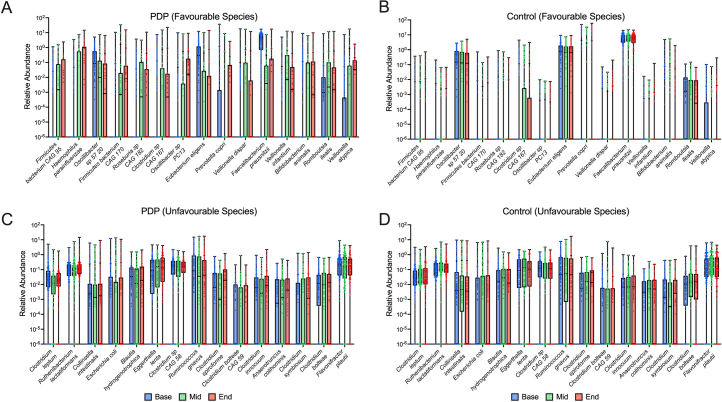
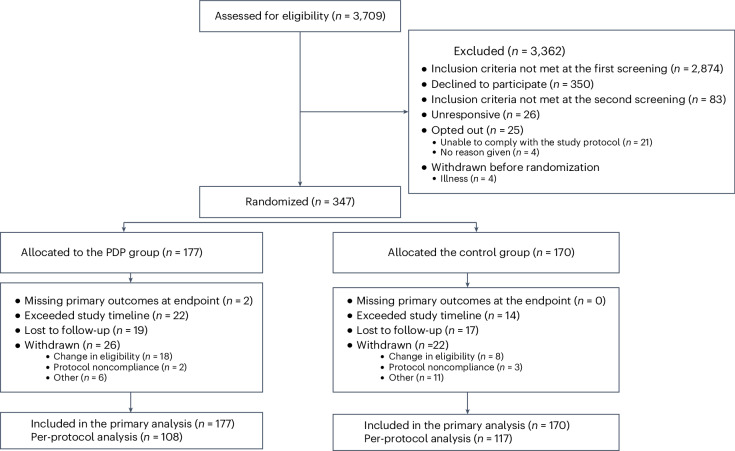
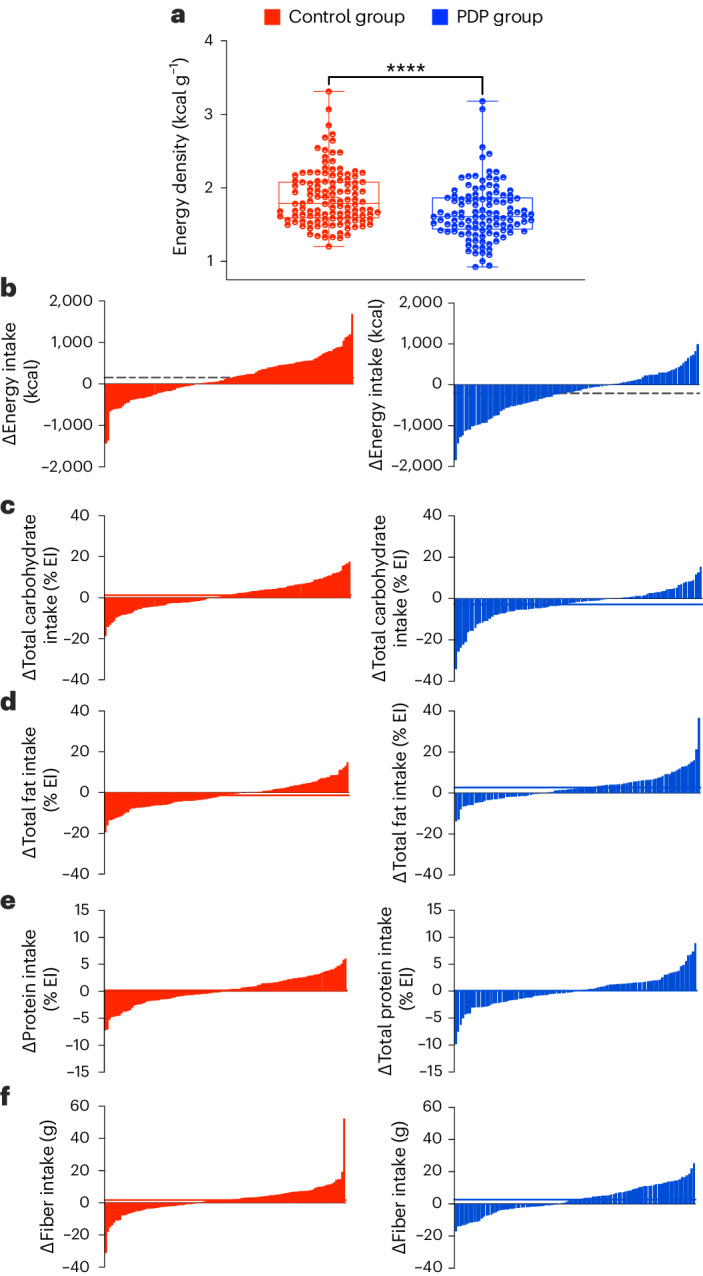
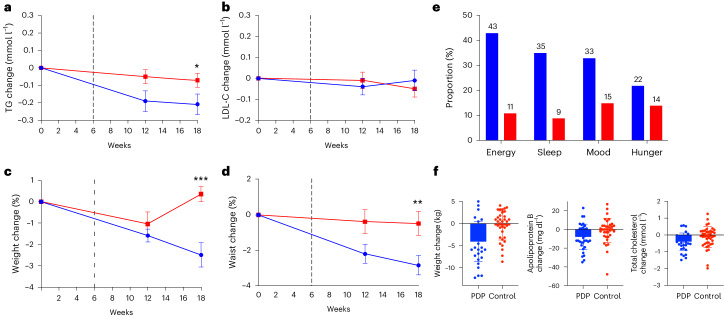
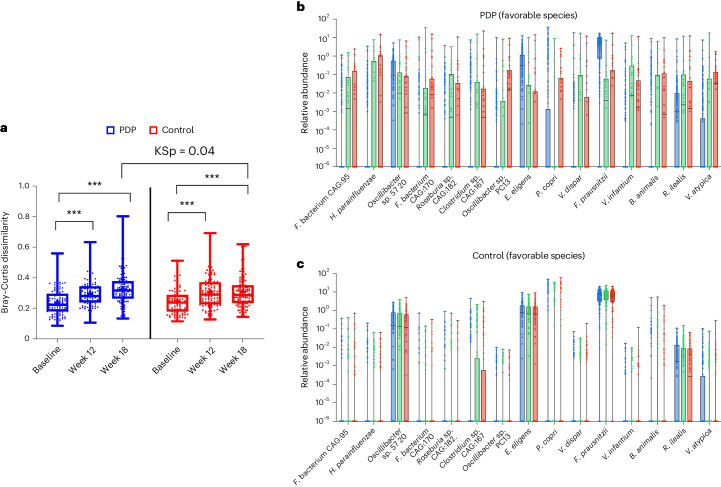
Large variability exists in people's responses to foods. However, the efficacy of personalized dietary advice for health remains understudied. We compared a personalized dietary program (PDP) versus general advice (control) on cardiometabolic health using a randomized clinical trial. The PDP used food characteristics, individual postprandial glucose and triglyceride (TG) responses to foods, microbiomes and health history, to produce personalized food scores in an 18-week app-based program. The control group received standard care dietary advice (US Department of Agriculture Guidelines for Americans, 2020-2025) using online resources, check-ins, video lessons and a leaflet. Primary outcomes were serum low-density lipoprotein cholesterol and TG concentrations at baseline and at 18 weeks. Participants (n = 347), aged 41-70 years and generally representative of the average US population, were randomized to the PDP (n = 177) or control (n = 170). Intention-to-treat analysis (n = 347) between groups showed significant reduction in TGs (mean difference = -0.13 mmol l; log-transformed 95% confidence interval = -0.07 to -0.01, P = 0.016). Changes in low-density lipoprotein cholesterol were not significant. There were improvements in secondary outcomes, including body weight, waist circumference, HbA1c, diet quality and microbiome (beta-diversity) (P < 0.05), particularly in highly adherent PDP participants. However, blood pressure, insulin, glucose, C-peptide, apolipoprotein A1 and B, and postprandial TGs did not differ between groups. No serious intervention-related adverse events were reported. Following a personalized diet led to some improvements in cardiometabolic health compared to standard dietary advice. ClinicalTrials.gov registration: NCT05273268 .
人们对食物的反应存在很大差异。然而,个性化饮食建议对健康的疗效仍有待研究。我们使用随机临床试验比较了个性化饮食计划(PDP)与一般建议(对照组)对心脏代谢健康的影响。PDP 使用食物特性、个体餐后血糖和甘油三酯(TG)对食物的反应、微生物组和健康史,在 18 周的基于应用程序的计划中生成个性化食物评分。对照组使用在线资源、签到、视频课程和传单接受标准的饮食建议(美国农业部 2020-2025 年美国人指南)。主要结局是基线和 18 周时的血清低密度脂蛋白胆固醇和 TG 浓度。参与者(n=347)年龄在 41-70 岁,通常代表美国普通人群,随机分为 PDP 组(n=177)或对照组(n=170)。意向治疗分析(n=347)显示两组间 TG 显著降低(平均差异=-0.13 mmol l;对数转换 95%置信区间=-0.07 至-0.01,P=0.016)。低密度脂蛋白胆固醇的变化不显著。次要结局包括体重、腰围、HbA1c、饮食质量和微生物组(β多样性)均有改善(P<0.05),尤其是在高度依从 PDP 的参与者中。然而,血压、胰岛素、血糖、C 肽、载脂蛋白 A1 和 B 以及餐后 TG 在两组间无差异。未报告与干预相关的严重不良事件。与标准饮食建议相比,遵循个性化饮食可改善心脏代谢健康。临床试验注册:NCT05273268。