Wu Minghong, Lin Gengye, Li Rui, Liu Xing, Liu Shumei, Zhao Jianqing, Xie Weiqi
School of Materials Science and Engineering, Key Laboratory Guangdong High Property and Functional Polymer Materials, Plant Fiber Material Science Research Center, State Key Laboratory of Pulp and Paper Engineering, South China University of Technology, Guangzhou 510640, China.
School of Minerals Processing and Bioengineering, Central South University, Changsha 410083, China.
Sci Adv. 2024 May 10;10(19):eadl4449. doi: 10.1126/sciadv.adl4449. Epub 2024 May 8.
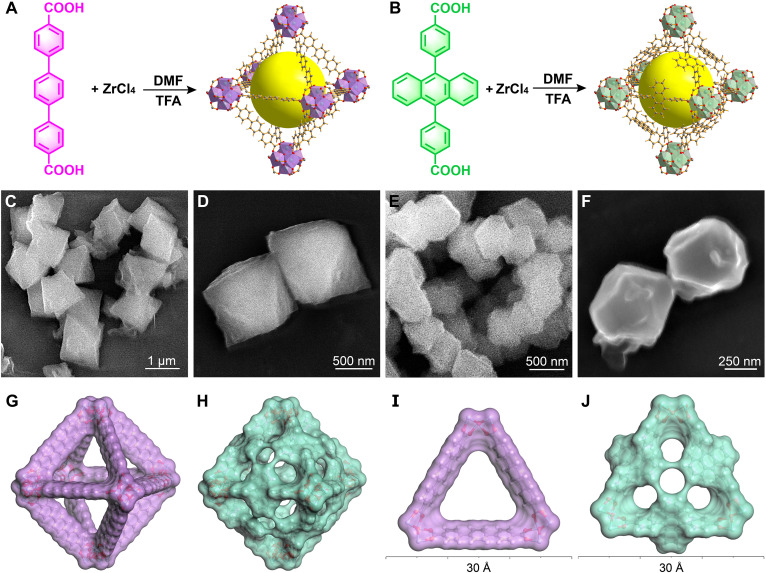
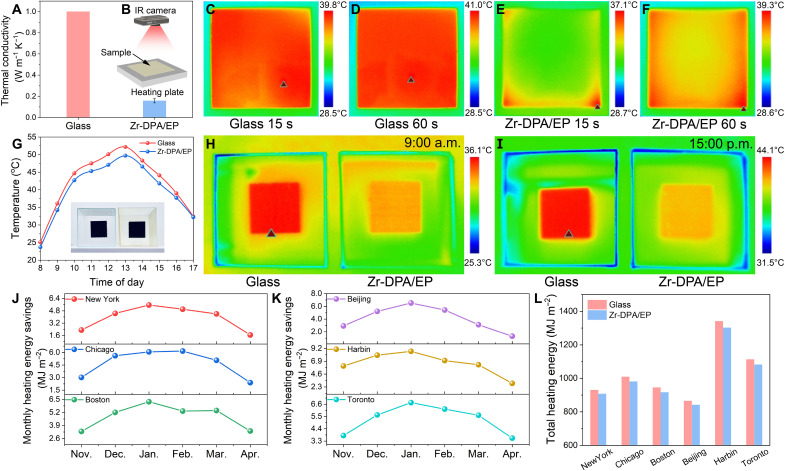
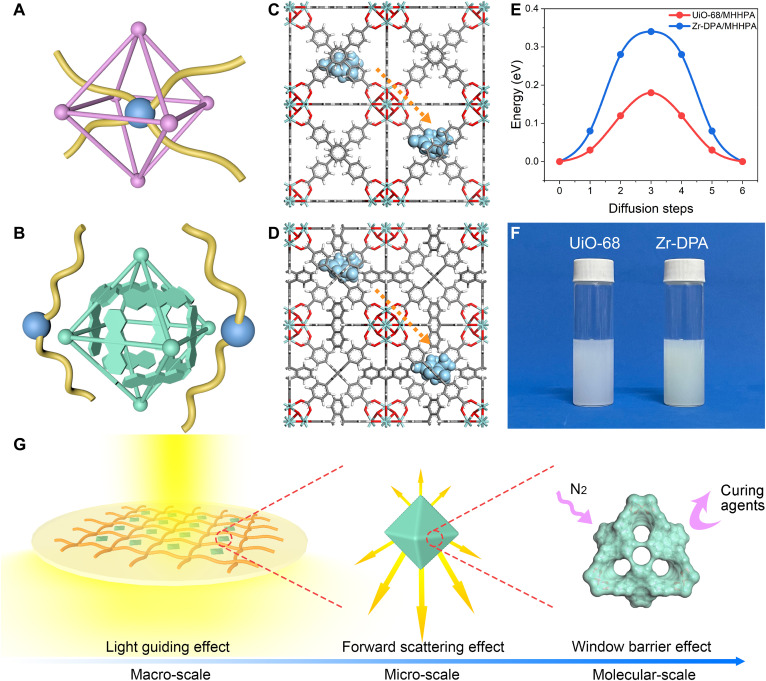
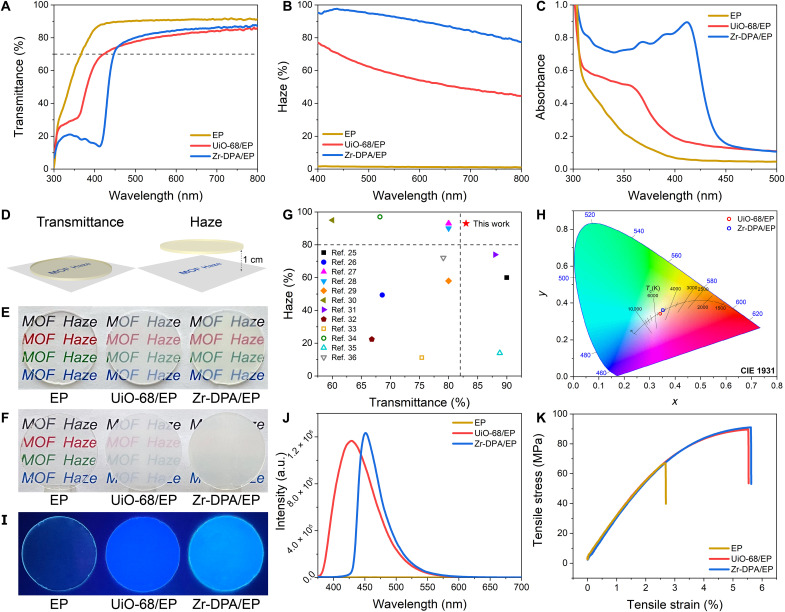
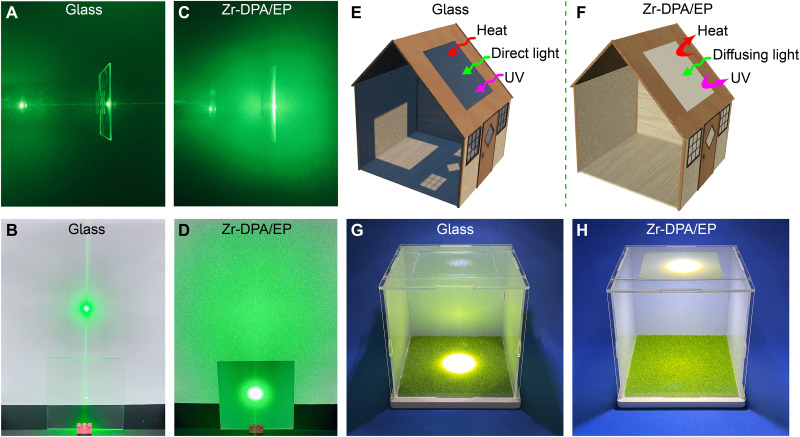
Metal-organic frameworks (MOFs) hold great promise for diverse applications when combined with polymers. However, a persistent challenge lies in the susceptibility of exposed MOF pores to molecule and polymer penetration, compromising the porosity and overall performance. Here, we design a molecular-caged MOF (MC-MOF) to achieve contracted window without sacrificing the MOF porosity by torsional conjugated ligands. These molecular cages effectively shield against the undesired molecule penetration during polymerization, thereby preserving the pristine porosity of MC-MOF and providing outstanding light and thermal management to the composites. The polymer containing 0.5 wt % MC-MOF achieves an 83% transmittance and an exceptional haze of 93% at 550 nanometers, coupled with remarkable thermal insulation. These MC-MOF/polymer composites offer the potential for more uniform daylighting and reduced energy consumption in sustainable buildings when compared to traditional glass materials. This work delivers a general method to uphold MOF porosity in polymers through molecular cage design, advancing MOF-polymer applications in energy and sustainability.
金属有机框架材料(MOFs)与聚合物结合时在各种应用中具有巨大潜力。然而,一个长期存在的挑战在于暴露的MOF孔易受分子和聚合物渗透的影响,从而损害孔隙率和整体性能。在此,我们设计了一种分子笼状MOF(MC-MOF),通过扭转共轭配体在不牺牲MOF孔隙率的情况下实现收缩窗口。这些分子笼在聚合过程中有效屏蔽了不期望的分子渗透,从而保留了MC-MOF的原始孔隙率,并为复合材料提供了出色的光和热管理。含有0.5 wt% MC-MOF的聚合物在550纳米处实现了83%的透光率和93%的优异雾度,同时具有显著的隔热性能。与传统玻璃材料相比,这些MC-MOF/聚合物复合材料在可持续建筑中具有实现更均匀采光和降低能耗的潜力。这项工作提供了一种通过分子笼设计在聚合物中保持MOF孔隙率的通用方法,推动了MOF-聚合物在能源和可持续性方面的应用。