Padilla-Valverde David, Bodoque-Villar Raquel, García-Santos Esther, Sanchez Susana, Manzanares-Campillo Carmen, Rodriguez Marta, González Lucia, Ambrós Alfonso, Cano Juana M, Padilla-Marcote Maria, Redondo-Calvo Javier, Martin Jesus, Serrano-Oviedo Leticia
Head of the Hepatobiliary Surgery Unit and Carcinomatosis Programme, Department of Surgery, General University Hospital, Faculty of Medicine, UCLM, C/Obispo Rafael Torija s/n, 13005 Ciudad Real, Spain.
Traslational Investigation Unit, University General Hospital of Ciudad Real, SESCAM, Research Institute of Castilla-La Mancha (IDISCAM), C/Obispo Rafael Torija s/n, 13005 Ciudad Real, Spain.
Cancers (Basel). 2024 Apr 28;16(9):1718. doi: 10.3390/cancers16091718.
Despite the improvement in therapies, pancreatic cancer represents one of the most cancer-related deaths. In our hypothesis, we propose that Hyperthermic Intraperitoneal Chemotherapy with gemcitabine after pancreatic cytoreductive surgery could reduce tumor progression by reducing residual neoplastic volume and residual pancreatic cancer stem cells.
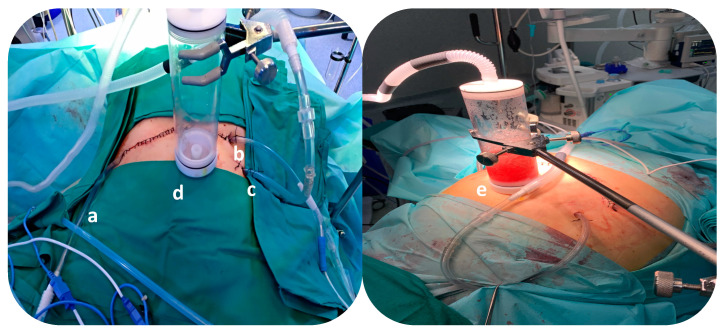
A randomized trial involving 42 patients. All patients were diagnosed with pancreatic ductal adenocarcinoma. Group I: R0 resection. Group II. R0 resection and HIPEC with gemcitabine (120 mg/m for 30 min). Effectiveness was measured with analysis of overall survival, disease-free survival, distant recurrence, locoregional recurrence, and measuring of pancreatic cancer stem cells (EpCAMCXCR4CD133).
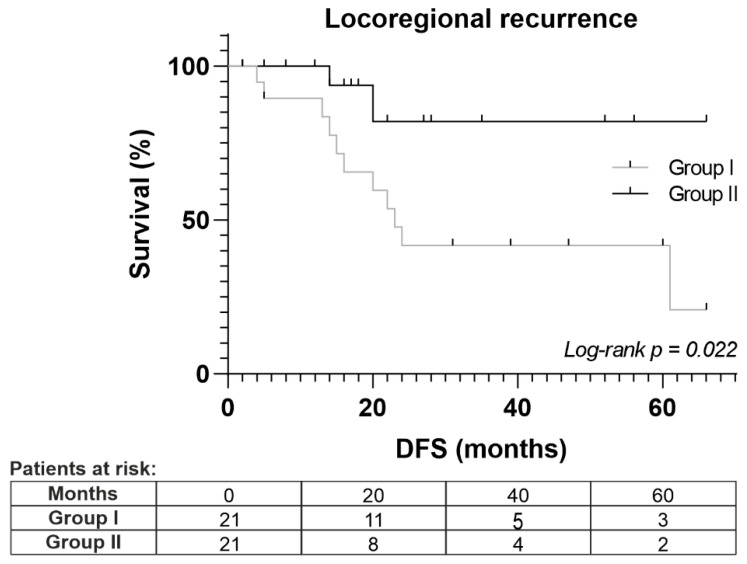
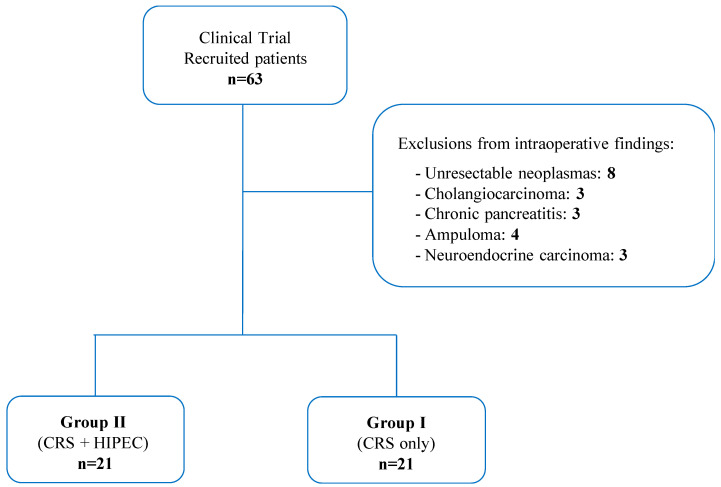
From 2017 to 2023, 63 patients were recruited for our clinical trial; 21 patients were included in each group, and 21 were excluded. Locoregional recurrence, -value: 0.022, was lower in the experimental group. There were no significant differences between the two groups in hospital mortality, perioperative complications, or hospital costs. We found a significant decrease in pancreatic cancer stem cells in patients in the experimental group after treatment, -value of 0.018.
The use of HIPEC with gemcitabine after surgery in patients with resectable pancreatic ductal adenocarcinoma reduces locoregional recurrence and may be associated with a significant decrease in pancreatic cancer stem cells.
尽管治疗方法有所改进,但胰腺癌仍是癌症相关死亡的主要原因之一。在我们的假设中,我们提出在胰腺癌减瘤手术后进行吉西他滨腹腔热灌注化疗可通过减少残留肿瘤体积和残留胰腺癌干细胞来降低肿瘤进展。
一项涉及42例患者的随机试验。所有患者均被诊断为胰腺导管腺癌。第一组:R0切除。第二组:R0切除并进行吉西他滨腹腔热灌注化疗(120mg/m²,持续30分钟)。通过分析总生存期、无病生存期、远处复发、局部区域复发以及测量胰腺癌干细胞(EpCAM⁺CXCR4⁺CD133⁺)来评估疗效。
2017年至2023年,63例患者被纳入我们的临床试验;每组纳入21例患者,排除21例。局部区域复发,P值:0.022,试验组较低。两组在医院死亡率、围手术期并发症或住院费用方面无显著差异。我们发现试验组患者治疗后胰腺癌干细胞显著减少,P值为0.018。
可切除胰腺导管腺癌患者术后使用吉西他滨腹腔热灌注化疗可降低局部区域复发,并且可能与胰腺癌干细胞显著减少有关。