Sondag-Tschroots I R, Schulz-Raateland R C, van Walbeek H K, Feltkamp T E
Clin Exp Immunol. 1979 Aug;37(2):323-7.
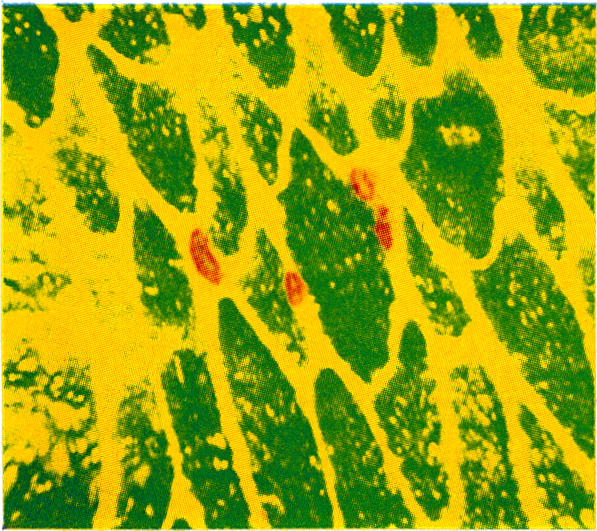
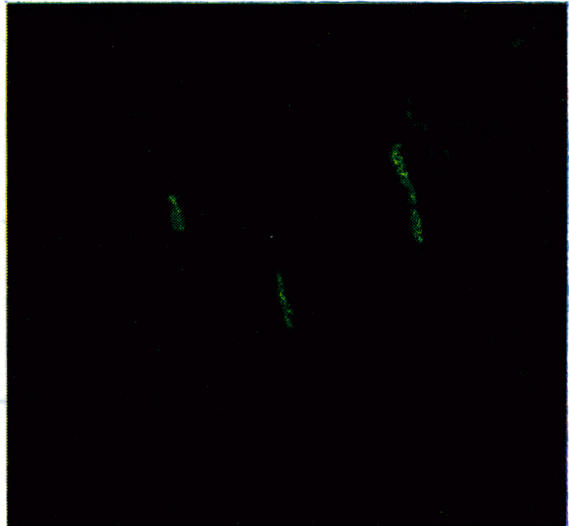
Antibodies to acetylcholine receptors (AChR) are probably directly responsible for the pathogenesis of myasthenia gravis (MG). Methods for the demonstration of these antibodies are complicated. The present study shows that the antibodies can also be revealed by the use of the simple indirect immunofluorescence technique with rat diaphragm as substrate. Antibodies were demonstrated with FITC-labelled anti-human Ig. The location on the motor endplates was confirmed by using a TRITC-labelled anti-alpha-bungarotoxin system. Antibodies to motor endplates were only demonstrated in MG and not in either twenty-two patients with neuromuscular disorders or fifty normal subjects. Antibodies to motor endplates were found in only twelve out of fifty-seven MG patients. In fifteen of the other forty-five patients, antibodies were found of the classical anti-skeletal muscle type, 'overluminating' the anti-motor endplate antibodies.
抗乙酰胆碱受体(AChR)抗体可能是重症肌无力(MG)发病机制的直接原因。检测这些抗体的方法很复杂。本研究表明,使用以大鼠膈肌为底物的简单间接免疫荧光技术也能检测到这些抗体。用异硫氰酸荧光素(FITC)标记的抗人免疫球蛋白(Ig)来检测抗体。通过使用异硫氰酸四甲基罗丹明(TRITC)标记的抗α-银环蛇毒素系统来确认运动终板上的位置。仅在MG患者中检测到运动终板抗体,而在22例神经肌肉疾病患者和50名正常受试者中均未检测到。在57例MG患者中,仅12例检测到运动终板抗体。在另外45例患者中的15例中,发现了经典的抗骨骼肌型抗体,其“遮盖”了抗运动终板抗体。