Aerts Andreas, Vovchenko Maxim, Elahi Seyed Ali, Viñuelas Rocío Castro, De Maeseneer Tess, Purino Martin, Hoogenboom Richard, Van Oosterwyck Hans, Jonkers Ilse, Cardinaels Ruth, Smet Mario
Laboratory of Organic Material Synthesis, Polymer Chemistry and Materials, Department of Chemistry, KU Leuven, Celestijnenlaan 200f, P.O. Box 2404, 3001 Leuven, Belgium.
Biomechanics Section, Department of Mechanical Engineering, KU Leuven, Celestijnenlaan 300C, P.O. Box 2419, 3001 Leuven, Belgium.
Polymers (Basel). 2024 May 1;16(9):1264. doi: 10.3390/polym16091264.
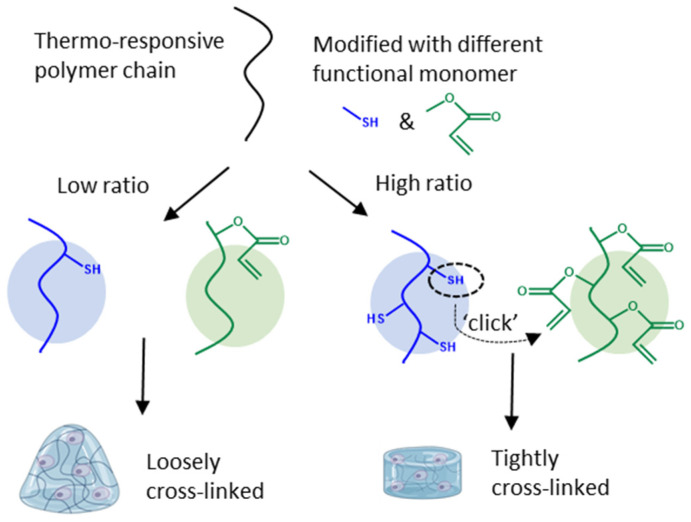
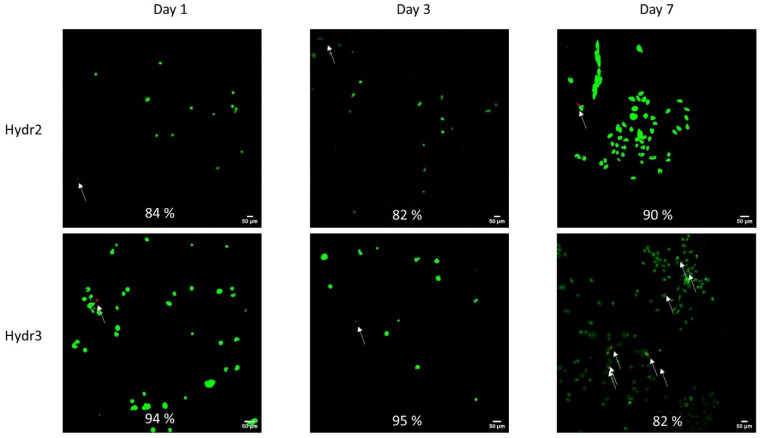
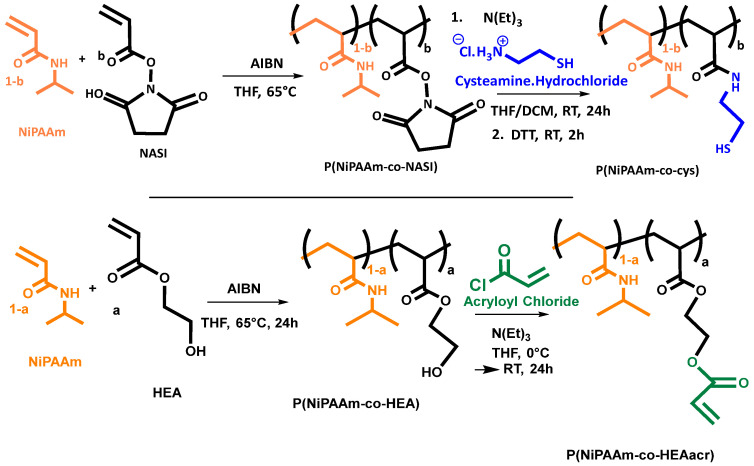
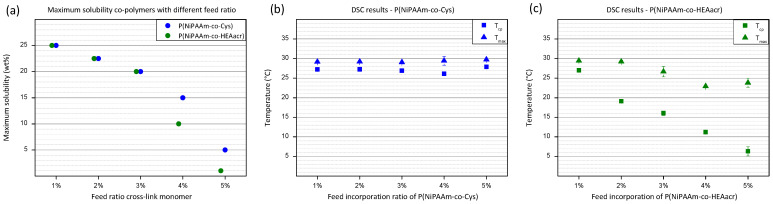
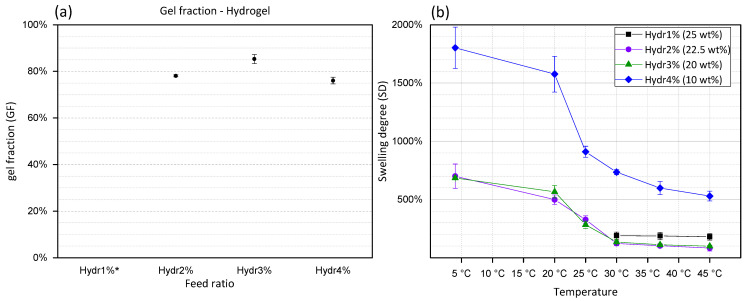
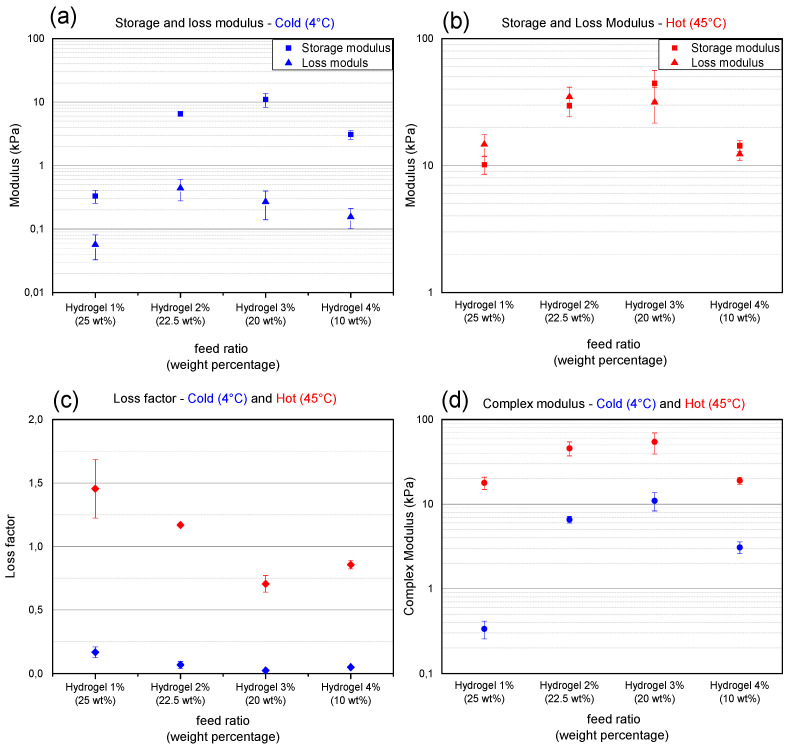
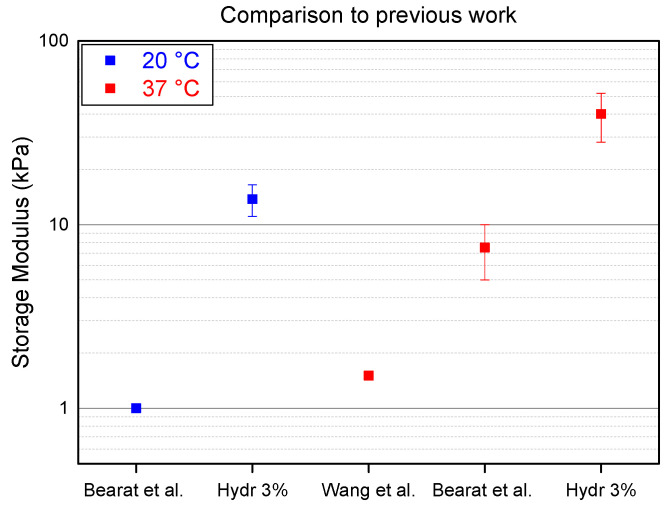
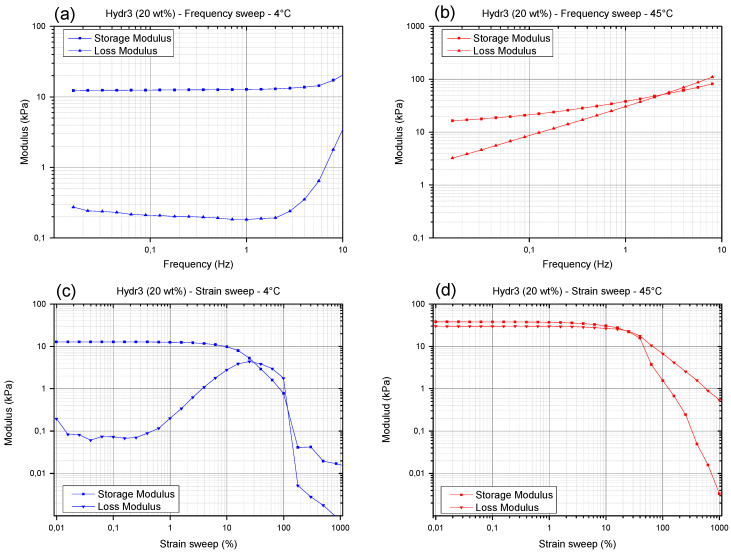
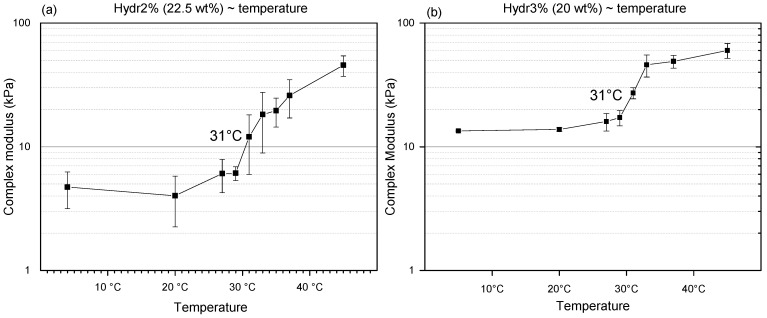
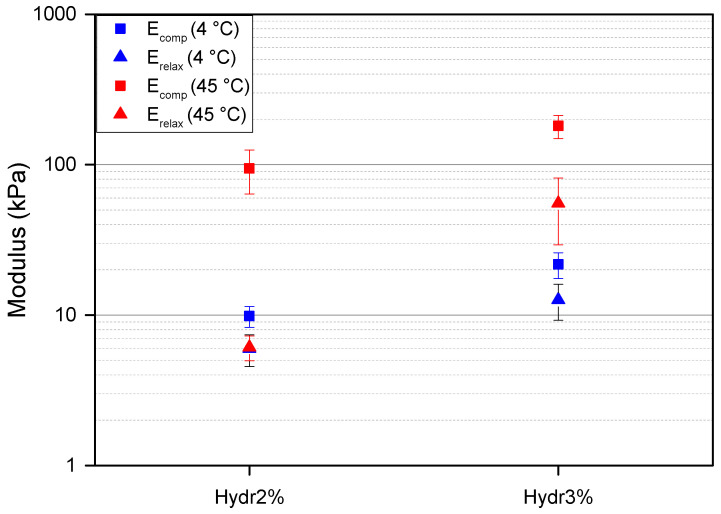
The thermo-responsive behavior of Poly(N-isopropylacrylamide) makes it an ideal candidate to easily embed cells and allows the polymer mixture to be injected. However, P(NiPAAm) hydrogels possess minor mechanical properties. To increase the mechanical properties, a covalent bond is introduced into the P(NIPAAm) network through a biocompatible thiol-ene click-reaction by mixing two polymer solutions. Co-polymers with variable thiol or acrylate groups to thermo-responsive co-monomer ratios, ranging from 1% to 10%, were synthesized. Precise control of the crosslink density allowed customization of the hydrogel's mechanical properties to match different tissue stiffness levels. Increasing the temperature of the hydrogel above its transition temperature of 31 °C induced the formation of additional physical interactions. These additional interactions both further increased the stiffness of the material and impacted its relaxation behavior. The developed optimized hydrogels reach stiffnesses more than ten times higher compared to the state of the art using similar polymers. Furthermore, when adding cells to the precursor polymer solutions, homogeneous thermo-responsive hydrogels with good cell viability were created upon mixing. In future work, the influence of the mechanical micro-environment on the cell's behavior can be studied in vitro in a continuous manner by changing the incubation temperature.
聚(N-异丙基丙烯酰胺)的热响应行为使其成为轻松包埋细胞并允许注射聚合物混合物的理想候选材料。然而,聚(N-异丙基丙烯酰胺)水凝胶的机械性能较差。为了提高机械性能,通过混合两种聚合物溶液,通过生物相容性硫醇-烯点击反应将共价键引入聚(N-异丙基丙烯酰胺)网络中。合成了硫醇或丙烯酸酯基团与热响应性共聚单体比例可变(范围为1%至10%)的共聚物。对交联密度的精确控制使得能够定制水凝胶的机械性能以匹配不同的组织硬度水平。将水凝胶的温度升高到其31°C的转变温度以上会诱导形成额外的物理相互作用。这些额外的相互作用既进一步增加了材料的硬度,又影响了其松弛行为。与使用类似聚合物的现有技术相比,所开发的优化水凝胶的硬度高出十多倍。此外,向前体聚合物溶液中添加细胞时,混合后会形成具有良好细胞活力的均匀热响应性水凝胶。在未来的工作中,可以通过改变孵育温度,以连续的方式在体外研究机械微环境对细胞行为的影响。