Colucci Giovanna, Sacchi Francesca, Bondioli Federica, Messori Massimo
Politecnico di Torino, Department of Applied Science and Technology (DISAT), Corso Duca degli Abruzzi 24, 10129 Torino, Italy.
National Interuniversity Consortium of Materials Science and Technology (INSTM), Via G. Giusti 9, 50121 Firenze, Italy.
Polymers (Basel). 2024 May 2;16(9):1272. doi: 10.3390/polym16091272.
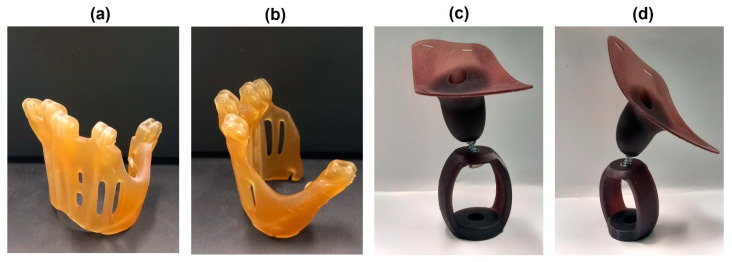
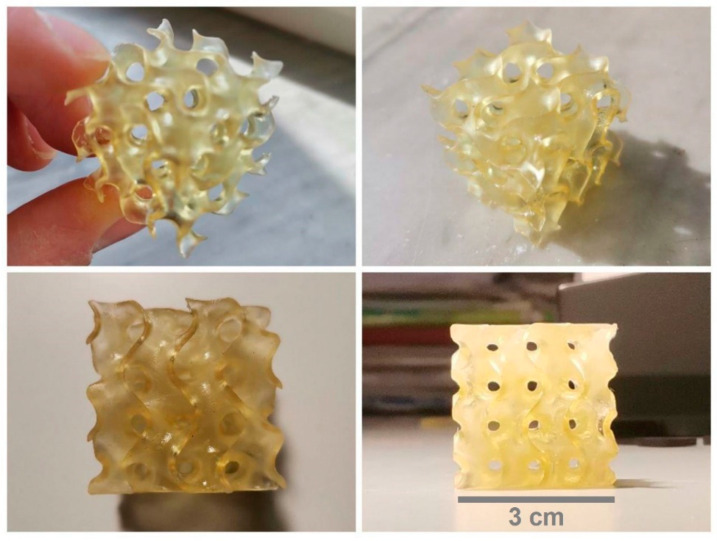
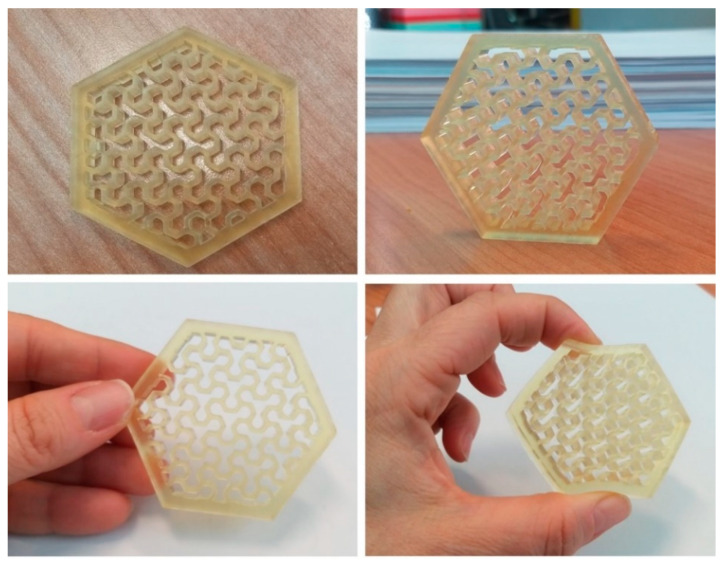
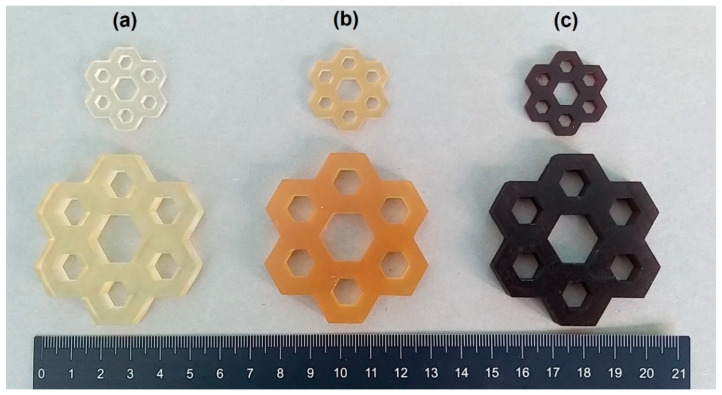
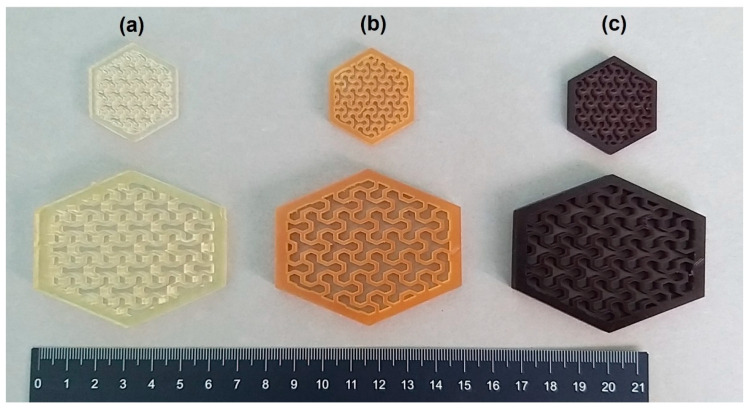
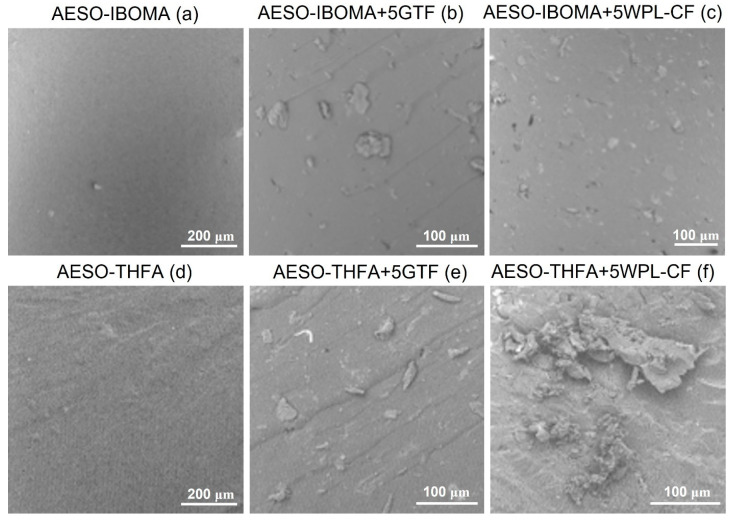
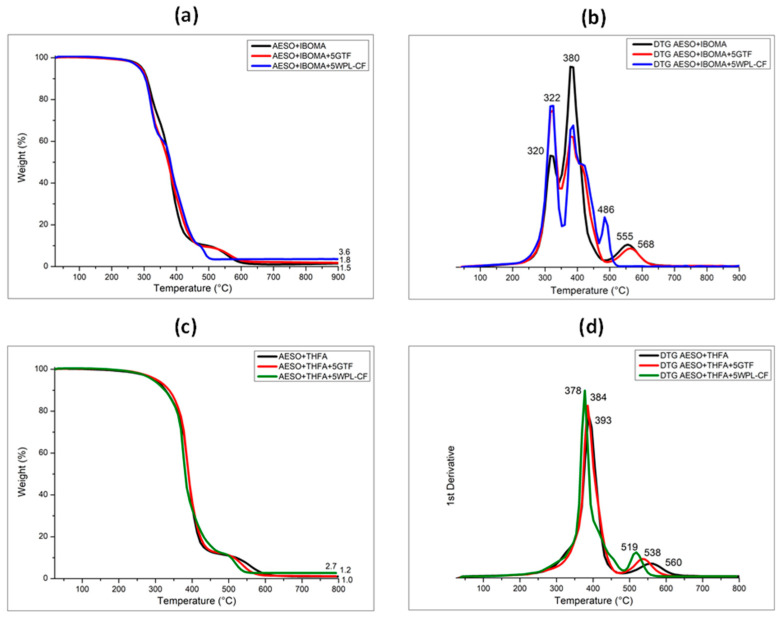
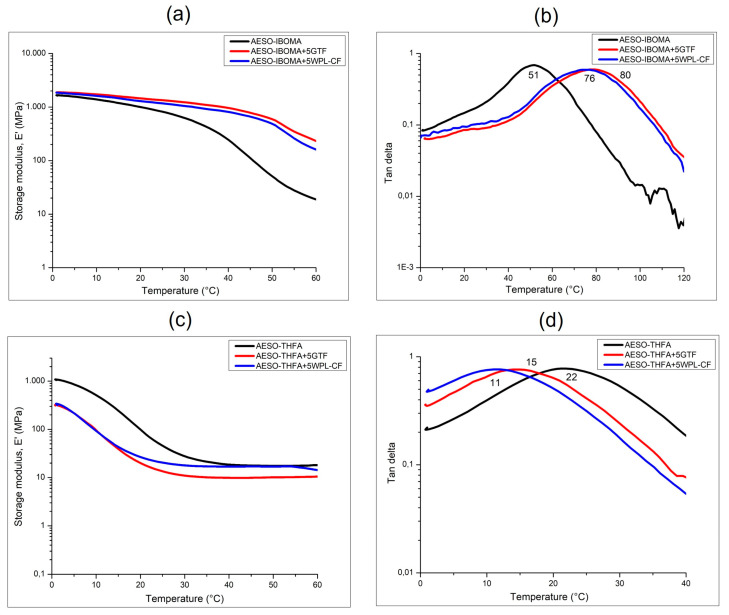
The present work aimed to prepare novel bio-based composites by adding fillers coming from agro-wastes to an acrylate epoxidized soybean oil (AESO) resin, using liquid crystal display (LCD) 3D printing. Different photocurable formulations were prepared by varying the reactive diluents, iso-bornyl methacrylate (IBOMA) and tetrahydrofurfuryl acrylate (THFA). Then, two fillers derived from different industrial wastes, corn (GTF) and wine (WPL-CF) by-products, were added to the AESO-based formulations to develop polymer composites with improved properties. The printability by LCD of the photocurable formulations was widely studied. Bio-based objects with different geometries were realized, showing printing accuracy, layer adhesion, and accurate details. The thermo-mechanical and mechanical properties of the 3D-printed composites were tested by TGA, DMA, and tensile tests. The results revealed that the agro-wastes' addition led to a remarkable increase in the elastic modulus, tensile strength, and glass transition temperature in the glassy state for the systems containing IBOMA and for flexible structures in the rubbery region for systems containing THFA. AESO-based polymers demonstrated tunable properties, varying from rigid to flexible, in the presence of different diluents and biofillers. This finding paves the way for the use of this kind of composite in applications, such as biomedical for the realization of prostheses.
本研究旨在通过将来自农业废弃物的填料添加到丙烯酸酯环氧化大豆油(AESO)树脂中,利用液晶显示器(LCD)3D打印制备新型生物基复合材料。通过改变反应性稀释剂甲基丙烯酸异冰片酯(IBOMA)和丙烯酸四氢糠酯(THFA),制备了不同的光固化配方。然后,将两种源自不同工业废弃物的填料,即玉米副产品(GTF)和葡萄酒副产品(WPL-CF),添加到基于AESO的配方中,以开发具有改进性能的聚合物复合材料。对光固化配方通过LCD的可打印性进行了广泛研究。实现了具有不同几何形状的生物基物体,展示了打印精度、层间附着力和精确细节。通过热重分析(TGA)、动态热机械分析(DMA)和拉伸试验对3D打印复合材料的热机械性能和力学性能进行了测试。结果表明,对于含有IBOMA的体系,农业废弃物的添加导致玻璃态下弹性模量、拉伸强度和玻璃化转变温度显著提高;对于含有THFA的体系,在橡胶态区域的柔性结构中也是如此。在不同稀释剂和生物填料存在的情况下,基于AESO的聚合物表现出从刚性到柔性的可调性能。这一发现为这种复合材料在诸如生物医学领域用于制造假体等应用中铺平了道路。