Laboratory of Biological Psychiatry, Institute of Mental Health, Tianjin Anding Hospital, Mental Health Center of Tianjin Medical University, 13 Liulin Rd., Hexi District, Tianjin, 300222, China.
Chifeng Anding Hospital, NO.18 Gongger Street, Hongshan District, Chifeng City, 024000, Inner Mongolia Autonomous Region, China.
BMC Psychiatry. 2024 May 13;24(1):355. doi: 10.1186/s12888-024-05805-0.
Sleep disturbances are a common occurrence in patients with schizophrenia, yet the underlying pathogenesis remain poorly understood. Here, we performed a targeted metabolomics-based approach to explore the potential biological mechanisms contributing to sleep disturbances in schizophrenia.
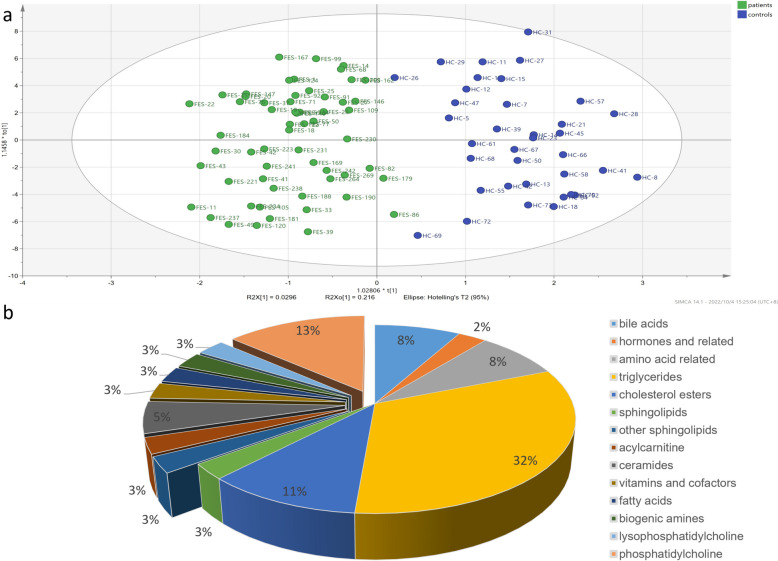
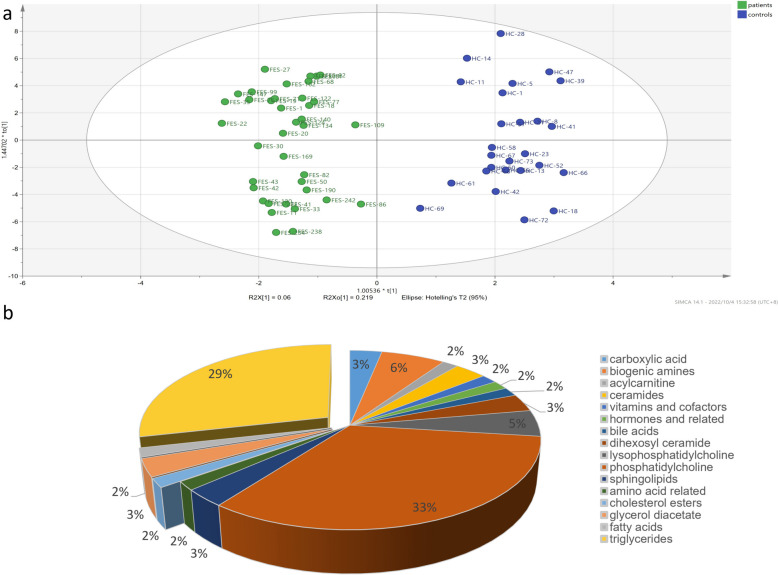
Plasma samples from 59 drug-naïve patients with schizophrenia and 36 healthy controls were subjected to liquid chromatography-mass spectrometry (LC-MS) targeted metabolomics analysis, allowing for the quantification and profiling of 271 metabolites. Sleep quality and clinical symptoms were assessed using the Pittsburgh Sleep Quality Index (PSQI) and the Positive and Negative Symptom Scale (PANSS), respectively. Partial correlation analysis and orthogonal partial least squares discriminant analysis (OPLS-DA) model were used to identify metabolites specifically associated with sleep disturbances in drug-naïve schizophrenia.
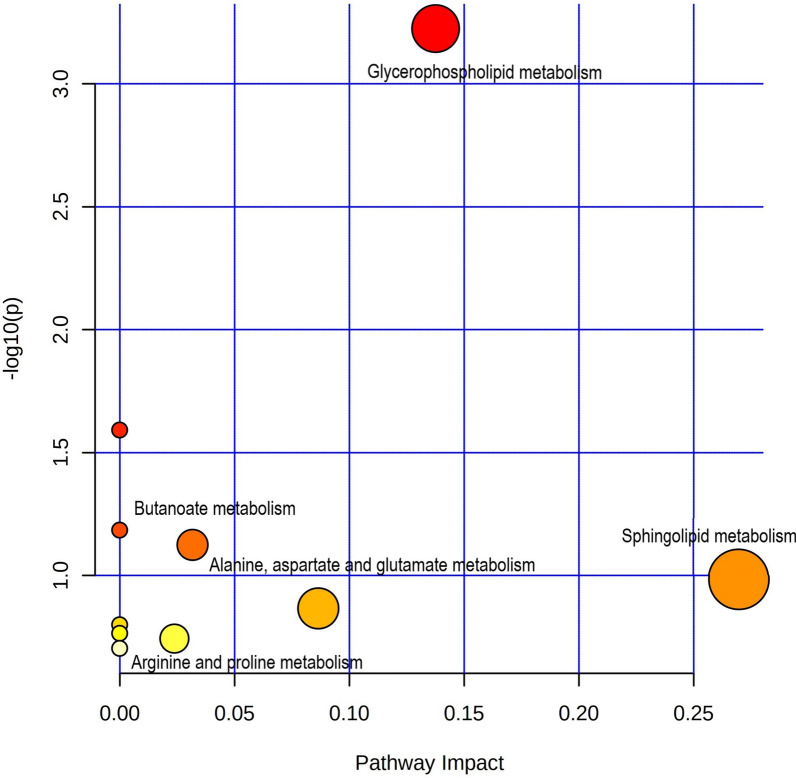
16 characteristic metabolites were observed significantly associated with sleep disturbances in drug-naïve patients with schizophrenia. Furthermore, the glycerophospholipid metabolism (Impact: 0.138, p<0.001), the butanoate metabolism (Impact: 0.032, p=0.008), and the sphingolipid metabolism (Impact: 0.270, p=0.104) were identified as metabolic pathways associated with sleep disturbances in drug-naïve patients with schizophrenia.
Our study identified 16 characteristic metabolites (mainly lipids) and 3 metabolic pathways related to sleep disturbances in drug-naïve schizophrenia. The detection of these distinct metabolites provide valuable insights into the underlying biological mechanisms associated with sleep disturbances in schizophrenia.
睡眠障碍是精神分裂症患者的常见病症,但潜在的发病机制仍知之甚少。在这里,我们采用靶向代谢组学方法来探索导致精神分裂症睡眠障碍的潜在生物学机制。
对 59 名未经药物治疗的精神分裂症患者和 36 名健康对照者的血浆样本进行液相色谱-质谱(LC-MS)靶向代谢组学分析,共定量和分析了 271 种代谢物。采用匹兹堡睡眠质量指数(PSQI)和阳性与阴性症状量表(PANSS)分别评估睡眠质量和临床症状。采用偏相关分析和正交偏最小二乘判别分析(OPLS-DA)模型鉴定与未经药物治疗的精神分裂症患者睡眠障碍相关的代谢物。
在未经药物治疗的精神分裂症患者中,发现 16 种特征代谢物与睡眠障碍显著相关。此外,甘油磷脂代谢(影响:0.138,p<0.001)、丁酸代谢(影响:0.032,p=0.008)和鞘脂代谢(影响:0.270,p=0.104)被鉴定为与未经药物治疗的精神分裂症患者睡眠障碍相关的代谢途径。
本研究确定了 16 种特征代谢物(主要是脂质)和 3 种与未经药物治疗的精神分裂症患者睡眠障碍相关的代谢途径。这些不同代谢物的检测为精神分裂症睡眠障碍相关的潜在生物学机制提供了有价值的见解。