Department of Paediatrics and Child Health, Aga Khan University Hospital, Karachi, Pakistan.
Department of Biological and Biomedical Sciences, Aga Khan University Hospital, Karachi, Pakistan.
mSphere. 2024 Jun 25;9(6):e0019624. doi: 10.1128/msphere.00196-24. Epub 2024 May 14.
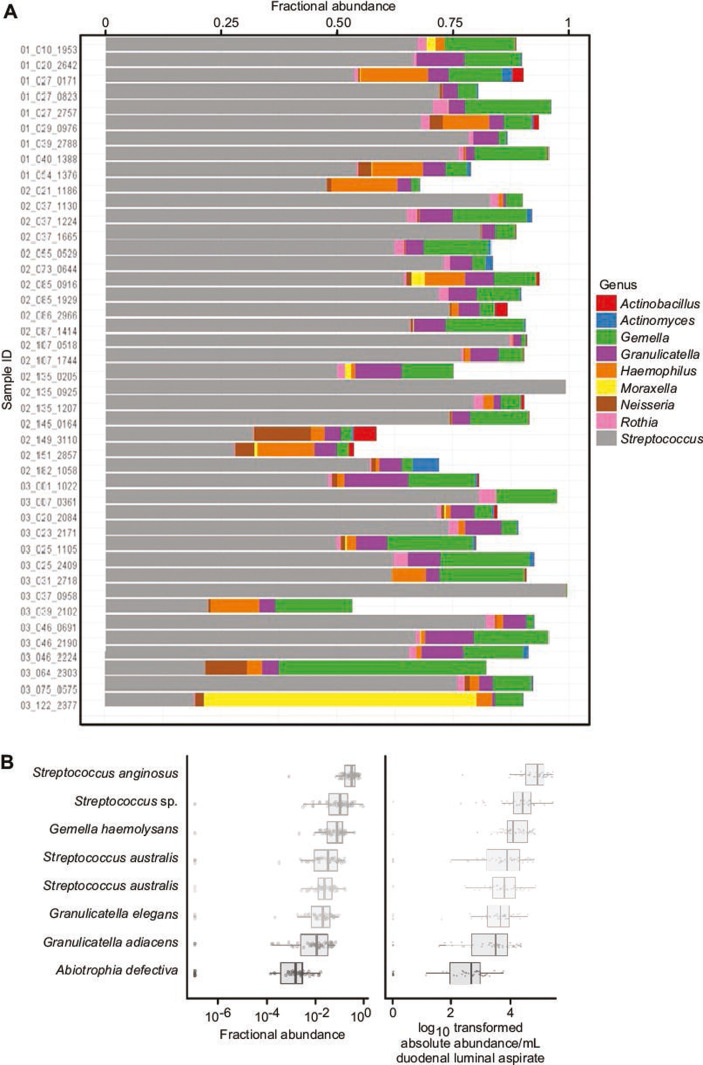
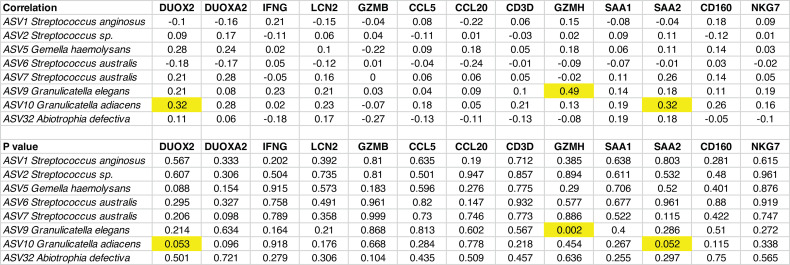
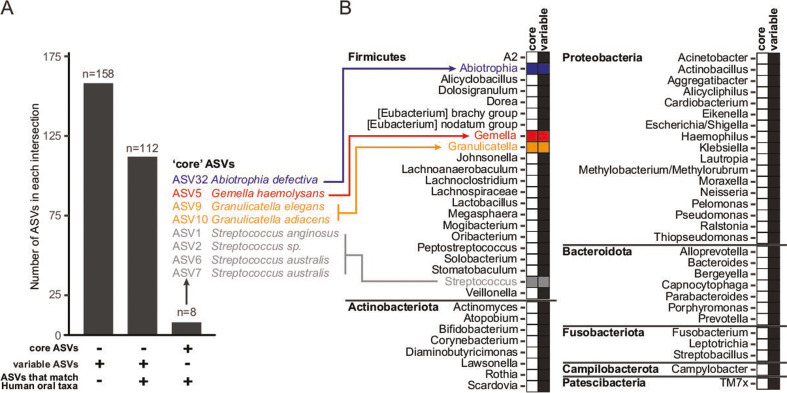
Environmental enteric dysfunction (EED) is a subclinical syndrome of altered small intestinal function postulated to be an important contributor to childhood undernutrition. The role of small intestinal bacterial communities in the pathophysiology of EED is poorly defined due to a paucity of studies where there has been a direct collection of small intestinal samples from undernourished children. Sixty-three members of a Pakistani cohort identified as being acutely malnourished between 3 and 6 months of age and whose wasting (weight-for-length -score [WLZ]) failed to improve after a 2-month nutritional intervention underwent esophagogastroduodenoscopy (EGD). Paired duodenal luminal aspirates and duodenal mucosal biopsies were obtained from 43 children. Duodenal microbiota composition was characterized by sequencing bacterial 16S rRNA gene amplicons. Levels of bacterial taxa (amplicon sequence variants [ASVs]) were referenced to anthropometric indices, histopathologic severity in biopsies, expression of selected genes in the duodenal mucosa, and fecal levels of an immunoinflammatory biomarker (lipocalin-2). A "core" group of eight bacterial ASVs was present in the duodenal samples of 69% of participants. was the most prevalent, followed by sp., , , , and . At the time of EGD, none of the core taxa were significantly correlated with WLZ. Statistically significant correlations were documented between the abundances of and and the expression of duodenal mucosal genes involved in immune responses (dual oxidase maturation factor 2, serum amyloid A, and granzyme H). These results suggest that a potential role for members of the oral microbiota in pathogenesis, notably , and species, warrants further investigation.IMPORTANCEUndernutrition among women and children is a pressing global health problem. Environmental enteric dysfunction (EED) is a disease of the small intestine (SI) associated with impaired gut mucosal barrier function and reduced capacity for nutrient absorption. The cause of EED is ill-defined. One emerging hypothesis is that alterations in the SI microbiota contribute to EED. We performed a culture-independent analysis of the SI microbiota of a cohort of Pakistani children with undernutrition who had failed a standard nutritional intervention, underwent upper gastrointestinal tract endoscopy, and had histologic evidence of EED in their duodenal mucosal biopsies. The results revealed a shared group of bacterial taxa in their duodenums whose absolute abundances were correlated with levels of the expression of genes in the duodenal mucosa that are involved in inflammatory responses. A number of these bacterial taxa are more typically found in the oral microbiota, a finding that has potential physiologic and therapeutic implications.
环境肠道功能障碍 (EED) 是一种小肠功能改变的亚临床综合征,据推测是儿童营养不良的一个重要原因。由于缺乏对营养不良儿童直接采集小肠样本的研究,因此,小肠细菌群落在 EED 病理生理学中的作用仍未得到明确界定。
在这项研究中,来自巴基斯坦队列的 63 名成员在 3 至 6 个月大时被确定为急性营养不良,如果经过为期 2 个月的营养干预后体重减轻(体重与身长比评分[WLZ])没有改善,他们接受了食管胃十二指肠镜检查(EGD)。从 43 名儿童中获得了配对的十二指肠腔抽吸物和十二指肠黏膜活检。通过测序细菌 16S rRNA 基因扩增子来描述十二指肠微生物群落组成。细菌分类群(扩增子序列变体 [ASV])的水平参考了人体测量指数、活检中的组织病理学严重程度、十二指肠黏膜中选定基因的表达以及粪便中免疫炎症生物标志物(脂钙蛋白-2)的水平。在 69%的参与者的十二指肠样本中存在一个由 8 个细菌 ASV 组成的“核心”组。 最为普遍,其次是 sp. , , , , 和 。在 EGD 时,核心分类群与 WLZ 均无显著相关性。十二指肠黏膜中与免疫反应相关的基因(双氧化酶成熟因子 2、血清淀粉样蛋白 A 和颗粒酶 H)的表达与 和 的丰度之间记录到了统计学显著相关性。这些结果表明,口腔微生物群中某些成员(特别是 和 物种)在发病机制中的潜在作用值得进一步研究。
妇女和儿童营养不良是一个紧迫的全球健康问题。环境肠道功能障碍 (EED) 是一种与肠道黏膜屏障功能受损和吸收营养能力降低相关的小肠疾病。EED 的病因尚未明确。一个新兴的假设是,SI 微生物群的改变导致了 EED。我们对一组巴基斯坦营养不良儿童进行了非培养分析,这些儿童在标准营养干预后未能成功,接受了上消化道内镜检查,并在其十二指肠黏膜活检中发现了 EED 的组织病理学证据。结果显示,他们的十二指肠中有一组共同的细菌分类群,其绝对丰度与十二指肠黏膜中参与炎症反应的基因表达水平相关。这些细菌分类群中的许多更常见于口腔微生物群,这一发现具有潜在的生理和治疗意义。