Burdinski Debbie, Kodibagkar Alisha, Potter Kevin, Schuster Randi, Evins A Eden, Ghosh Satrajit, Gilman Jodi
McGovern Institute for Brain Research, MIT, Cambridge, MA.
Harvard Medical School, Boston, MA.
medRxiv. 2024 May 1:2024.04.29.24306516. doi: 10.1101/2024.04.29.24306516.
Cannabis is increasingly being used to treat medical symptoms, but the effects of cannabis use on brain function in those using cannabis for these symptoms is not known.
To test whether brain activation during working memory, reward, and inhibitory control tasks, areas of cognition impacted by cannabis, showed increases following one year of cannabis use for medical symptoms.
This observational cohort study took place from July 2017 to July 2020 and is reported on in 2024.
Participants were from the greater Boston area.
Participants were recruited as part of a clinical trial based on seeking medical cannabis cards for anxiety, depression, pain, or sleep disorders, and were between 18 and 65 years. Exclusion criteria were daily cannabis use and cannabis use disorder at baseline.
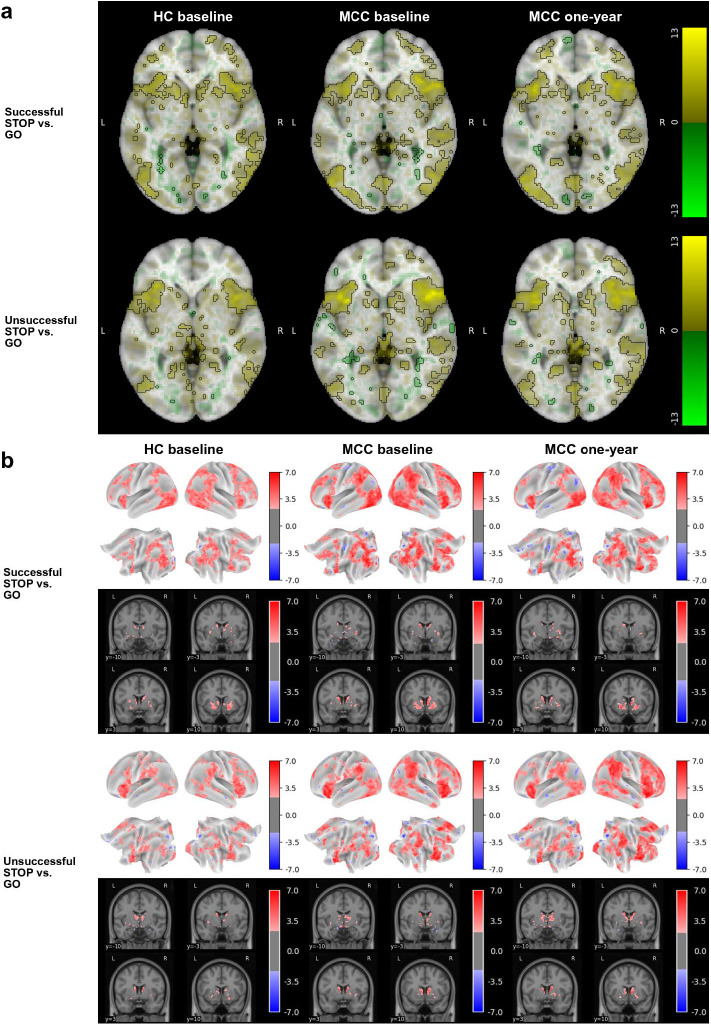
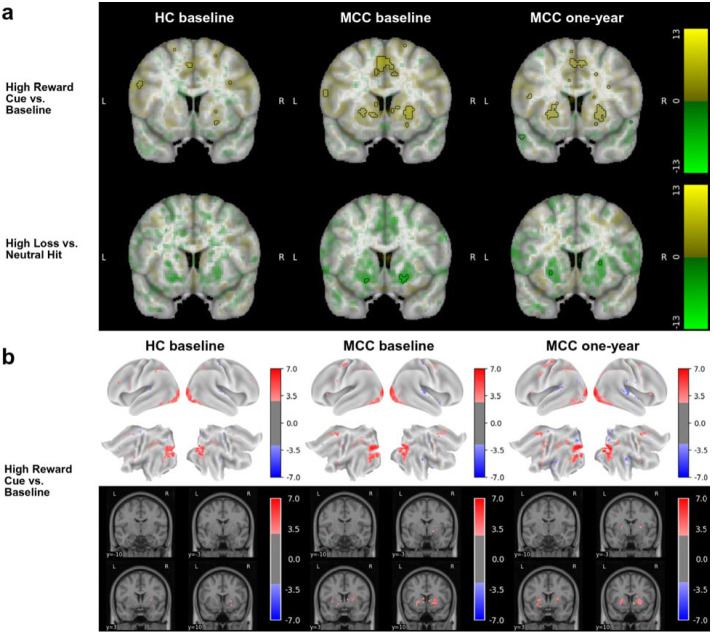
Outcomes were whole brain functional activation during tasks involving working memory, reward and inhibitory control at baseline and after one year of cannabis use.
Imaging was collected in participants before and one year after obtaining medical cannabis cards; 57 at baseline (38 female [66.7%]; mean [SD] age, 38.0 [14.6] years) at baseline, and 54 at one-year (37 female [68.5%]; mean [SD] age, 38.7 [14.3] years). Imaging was also collected in 32 healthy control participants (22 female [68.8%]; mean [SD] age, 33.8 [11.8] years) at baseline. In all groups and at both time points, functional imaging revealed canonical activations of the probed cognitive processes. No statistically significant difference in brain activation between the two timepoints (baseline and one-year) in those with medical cannabis cards and no association of changes in cannabis use frequency with brain activation were found.
Findings suggest that adults do not show significant neural effects in the areas of cognition of working memory, reward, and inhibitory control after one year of cannabis use for medical symptoms. The results warrant further studies that probe effects of cannabis at higher doses, with greater frequency, in younger age groups, and with larger, more diverse cohorts.
NCT03224468, https://clinicaltrials.gov/.
大麻越来越多地被用于治疗医学症状,但大麻使用对因这些症状而使用大麻者脑功能的影响尚不清楚。
测试在工作记忆、奖赏和抑制控制任务(大麻影响的认知领域)期间的脑激活情况,是否在因医学症状使用大麻一年后出现增加。
这项观察性队列研究于2017年7月至2020年7月进行,并于2024年报告。
参与者来自大波士顿地区。
参与者作为一项临床试验的一部分被招募,该试验基于为焦虑、抑郁、疼痛或睡眠障碍申请医用大麻卡,年龄在18至65岁之间。排除标准为基线时每日使用大麻和患有大麻使用障碍。
结局为在涉及工作记忆、奖赏和抑制控制的任务期间,在基线时和使用大麻一年后的全脑功能激活情况。
在参与者获得医用大麻卡之前和之后一年收集成像数据;基线时57人(38名女性[66.7%];平均[标准差]年龄,38.0[14.