.Changzhou University Business School, Jiangsu, Changzhou, China.
PLoS One. 2024 May 15;19(5):e0292571. doi: 10.1371/journal.pone.0292571. eCollection 2024.
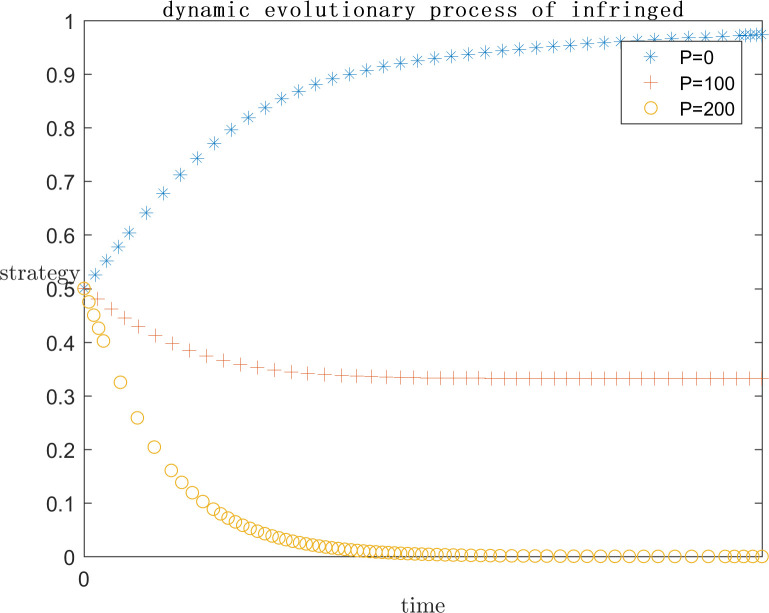
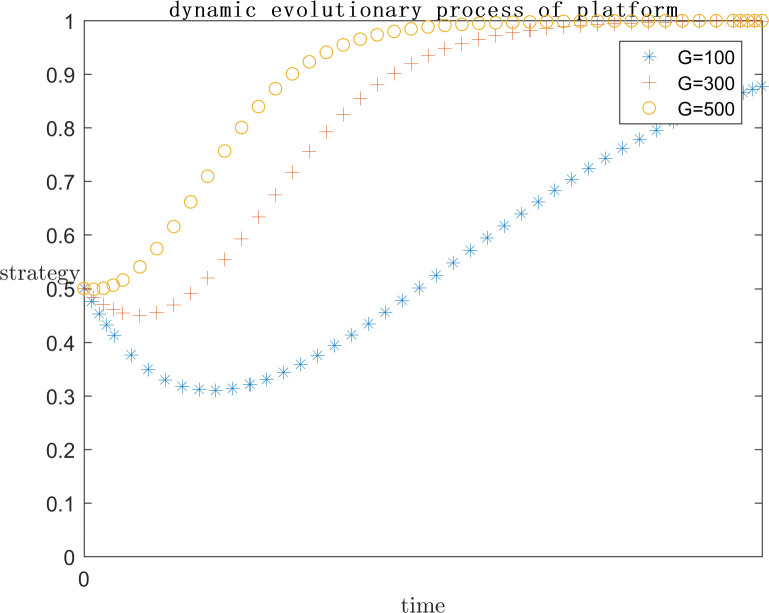
User-generated content (UGC) is developing rapidly as an emerging platform form, however, the problem of indirect copyright infringement by algorithms is becoming more and more prominent, and infringement governance has become a key act in the development of UGC platforms. When infringement occurs, recommendation algorithms expand the scope and results of infringement, while platforms choose to conspire with direct infringers for their own interests, making it difficult for infringed persons to defend their rights. In order to analyse the influence of different factors in the platform ecosystem on the subject's behavioural strategies, a "platform-infringer" evolutionary game model is constructed, and numerical simulation is used to verify the correctness of the stable results. Based on the simulation results, it is concluded that the factors of uncertain revenue, punishment and reputation loss have important influence on the decision-making behaviour of the subject of infringement governance, and accordingly, the proposed measures on the publishers, platforms and the legal level of the government are conducive to the evolution of the system to the point of positive regulation and stability of rights protection, with a view to promoting the healthier and more stable development of the UGC platforms.
用户生成内容(UGC)作为一种新兴的平台形式正在迅速发展,然而,算法间接侵权的问题越来越突出,侵权治理已成为 UGC 平台发展的关键行为。在侵权发生时,推荐算法扩大了侵权的范围和结果,而平台为了自身利益选择与直接侵权者勾结,使得被侵权人难以维护自己的权利。为了分析平台生态系统中的不同因素对主体行为策略的影响,构建了“平台-侵权者”进化博弈模型,并通过数值模拟验证了稳定结果的正确性。基于模拟结果得出,不确定收益、惩罚和声誉损失等因素对侵权治理主体的决策行为具有重要影响,因此,针对出版商、平台和政府法律层面提出的措施有利于制度向积极监管和稳定权利保护的方向进化,以期促进 UGC 平台更健康、更稳定的发展。