Evolution and Ecology Research Centre, School of Biological, Earth and Environmental Sciences, UNSW Sydney, Sydney, NSW, 2052, Australia.
School of Life Sciences, Faculty of Science, University of Technology Sydney, Sydney, NSW, 2007, Australia.
Sci Rep. 2024 May 15;14(1):11088. doi: 10.1038/s41598-024-61788-8.
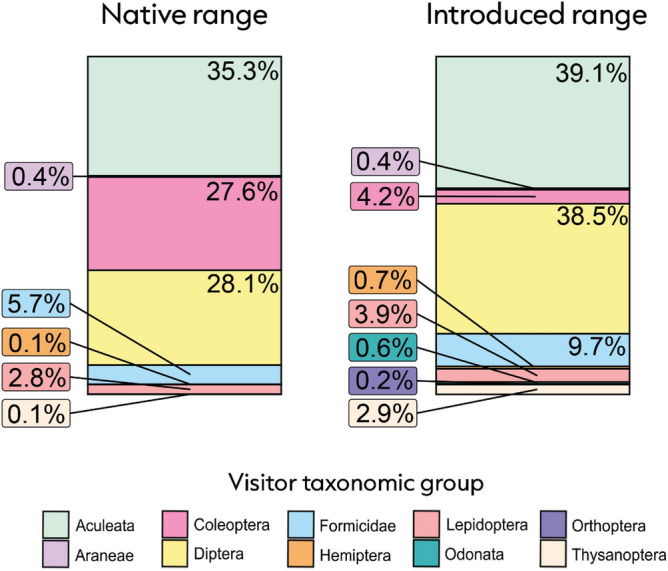
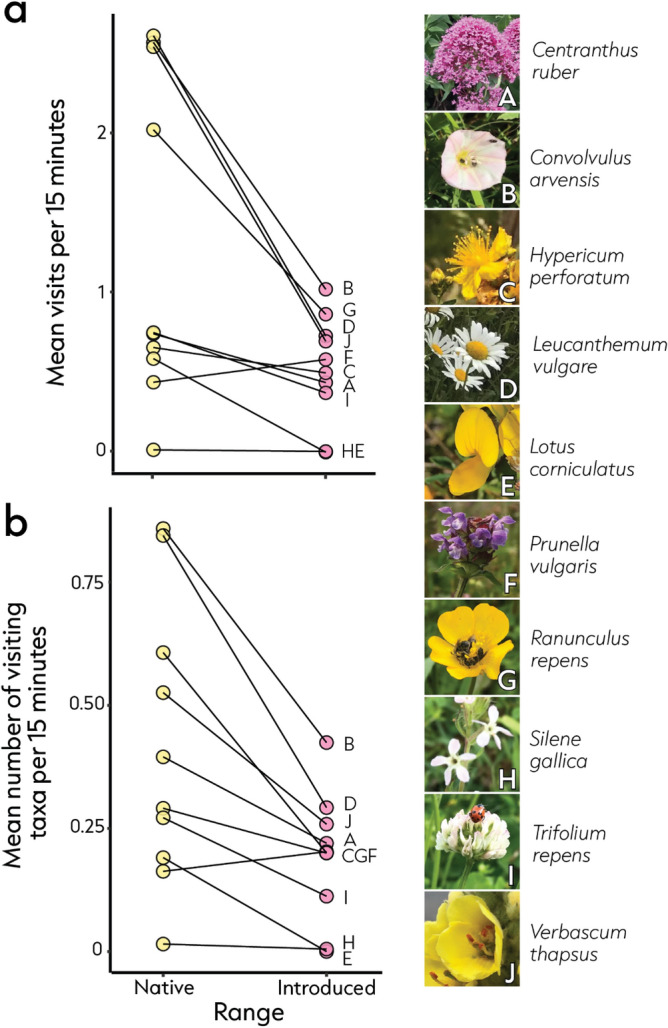
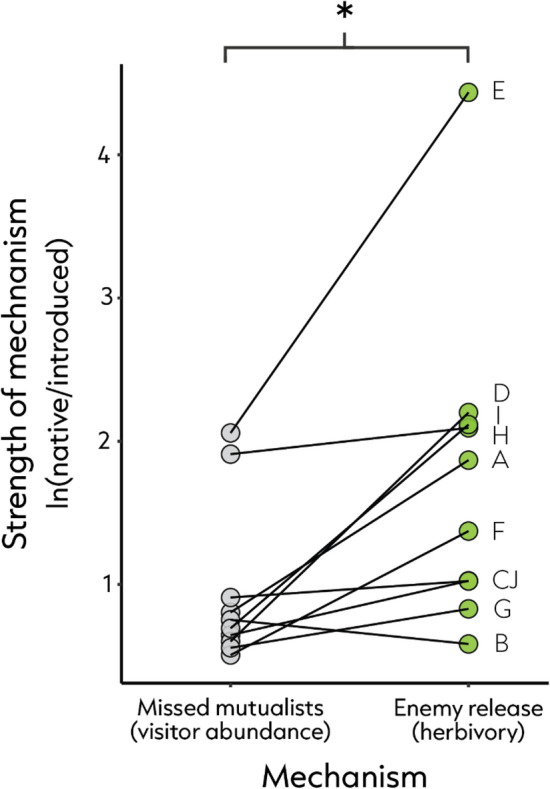
Many studies seeking to understand the success of biological invasions focus on species' escape from negative interactions, such as damage from herbivores, pathogens, or predators in their introduced range (enemy release). However, much less work has been done to assess the possibility that introduced species might shed mutualists such as pollinators, seed dispersers, and mycorrhizae when they are transported to a new range. We ran a cross-continental field study and found that plants were being visited by 2.6 times more potential pollinators with 1.8 times greater richness in their native range than in their introduced range. Understanding both the positive and negative consequences of introduction to a new range can help us predict, monitor, and manage future invasion events.
许多研究试图理解生物入侵的成功,其关注的焦点在于物种逃避负面相互作用的能力,例如在引入区域中免受草食动物、病原体或捕食者的伤害(天敌释放)。然而,对于评估引入物种在被引入新的分布区时可能会失去传粉者、种子散布者和菌根等共生体的可能性的研究则少得多。我们进行了一项跨大陆的实地研究,发现与引入区相比,植物在其本地范围内被潜在传粉者访问的次数多 2.6 倍,传粉者的丰富度多 1.8 倍。了解引入新分布区的积极和消极后果可以帮助我们预测、监测和管理未来的入侵事件。