Zhong Lincui, Lin Qingwei, He Longping, Liu Dongmei, Zhu Lin, Zeng Qingbo, Song Jingchun
Intensive Care Unit, The 908th Hospital of Chinese PLA Logistic Support Force, Nanchang, Jiangxi, China.
Intensive Care Unit, Huoshenshan Hospital, Wuhan, Hubei, China.
Front Med (Lausanne). 2024 May 2;11:1356283. doi: 10.3389/fmed.2024.1356283. eCollection 2024.
To predict mortality in severe patients with COVID-19 at admission to the intensive care unit (ICU) using thromboelastography (TEG).
This retrospective, two-center, observational study involved 87 patients with PCR-and chest CT-confirmed severe COVID-19 who were admitted to at Wuhan Huoshenshan Hospital and the 908th Hospital of Chinese PLA Logistic Support Force between February 2020 and February 2023. Clinic demographics, laboratory results, and outcomes were compared between those who survived and those who died during hospitalization.
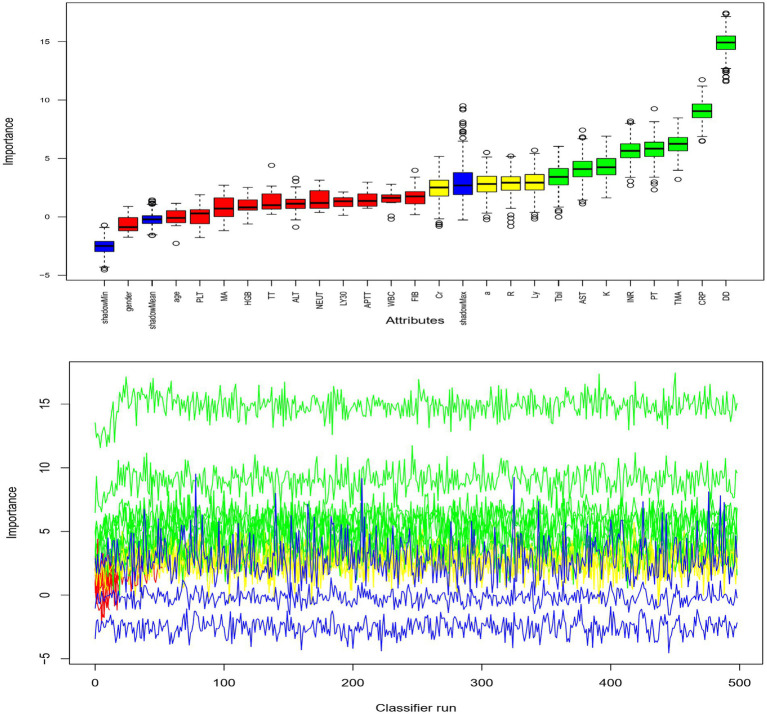
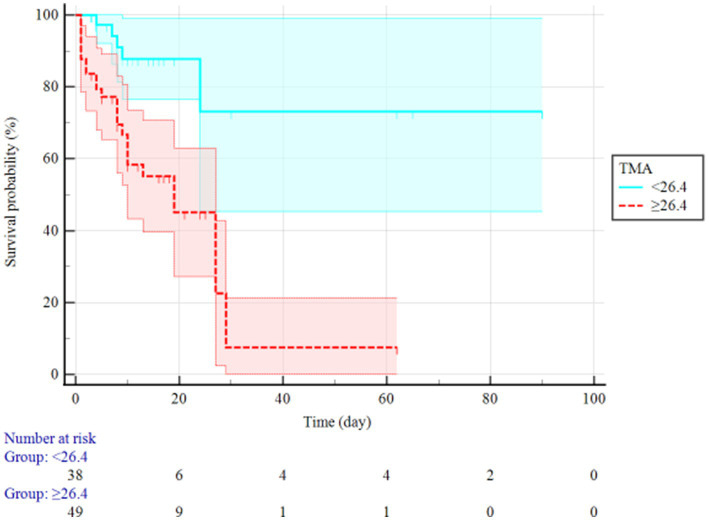
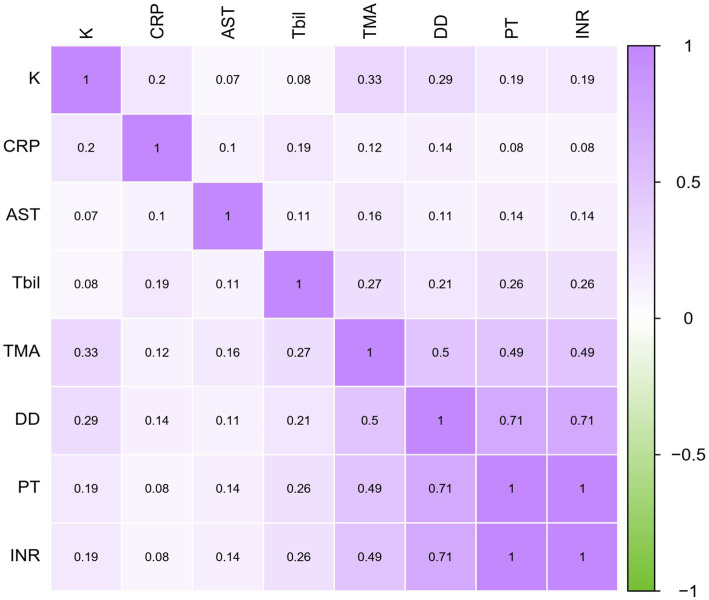
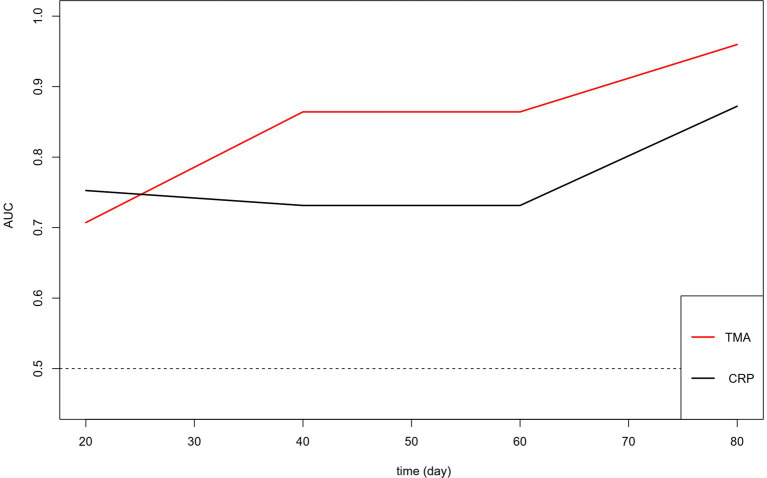
Thromboelastography showed that of the 87 patients, 14 were in a hypercoagulable state, 25 were in a hypocoagulable state, and 48 were normal, based on the time to maximum amplitude (TMA). Patients who died showed significantly lower α angle, but significantly longer R-time, K-time and TMA than patients who survived. Random forest selection showed that K-time, TMA, prothrombin time (PT), international normalized ratio (INR), D-dimer, C-reactive protein (CRP), aspartate aminotransferase (AST), and total bilirubin (Tbil) were significant predictors. Multivariate logistic regression identified that TMA and CRP were independently associated with mortality. TMA had a greater predictive power than CRP levels based on time-dependent AUCs. Patients with TMA ≥ 26.4 min were at significantly higher risk of mortality (hazard ratio 3.99, 95% Confidence Interval, 1.92-8.27, < 0.01).
TMA ≥26.4 min at admission to ICU may be an independent predictor of in-hospital mortality for patients with severe COVID-19.
使用血栓弹力图(TEG)预测新型冠状病毒肺炎(COVID-19)重症患者入住重症监护病房(ICU)时的死亡率。
这项回顾性、双中心观察性研究纳入了87例经聚合酶链反应(PCR)和胸部CT确诊的COVID-19重症患者,这些患者于2020年2月至2023年2月期间入住武汉火神山医院和中国人民解放军联勤保障部队第908医院。比较了住院期间存活患者和死亡患者的临床人口统计学、实验室检查结果及预后情况。
血栓弹力图显示,根据最大振幅时间(TMA),87例患者中,14例处于高凝状态,25例处于低凝状态,48例正常。死亡患者的α角明显更低,但R时间、K时间和TMA明显长于存活患者。随机森林选择显示,K时间、TMA、凝血酶原时间(PT)、国际标准化比值(INR)、D-二聚体、C反应蛋白(CRP)、天门冬氨酸氨基转移酶(AST)和总胆红素(Tbil)是显著的预测指标。多因素逻辑回归分析确定,TMA和CRP与死亡率独立相关。基于时间依赖性曲线下面积(AUC),TMA的预测能力大于CRP水平。TMA≥26.4分钟的患者死亡风险显著更高(风险比3.99,95%置信区间1.92 - 8.27,P<0.01)。
入住ICU时TMA≥26.4分钟可能是COVID-19重症患者院内死亡的独立预测指标。