Emergency Medicine Clinical Research Center, Beijing Chao-Yang Hospital, Capital Medical University, & Beijing Key Laboratory of Cardiopulmonary Cerebral Resuscitation, Capital Medical University, Beijing, China.
Clin Appl Thromb Hemost. 2021 Jan-Dec;27:10760296211047231. doi: 10.1177/10760296211047231.
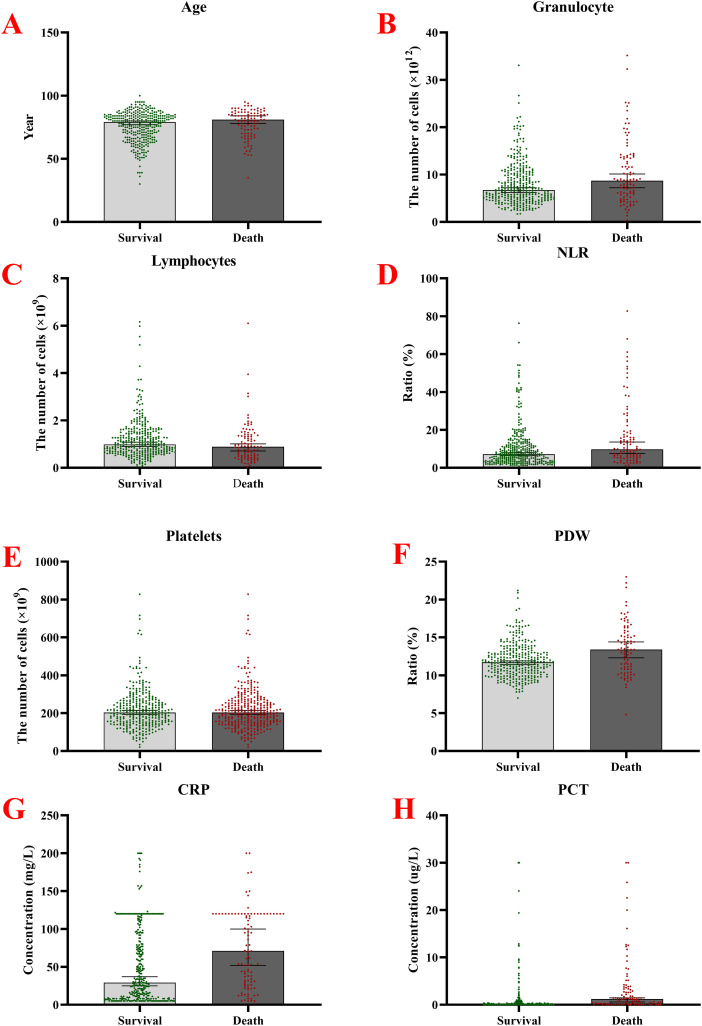
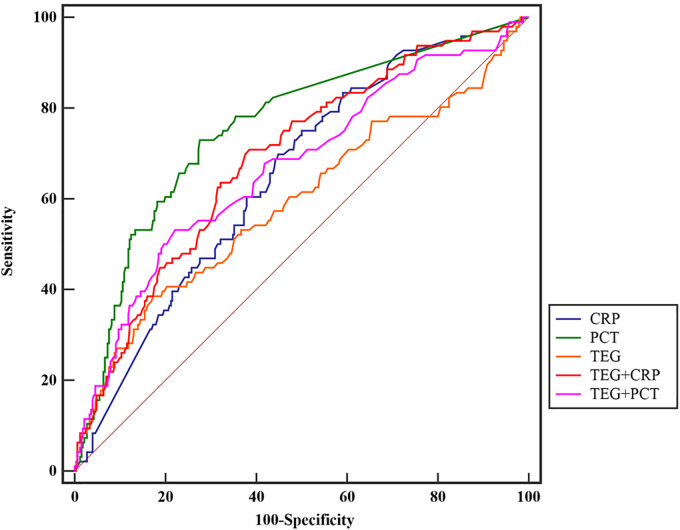
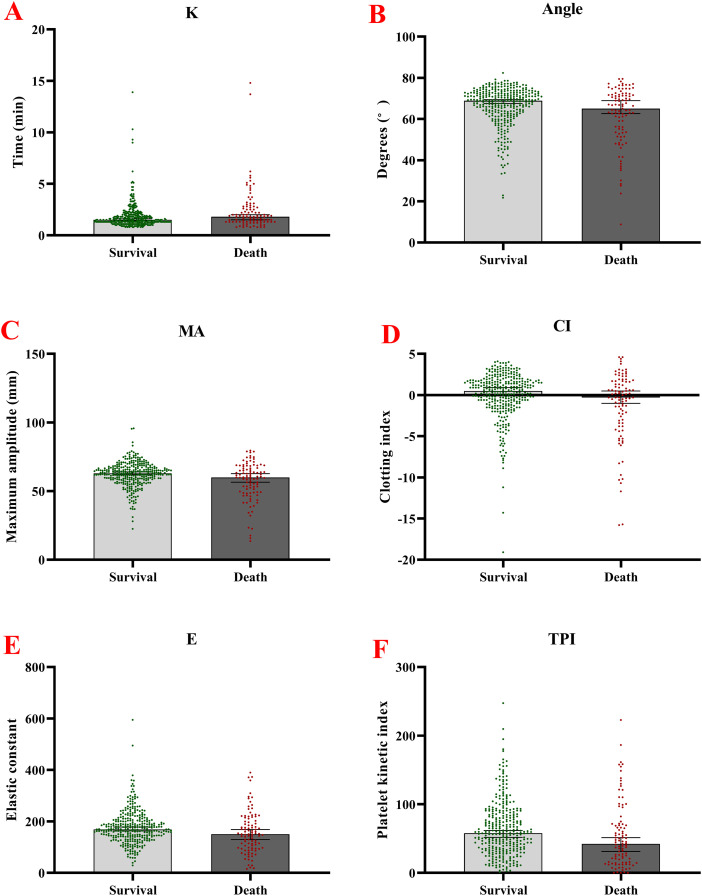
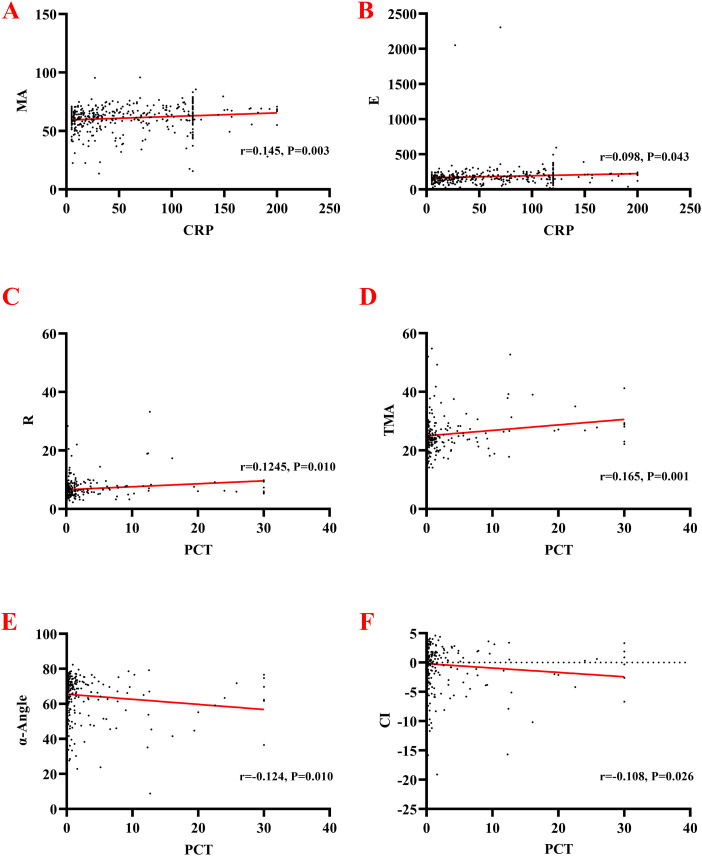
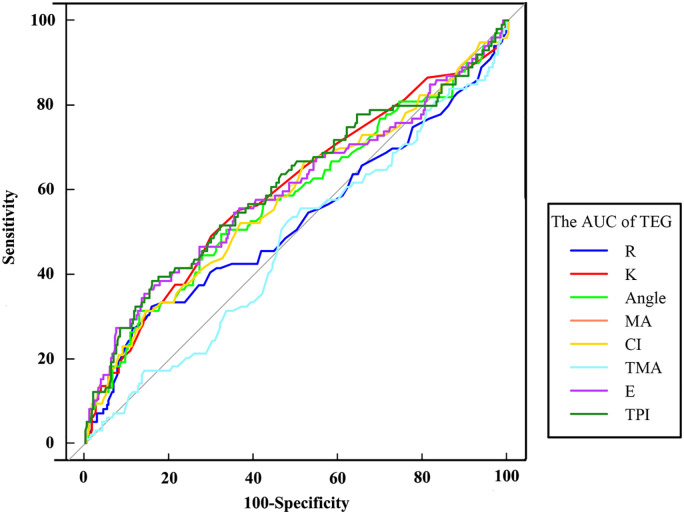
In this study, we want to investigate the clinical value of each index of thromboelastography (TEG) on the prognosis of infected patients.The clinical baseline data and TEG test results of 431 infected patients in our hospital's emergency department between January 2018 and December 2018 were selected. And the patients were divided into death and survival groups to analyze the predictive value of each index of TEG and the joint model on the death of infected patients.In the correlation study of C-reactive protein (CRP) and procalcitonin (PCT) with each TEG parameter, CRP was positively correlated with maximum amplitude (MA, = 0.145, = .003) and elasticity constants (E, = 0.098, = .043), respectively. PCT was positively correlated with coagulation reaction time (R, = 0.124, = .010) and time to MA (TMA) ( = 0.165, = .001), respectively; PCT was negatively correlated with α-Angle ( = 0.124, = .010) and coagulation index (CI, = -0.108, = .026), respectively. Multifactorial regression analysis showed that granulocytes, thrombocytes, platelet distribution width (PDW), and infection site were independent influences on infected patients' death. Diagnostic data showed that all eight TEG indicators had good specificity for predicting death, but all had poor sensitivity; thrombodynamic potential index (TPI) had the best diagnostic value (area under the curve, AUC = 0.609, = .002). The eight-indicator modeling of TEG showed that the TEG model combined with PCT and CRP, respectively, had lower diagnostic efficacy than PCT (AUC = 0.756, < .001); however, TEG had better specificity (82.73%) when diagnosed independently.The granulocytes, thrombocytes, PDW, and infection site are independent influencing factors of death in infected patients. Each index of TEG has better specificity in the diagnosis of death in infected patients.
在这项研究中,我们旨在探讨血栓弹力图(TEG)各项指标对感染患者预后的临床价值。选取我院急诊科 2018 年 1 月至 2018 年 12 月收治的 431 例感染患者的临床基线数据和 TEG 检测结果,并将患者分为死亡组和存活组,分析 TEG 各项指标及联合模型对感染患者死亡的预测价值。在 CRP 和 PCT 与 TEG 各项参数的相关性研究中,CRP 与最大振幅(MA)呈正相关( = 0.145,P = 0.003)和弹性常数(E)呈正相关( = 0.098,P = 0.043),PCT 与凝血反应时间(R)呈正相关( = 0.124,P = 0.010)和 MA 时间(TMA)呈正相关( = 0.165,P = 0.001),PCT 与 α 角呈负相关( = 0.124,P = 0.010)和凝血指数(CI)呈负相关( = -0.108,P = 0.026)。多因素回归分析显示,粒细胞、血小板、血小板分布宽度(PDW)和感染部位是感染患者死亡的独立影响因素。诊断数据显示,TEG 的八项指标对死亡的预测均具有良好的特异性,但均具有较差的敏感性;血栓动力潜力指数(TPI)具有最佳的诊断价值(曲线下面积,AUC = 0.609,P = 0.002)。TEG 的八项指标建模显示,TEG 模型分别与 PCT 和 CRP 结合时,诊断效能均低于 PCT(AUC = 0.756,P < 0.001);然而,TEG 独立诊断时具有更好的特异性(82.73%)。粒细胞、血小板、PDW 和感染部位是感染患者死亡的独立影响因素。TEG 的各项指标在诊断感染患者死亡方面具有更好的特异性。