Cancer Center, Department of Radiology, Zhejiang Provincial People's Hospital, (Affiliated People's Hospital), Hangzhou Medical College, Hangzhou, Zhejiang, China.
Department of Radiology, Zhejiang Hospital, Hangzhou, Zhejiang, China.
Ther Adv Respir Dis. 2024 Jan-Dec;18:17534666241249168. doi: 10.1177/17534666241249168.
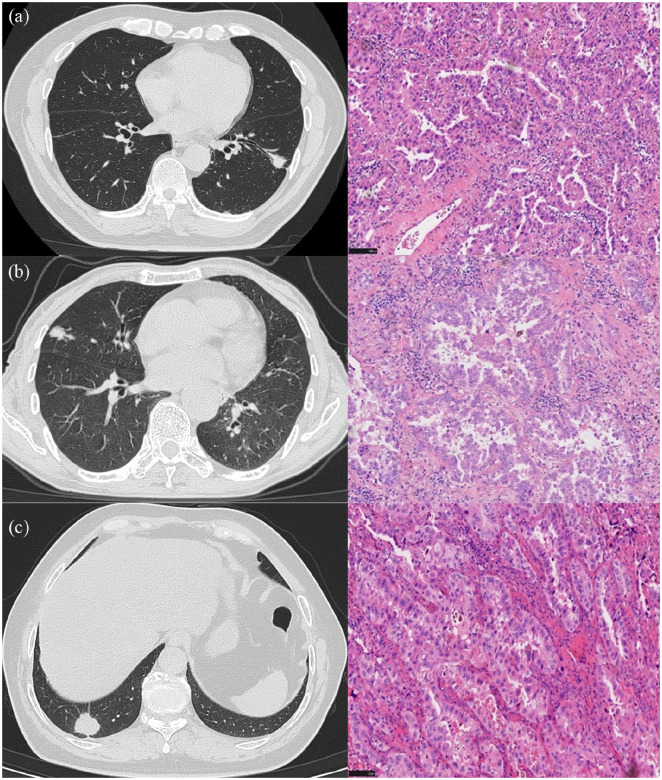
Invasive lung adenocarcinoma with MPP/SOL components has a poor prognosis and often shows a tendency to recurrence and metastasis. This poor prognosis may require adjustment of treatment strategies. Preoperative identification is essential for decision-making for subsequent treatment.
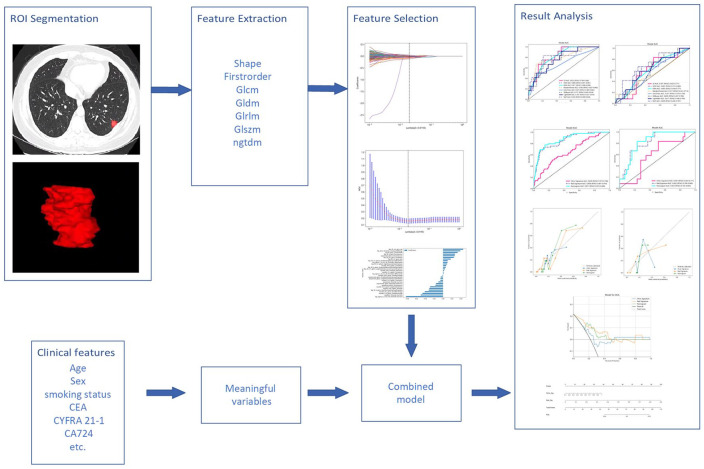
This study aimed to preoperatively predict the probability of MPP/SOL components in lung adenocarcinomas by a comprehensive model that includes radiomics features, clinical characteristics, and serum tumor biomarkers.
A retrospective case control, diagnostic accuracy study.
This study retrospectively recruited 273 patients (males: females, 130: 143; mean age ± standard deviation, 63.29 ± 10.03 years; range 21-83 years) who underwent resection of invasive lung adenocarcinoma. Sixty-one patients (22.3%) were diagnosed with lung adenocarcinoma with MPP/SOL components. Radiomic features were extracted from CT before surgery. Clinical, radiomic, and combined models were developed using the logistic regression algorithm. The clinical and radiomic signatures were integrated into a nomogram. The diagnostic performance of the models was evaluated using the area under the curve (AUC). Studies were scored according to the Radiomics Quality Score and Transparent Reporting of a Multivariable Prediction Model for Individual Prognosis or Diagnosis guidelines.
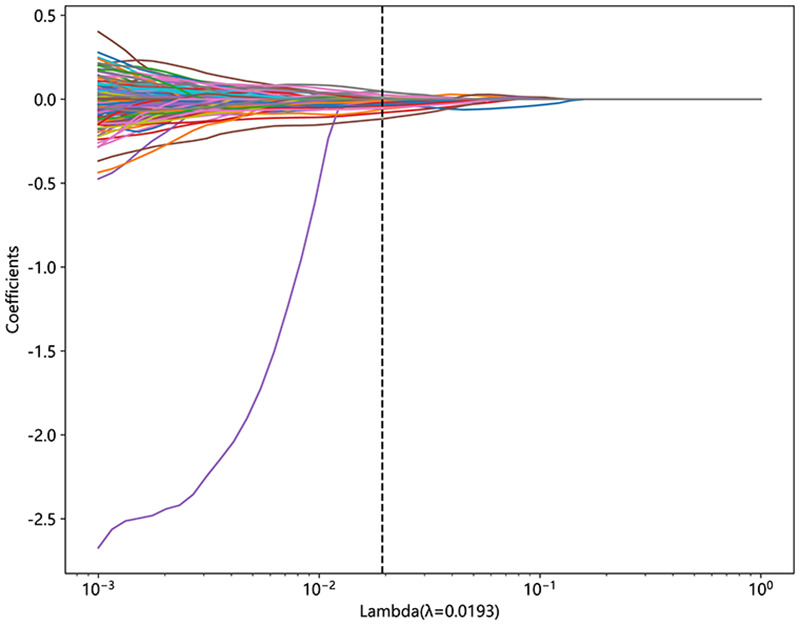
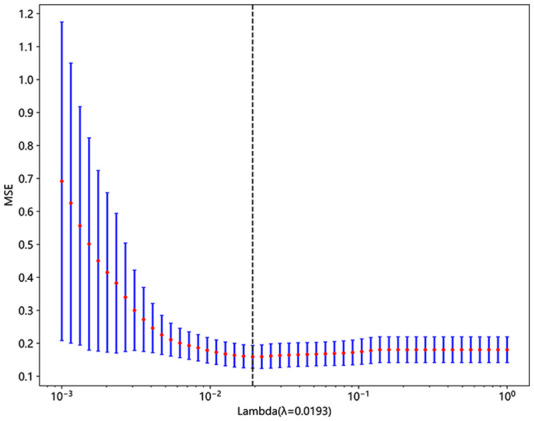
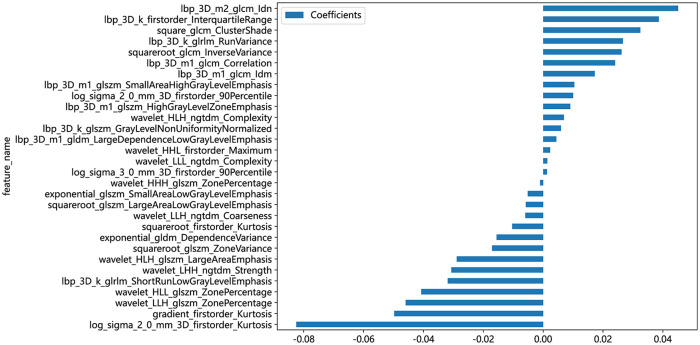
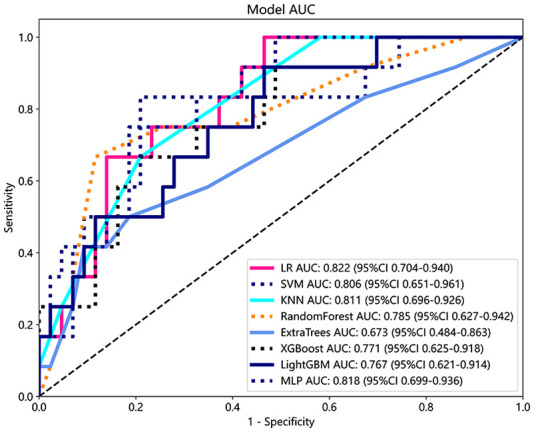
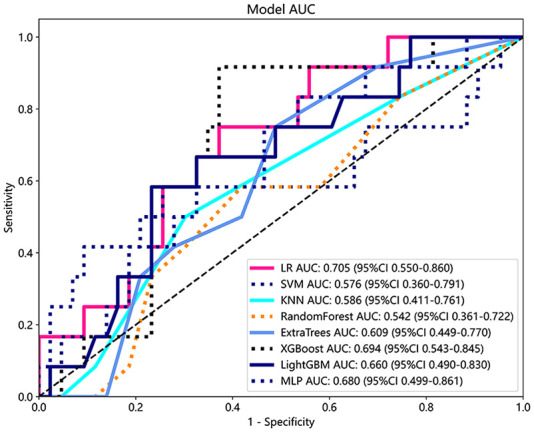
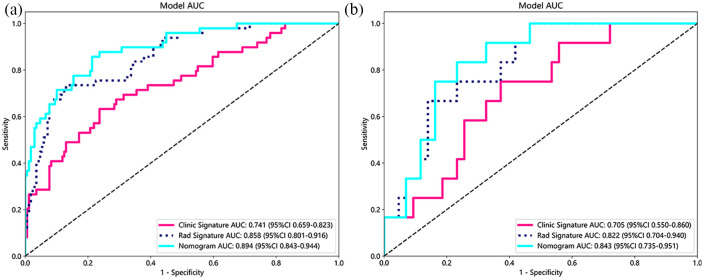
The radiomics model achieved the best AUC values of 0.858 and 0.822 in the training and test cohort, respectively. Tumor size (T_size), solid tumor size (ST_size), consolidation-to-tumor ratio (CTR), years of smoking, CYFRA 21-1, and squamous cell carcinoma antigen were used to construct the clinical model. The clinical model achieved AUC values of 0.741 and 0.705 in the training and test cohort, respectively. The nomogram showed higher AUCs of 0.894 and 0.843 in the training and test cohort, respectively.
This study has developed and validated a combined nomogram, a visual tool that integrates CT radiomics features with clinical indicators and serum tumor biomarkers. This innovative model facilitates the differentiation of micropapillary or solid components within lung adenocarcinoma and achieves a higher AUC, indicating superior predictive accuracy.
具有 MPP/SOL 成分的浸润性肺腺癌预后较差,常表现出复发和转移的趋势。这种不良预后可能需要调整治疗策略。术前识别对于后续治疗的决策至关重要。
本研究旨在通过包括放射组学特征、临床特征和血清肿瘤标志物在内的综合模型,术前预测肺腺癌中 MPP/SOL 成分的概率。
回顾性病例对照、诊断准确性研究。
本研究回顾性招募了 273 名(男:女,130:143;平均年龄±标准差,63.29±10.03 岁;年龄范围 21-83 岁)接受肺腺癌切除术的患者。61 例(22.3%)患者诊断为肺腺癌伴 MPP/SOL 成分。术前 CT 提取放射组学特征。采用逻辑回归算法建立临床、放射组学和联合模型。将临床和放射组学特征整合到一个列线图中。采用曲线下面积(AUC)评估模型的诊断性能。研究根据放射组学质量评分和多变量预测个体预后或诊断模型的透明报告指南进行评分。
放射组学模型在训练组和测试组中的 AUC 值分别为 0.858 和 0.822,表现最佳。肿瘤大小(T_size)、实性肿瘤大小(ST_size)、实变与肿瘤比值(CTR)、吸烟年限、细胞角蛋白 19 片段(CYFRA 21-1)和鳞状细胞癌抗原用于构建临床模型。临床模型在训练组和测试组中的 AUC 值分别为 0.741 和 0.705。列线图在训练组和测试组中的 AUC 值分别为 0.894 和 0.843,更高。
本研究开发并验证了一种联合列线图,这是一种将 CT 放射组学特征与临床指标和血清肿瘤标志物相结合的可视化工具。这种创新模型有助于区分肺腺癌中的微乳头或实体成分,并且具有更高的 AUC,表明预测准确性更高。