Department of Cancer Biology, Mayo Clinic, Jacksonville, FL, United States.
Graduate School of Biomedical Sciences, Mayo Clinic, Jacksonville, FL, United States.
Front Immunol. 2024 May 3;15:1369356. doi: 10.3389/fimmu.2024.1369356. eCollection 2024.
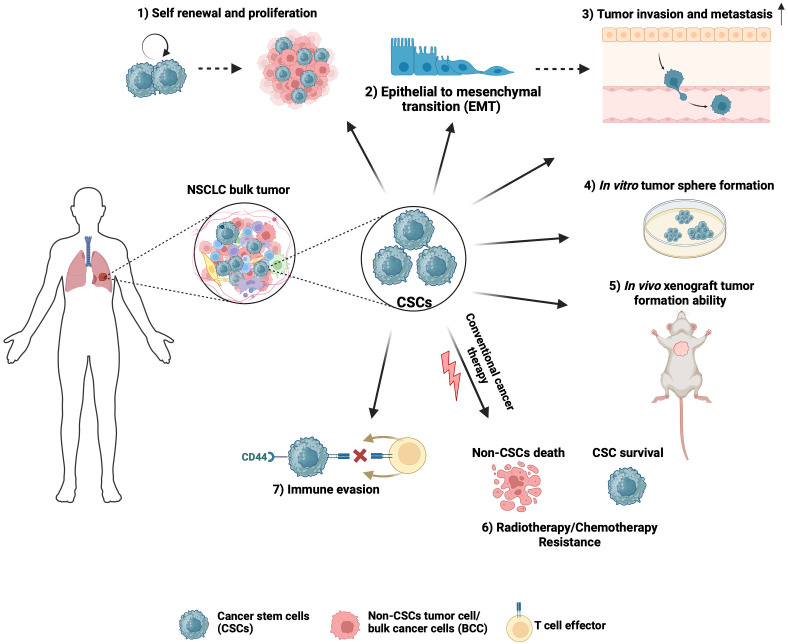
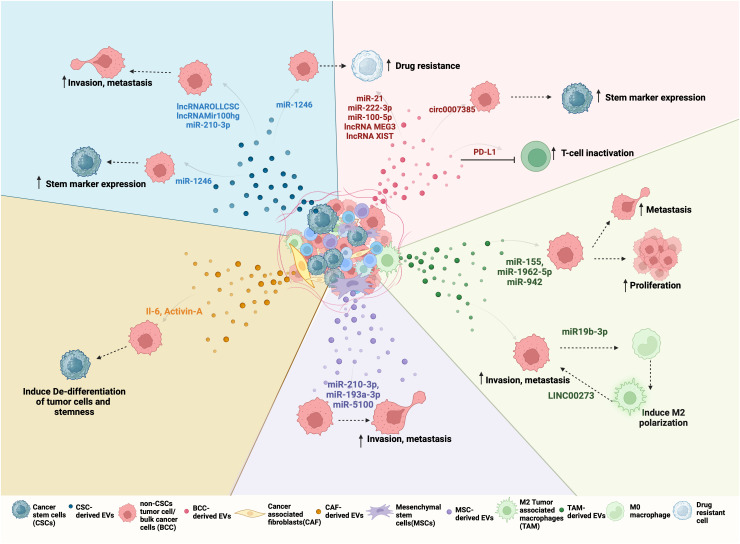
Non-small cell lung carcinoma (NSCLC) accounts for 85% of lung cancers, the leading cause of cancer associated deaths in the US and worldwide. Within NSCLC tumors, there is a subpopulation of cancer cells termed cancer stem cells (CSCs) which exhibit stem-like properties that drive NSCLC progression, metastasis, relapse, and therapeutic resistance. Extracellular vesicles (EVs) are membrane-bound nanoparticles secreted by cells that carry vital messages for short- and long-range intercellular communication. Numerous studies have implicated NSCLC CSC-derived EVs in the factors associated with NSCLC lethality. In this review, we have discussed mechanisms of EV-directed cross-talk between CSCs and cells of the tumor microenvironment that promote stemness, tumor progression and metastasis in NSCLC. The mechanistic studies discussed herein have provided insights for developing novel NSCLC diagnostic and prognostic biomarkers and strategies to therapeutically target the NSCLC CSC niche.
非小细胞肺癌(NSCLC)占肺癌的 85%,是美国和全球癌症相关死亡的主要原因。在 NSCLC 肿瘤中,存在一小部分被称为癌症干细胞(CSC)的癌细胞,它们表现出驱动 NSCLC 进展、转移、复发和治疗耐药的干细胞样特性。细胞外囊泡(EVs)是由细胞分泌的具有膜的纳米颗粒,携带用于短程和远程细胞间通讯的重要信息。许多研究表明,NSCLC CSC 衍生的 EVs 与 NSCLC 致死性相关的因素有关。在这篇综述中,我们讨论了 EV 介导的 CSC 与肿瘤微环境细胞之间的交叉对话的机制,这些机制促进了 NSCLC 中的干性、肿瘤进展和转移。本文讨论的机制研究为开发 NSCLC 的新型诊断和预后生物标志物以及靶向 NSCLC CSC 生态位的治疗策略提供了思路。