Leask Andrew, Nguyen John, Naik Angha, Chitturi Pratyusha, Riser Bruce L
College of Dentistry, University of Saskatchewan, 105 Wiggins Road, Saskatoon, SK S7N 5E4, Canada.
Department of Physiology & Biophysics, Center for Cancer Cell Biology, Immunology & Infection, Rosalind Franklin University, 3333 N. Green Bay Road, Chicago, IL 60064, USA.
iScience. 2024 Apr 30;27(6):109864. doi: 10.1016/j.isci.2024.109864. eCollection 2024 Jun 21.
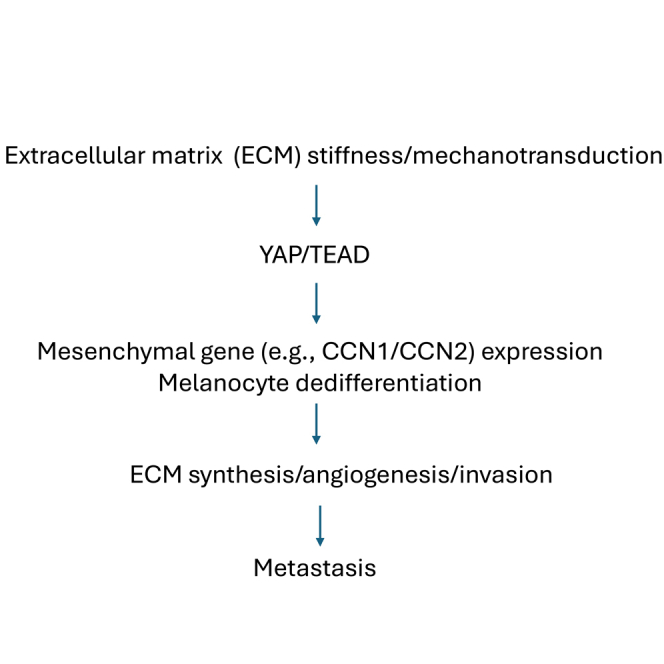
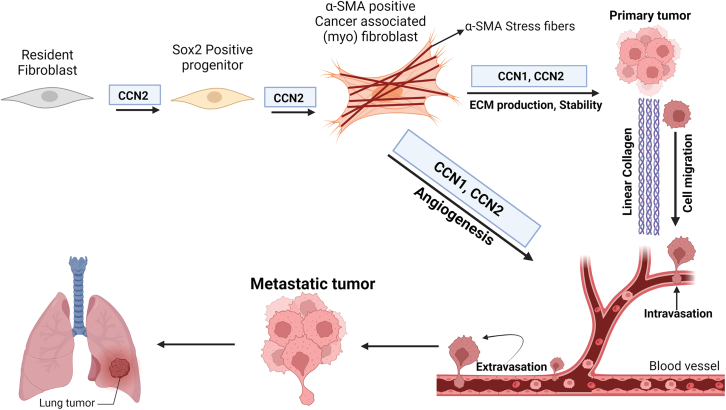
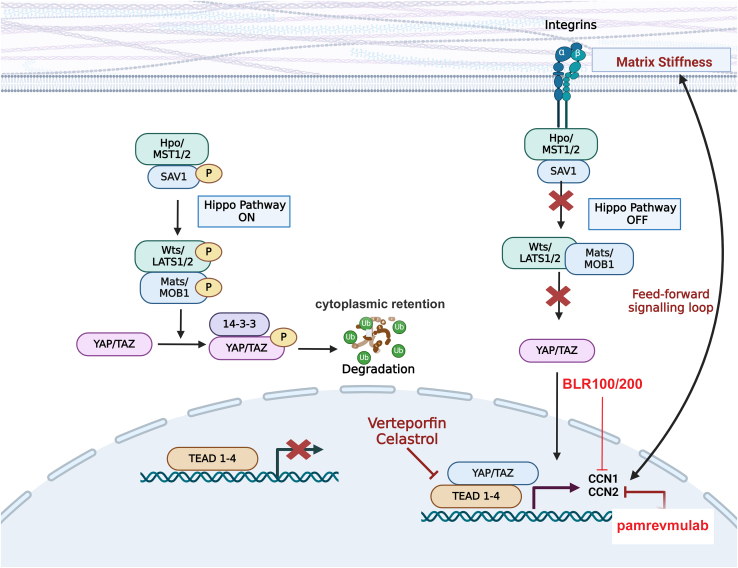
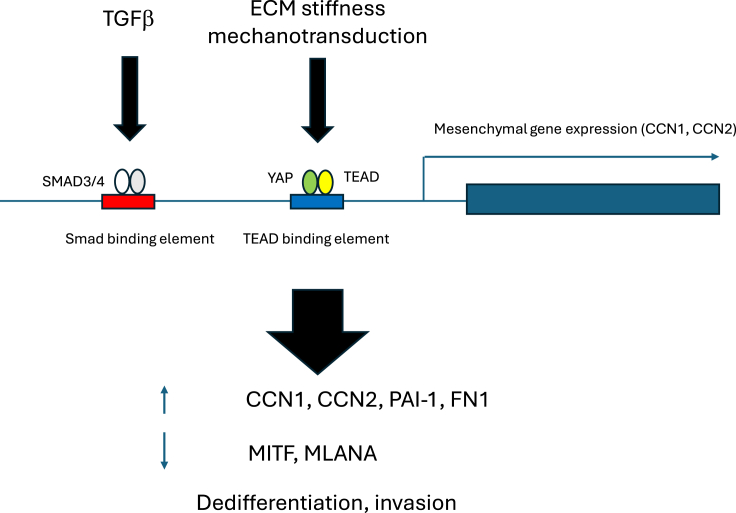
Hippo was first identified in a genetic screen as a protein that suppressed proliferation and cell growth. Subsequently, it was shown that hippo acted in a so-called canonical cascade to suppress Yorkie, the Drosophila equivalent of Yes-activated protein (YAP), a mechanosensitive transcriptional cofactor that enhances the activity of the TEAD family of transcription factors. YAP promotes fibrosis, activation of cancer-associated fibroblasts, angiogenesis and cancer cell invasion. YAP activates the expression of the matricellular proteins CCN1 (cyr61) and CCN2 (ctgf), themselves mediators of fibrogenesis and oncogenesis, and coordination of matrix deposition and angiogenesis. This review discusses how therapeutically targeting YAP through YAP inhibitors verteporfin and celastrol and its downstream mediators CCN1 and CCN2 might be useful in treating melanoma.
河马蛋白最初是在一项基因筛选中被鉴定为一种抑制细胞增殖和生长的蛋白质。随后,研究表明,河马蛋白在一个所谓的经典信号级联反应中发挥作用,抑制Yorkie,它相当于果蝇中的Yes激活蛋白(YAP),是一种机械敏感的转录辅因子,可增强TEAD家族转录因子的活性。YAP促进纤维化、癌症相关成纤维细胞的激活、血管生成和癌细胞侵袭。YAP激活基质细胞蛋白CCN1(cyr61)和CCN2(ctgf)的表达,它们本身就是纤维化和肿瘤发生的介质,以及基质沉积和血管生成的协调因子。这篇综述讨论了通过YAP抑制剂维替泊芬和雷公藤红素及其下游介质CCN1和CCN2对YAP进行治疗性靶向,可能对治疗黑色素瘤有用。